About Me

My photo
Halloo! When I found out I could go to med school with a Humanities degree with an Ethnomusicology emphasis, I almost peed myself. Here's to me holding it in.
Showing posts with label Bylakuppe. Show all posts

Wednesday, July 4, 2012

Dreams, Wings, and Other Things


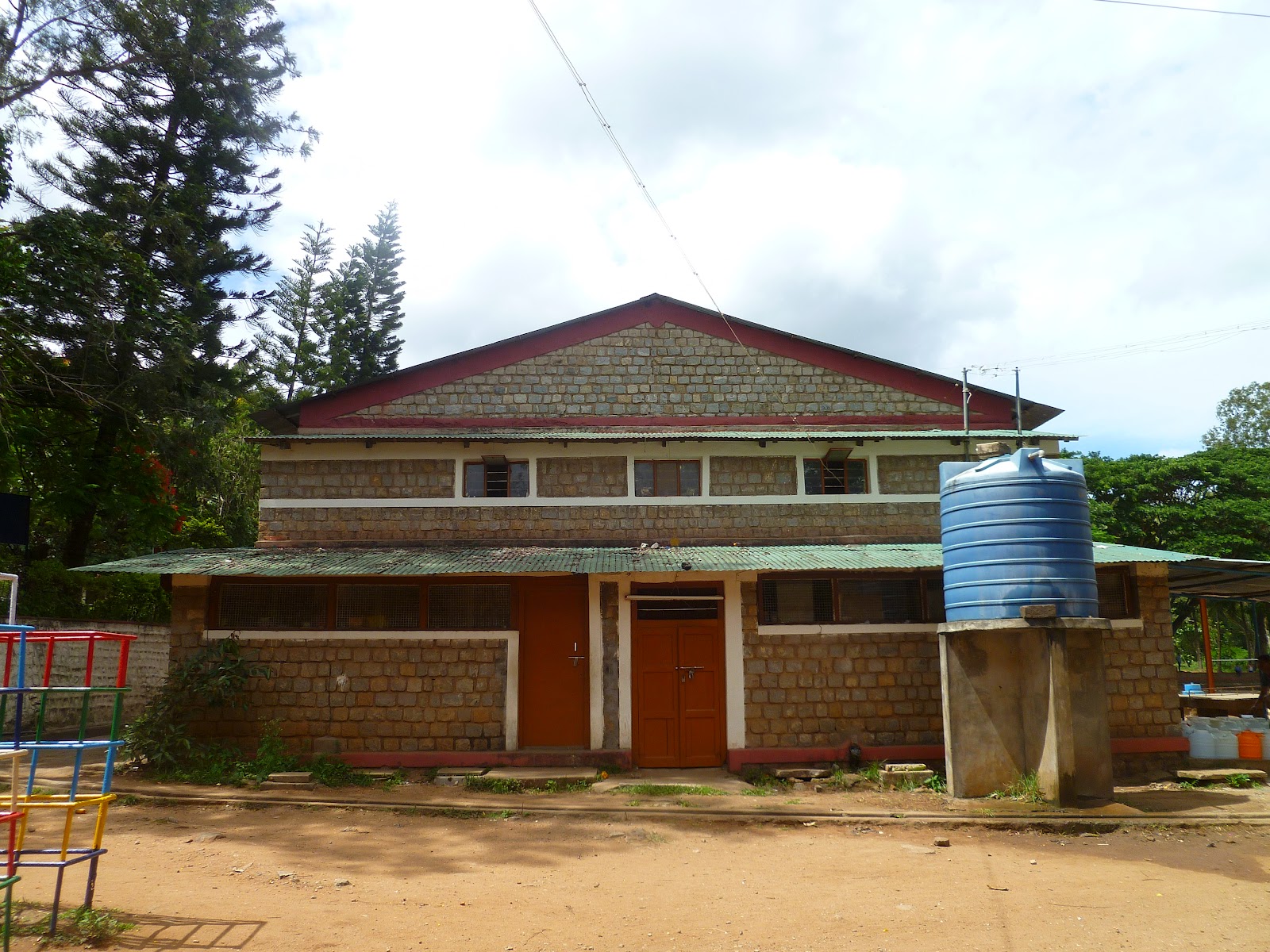
This stone building, nestled in a not-so-quiet corner of the Tibetan Children's Village between the mess hall and the sports field, is home to two wondrous little rooms filled to the brim with those magical implements we call instruments. Pardon me if I wax sentimental, but music rooms are to me what stadiums are to athletes, flea markets to hoarders, back alleys to crack addicts, and churches to the faithful. They are homes, sometimes literally, for stretches of time filling months and years. They are places of joy and pain, highs and lows, friends and frienemies (I never had any, but I saw the phenomenon in the music room regularly). The sound space is singular - what other rooms spend most of their time above a sound pressure level of 90 dB, in an at least semi-musical din?


The four main Tibetan instruments, with parts labeled. Notice the Tibetan, Western, and Indian scale degree equivalency chart in quadrant I (for those of you who forgot which quadrant is I, Descartes' fly on the ceiling is about to give you some terrible disease). The doors on either side lead to the two music/dance rooms.

The soundscape of the room is made more interesting by the pedagogical style I have observed when full classes are taught. The first half of class is spent learning some specific song, technique, or instrument, all by rote and call-and-response. The second half is a kind of free time, where students are meant to practice what they learn while the teacher moves from student to student assisting. Exploration is encouraged, and the result is the very loud, dissonant, and beautiful sound of twenty-five kids messing around on different instruments simultaneously in a small stone room. I noted to Dawa-la, the head music teacher, that I deeply appreciate this teaching method. Music is often taught in a painful way, with no spontaneity or exploration allowed. The focus is usually on not making mistakes, rather than on making music and making connections to the instruments. Some of the most fun and educational experiences I have ever had came from wondering what all the sounds are that a snare drum (etc.) can make, and going on to properly break all the rules I knew and trying my darndest to break rules I hadn't yet heard of. There's a special joy in bending the sound palette of an instrument past sane boundaries, if only for the mental image it conjures up of shock and disgust on an old fuddy-duddy music teacher's face.


Some of the concepts I threw at my drum class the other day. The cascara took a little while to lock in, but they were impressive in the speed they picked it up. Today, I noticed that someone filled the empty space in the top right corner with "Save Tibet!"

In this spirit, and with the injunction from Techung to share more of the best that Western music has to offer with the Bylakuppeans, I have embarked on a very fulfilling mission of reciprocity to my hosts. As I think I have mentioned, I teach drum lessons. There is one class of about 15 students, and two one-on-one classes with students who had the gonads (I have to use the generic term, because Nyidun is a girl) to approach the Inji-Mi and ask for lessons. We have been listening to funk, jazz, prog rock, pop, dance, Afro-Cuban stuff - you name it. It's fun to watch the look on kids' faces when they vibe with something that isn't Justin Bieber (J. Biebs, I love you man, but J. Coltrane is more my kind of cat).


One of the boys who digs on hanging around the music room in his free time. Some of these kids school me on dramyen. It's awesome.

In the spirit of the mission Dawa-la has entrusted me with, I also make sure the kids see me practicing their native music and singing in their mother tongue. For one thing, he told me, the teachers are always trying to convince the students of the richness of Tibetan culture, especially music and dance, and sometimes use as an illustration the Westerners (Injis) who come to their communities to learn Tibetan music. The injis, they say, wouldn't spend so much money and time to travel halfway around the world unless there was something very important and beautiful to uncover. The thing is, the students in Bylakuppe never actually see these injis, because Dharamsala in the north is the normal pilgrimage site for interested musicians. Dawa-la has tried to impart to me the impact of having a real, live inji in their midst. Forget about any musical aptitude I may or may not have. I have come from the land of Taylor Swift to learn dramyen. Dawa-la's hope, and I've seen some small evidences of his hope being fulfilled, is that the excitement of a Westerner learning dramyen might help some of the students take another look at their own musical tradition (without necessarily losing their interest in Metallica, Green Day, and The Eagles). The dream, for me and for the teachers at the school, is for the students to be able to have a resting point, a foundation, in their own culture, and an appreciation and applied aptitude for it, while also exploring, understanding, and experimenting with the musics of other cultures. It's a little like Sanka's speech in Cool Runnings - if I dress Jamaican, talk Jamaican, walk Jamaican, and is Jamaican, then I damn well better bobsled like a Jamaican. I don't see a thing wrong with a refugee picking up a guitar and learning "Hotel California," any more than I have a problem with an American college student traveling to India to learn dramyen, but I dig on the whole thing more if a native flair, fire, and spirit is retained. As another illustration, I was expressing some worry today over the accent I am using to sing the Tibetan lyrics in the song I will be performing at His Holiness' birthday (less than 35 hours from now!), and Dawa-la told me (and I'm paraphrasing),

"You are a Westerner. You won't sound Tibetan. It doesn't matter. You being there, up on that stage, and participating in our celebration in your own way - that's what people want to see. They'll love it. Just focus on the song."

That kind of embracing of two cultures simultaneously while recognizing one as your own is what I am coming to love and believe in more and more.

Words in Tibetan script, music in do-re-mi notation (1=do, 2=re, etc. A line under a phrase doubles its speed)

Back to the building, and the title of this post. I have this thing with physical space and environments and the ways they influence, enable, and inhibit artistic expression. For example, I have never been told more times in my life to play and sing louder. These dudes and chicks have serious pipes. I was practicing in the empty music room today when I heard a group in the other room start singing. It sounded like there were eight or so people singing. There were three. My theory, and maybe one day I'll prove it, is that coming from a physical space like the one in the Himalayas influences the cultures that inhabit it to fill the space with their music, and also uninhibits/never creates the volume sanctions that city-dwellers develop so as not to step on their neighbor's sound space. The alpenhorn in Switzerland are a similar case of huge instruments filling the forever-space, and the didgeridoo of the Australian Aborigines is another. (in a reverse example, electronic keyboards with headphone jacks took off in relatively cramped suburban America).

Focusing down to the microcosm of my current subject, music rooms are perfect spaces. They are made sacred by noise, sometimes disjointed and sometimes polished, and also make sacred and untouchable the noise-making desires of their inhabitants (untouchable, that is, by the normal workings of the outside world. If the students in the math building next door are taking a test, to hell with them, but if there is a performance on the stage above the music room then the music room's sacred space is extended and its internal system of governance applies). Music rooms are canvases for the painting of soundscapes. Returning to sentimentality, they are places for the realizing of dreams, and for the dreaming of new ones. They are vehicles for expression as vital and vibrant as the instruments they house.

[Similarly, for any interested parties, musical instruments are perfect objects embodying an infinite realm of possibilities, and make great gifts for all your poor friends who just spent all their money on trips to India]

Without a space where noise and experimentation are unrestricted, or at least are governed by a very different set of rules than the outside world, there can be very little in the way of musical learning. In this particular case, cultural preservation of a diasporic people depends on the existence of such a space. Further, the cultural interaction that takes place when one kid is playing an electric guitar and the kid one chair over is playing dramyen is unlikely without a space that houses both instruments and allows for the necessary noise. I believe this kind of interaction is vital to the way modern cultures progress - not vital in the sense of "needed for this good thing to happen," but in the sense of "foundational and integral to a natural process," and not progress in the sense of "improve," but simply in the sense of "moving forward." In other words, the tide of cultural change in the world is propelled by the existence of two or more distinct cultural implements (physical or otherwise) in shared spaces where they are allowed a degree of use. This may seem rather obvious and even mundane, and perhaps it is, but there is something stirring about watching the fluidity with which these students switch between and mix cultures, and there is something true about letting go of ideas of "Western" and "Tibetan" and watching the students simply live. This particular space has created a venue for this fluidity and unique way of creating identity. Other venues, for further exploration another time, include the pirate shops that sell mp3 cds of Bollywood and American music, the internet cafes with headphones at every stall (by the by, the internet cafe Lori and I frequent plays "All I Want for Christmas is You" over their speaker system every time I'm there), cell phones the monks use to play music while walking, and parties with music blasting. These places house and juxtapose music available to and popular in the community, and give some clues as to what music is housed in the hearts and brains of the people. While not quite as perfect a space as a music room, as they are all based on consumption rather than creation, they are indicative of and drivers of musical cultural exchange.

This ends my post. The pictures here are for general interest and for you, Dr. Grimshaw. There are more where these came from. Credit goes to Lori for agreeing to be my photographer for a few hours.


You know a student is serious when he shows up to a lesson wearing a v-neck t-shirt with a drum set and the word "ROCK" emblazoned in classic heavy metal font. This kid is good, and plays a mean guitar too.

A common sight - three dranyen chilling on the ground next to the kit. The one in the middle is using a kata, or Tibetan Buddhist blessing scarf, as an improvised strap.

Me with one of my teachers, Tsering Palden. This guy blows me away. I'll put up a recording when I get a chance. Yes ladies, he is single. And good with kids.

Tuesday, June 5, 2012

Ears Wide Open


Dig on India, man. On the same street you've got a Hindu temple, a buzzing bus station, mango hawkers, cell phone dealers, sari stitchers, Levi wearers thumbing through branded T-shirts, a thousand flies and all their cousins, the constant trickle of the open sewers, beggars clinking coins and rustling paper, the clack of coconut shells piling higher, and ringtones telling you you could be my chamak challo or J. Bieb's baby baby baby oh. Monks in maroon and saffron huddle laughing around laptops and Cokes while matrons in chupas mutter chants and thumb through  worn sets of prayer beads, watching the ladies in burkas barter for fruit. Walk a little further and glance over the side of the bridge, and the rhythmic thwack of mothers beating their clothes against boulders in the brown water meets the lowing of cattle that just walked in front of a hip rickshaw driver blaring the newest from Bollywood. Only the dogs are silent, quietly watching for a dropped biscuit from a toddler or a scrap from the butcher.

In this soundscape lives the Tibetan diaspora in Bylakuppe. Kushal Nagar, the closest big town, is a center of tourist activity for Indians going on a summer holiday to the higher, cooler ghats and hill stations of southwest India. The town caters to the fifteen thousand or more Tibetans, with signs advertising "Tibetian dress specialists" proudly capping the tailor stalls. Fifty rupees by rickshaw away lay the camps themselves, a sprawling verdant community of rolling hills and cement houses.  The sounds of tractors and motorcycles take over, accompanied by industry and, in the distance, the clapping of monks in debate. Unabashedly Buddhist, speakers chant mantras from rooftops and His Holiness teaches the finer points of compassion from a speaker near the catfish pond as devotees earn merit by feeding the aquatic residents glucose cookies, rolls, and day old bread. The children and I look upon this activity as one of sharing, as a good half of the cookies crunch happily in our mouths as the other half are slurped up by the "fishes with moustaches."  In the quiet parts of the day, the silence is made more conspicuous as motorcycle drivers turn off their engines to coast down the easy slopes in beautiful unhurried bliss. Six a.m. the next morning, the buzzing of my little three-sectioned friends reaches a crescendo, the siren-song of the birds climaxes, and chants from rooftop sound systems begin anew as I roll over to hear my wife's soft, slow, sleeping breathing. 

At least, that's how I hear it.


Tuesday, May 22, 2012

A Fortnight Has Passed

Whew... This is the first post (I've always cut deadlines close. It makes me feel alive.). I'll start off with a bunch of "I feel" stuff, just to get things going. I feel like I've been here forever, and I feel like I just got off the bus. I'm starting to feel comfortable, like I'm at home, which is weird. Navigating Bylakuppe and Kushalnagar (the nearest town with groceries, internet cafes, shopping, etc., about ten minutes by rickshaw from Bylakuppe) is absolutely no problem, and we have mastered the art of catching and riding rickshaws. We even haggled 10 rupees off our price with Raju this morning. I speak enough Hindi to get by without serious discomfort, and most people speak enough English to fill in whatever gaps there are. It's no more strange than going to the more legit Mexican food places in Phoenix, where legit = no hablan ingles y las comidas es muy bueno. I've become more and more grateful for the Hindi classes I took last year, and I'm even more psyched to learn more when I get back in the fall.
A road in the Kushalnagar outskirts
A road in Kushalnagar proper. Our favorite tailor has a shop just off the right of this picture - buying clothes off a rack is so American, so 2 weeks ago.

I feel a little restless, as our Protected Area Permits have not yet cleared and we have to be, in our host's words, "a little invisible" in the community because we are, in all truth and technicality, illegals. But I only feel a little restless, because our stay at Karuna Home (known to locals as the Ashram) has been wonderful and more productive than I could have guessed. We are saving loads of money, about 700 rupees a day, and we are in the wonderful company of Khube Rinpoche and his incredible staff. Just this morning Rinpoche, who was a monk for decades before disrobing and opening his home for the disabled, gave us teachings in meditation and Buddhist philosophy. If you want to talk about a gatekeeper into the community, he's the best. He knows everybody and is respected by the same. The police are turning a blind eye because of his assurance that the PAP is coming soon, and our transition into the community has been smooth and easy, if a little less sudden than we were expecting. There's even a certified nurse on staff full time at Karuna Home, so the little acclimatization sicknesses travelers to India are prone to have been carefully watched and compassionately cared for. Aja Nurse, as most call her, is a great friend and a hilarious conversationalist, excited to use her English and get to know a couple of Westerners. Our interest in the Tibetan culture has been warmly received by the folks we've explained our projects to. Aja Nurse and Tsering, the music teacher at the Karuna Home, broke into song when I explained my project to them. They sang the wedding drinking song (if you don't finish your bowl of chang at the same time the song finishes, you have to drink another one), and Rangzen, the Tibetan freedom song written by the famous Yak Band. So, as I said, our time here has been productive, restful, and only a little restless.
The red rectangle shows the location of the Karuna Home
This is an older picture - the grounds are much more filled in with greenery now, and there are a few more buildings, but you can see the offices in the foreground, the classrooms on the right, then the dining hall, then the housing for the children as you move towards the background. The housing for volunteers, teachers, and folks like us is on the left. They have built a playground and more housing for volunteers since the time this photo was taken.

Lori and I both feel excited, though, to get into the community proper and begin the projects we have planned. We contacted the Organic Research and Training Center about a week ago, and Damdul is excited to have her come on board. I have an in with the SOS school, and I have presented myself as a gratis drum teacher. Also, we love our lodgings in the Karuna Home (hot water, good electricity, and 3 square meals a day? This is India?!), but living in Namgyal's backyard is appealing as well, as we will get to deal with the trials and joys of living in the only slightly tamed jungle. I'll put up pictures when I get to a computer that has a card reader and isn't in an internet cafe, and you'll see what I mean. Namgyal is the man, too. He's more than a little bad-A, because he's ex-military, but he is as nice as can be and understands the questions and unknowns we are dealing with as first-timers in a Tibetan community. He is very laid back, and reminds me of the islanders I've met.

So, this basically sums up our story so far! We have met many people and learned many things, and I, for one, am grateful for the opportunity to live with and learn from the people in this remarkable place and community.


For those of you who are interested in the Karuna Home, here are two links. One is a testimonial and the second is the official site. Aunt Sue would be especially interested, methinks.

http://yourpresenceheals.com/a-miracle-of-compassion-karuna-home/
http://www.karunahome.org

Thursday, March 22, 2012

Annotated Source

1!

I'm done with the assignment - chheeeya. Don't fret - I'll still do research. I don't need assignments to do what I do.

Dufelmeier, Daylan. "A Forty Million Slave's Moment of Clarity." Jay-Z: Essays on Hip Hop's Philosopher King. Ed. Julius Bailey. Jefferson, NC: McFarland, 2011. Print.


In another annotated source I cited the introduction to the Jay-Z essays book, but several of the essays deserve closer examination. Here's one. The Forty Million Dollar Slave by William C. Rhoden that this essay alludes to and cites details the problems inherent in the vast moneymaking potential of black Americans through the centuries, and the primarily white businessmen that have tapped and taken the money their "Forty Million Dollar Slaves" made through their talents. Daylan explores Jay-Z's unique position as an incredibly lucrative black individual who is yet playing within the old system. As interesting as that is, more relevant to the direction of my studies in hip hop is the closing paragraph of the essay, where hip-hop's potential power for positive social change is defended and Daylan pleads for an increased and more effective use of hip-hop in this arena. I witnessed a beautiful and moving example of Tibetan activist music this past March 10th, and the use of hip-hop for Tibetan activism is readily apparent on the internet - I wonder, as I have in other posts, if any of this is going on in Bylakuppe.


"'Hip hop's true significance for the community activists and leaders I have worked with resides in its ability to encourage young people to believe they have the power to make a difference'(Watkins 255). In The Hip Hop Generation Bakari Kitwana documents scores of situations when hip hop has used its remarkable talent for change (206, 207, 208, 209). Potent lyrics laced with criticism of society would be more effective to make system-wide change than uncritical lyrics or black (or rapper) ownership. With lyrical skills like Jay-Z's rappers have such potential to challenge status quo and empower people to resist injustice... Songs that make heads nod yet retain socially empowering lyrics is what I call a win, win." 138

The recent tragic and touching rise in Tibetan self-immolation is certainly food for socially conscious music, especially as the Tibetan plight is remembered by a world grown callous over the last twenty years. We'll see what happens.

Wednesday, March 14, 2012

Hanging out in Bylakuppe

I decided that, for today's journal, I would spend a little time in virtual Bylakuppe. YouTube has quite a few videos taken in the settlement. Here are a few of the interesting ones:

This guy is the host of a show that does a gastronomic tour of India, and he ends up in Bylakuppe to try out some Tibetan/Tibetan-fusion food. I'm kinda starving right now. Mmmm... Thukpa sounds good.

Of special interest to Lori and B. Landrum, here is a video from the SOS Children's Village, a school in the settlement. I dig the songs they sing - that might be an interesting area for research. Again, they taunt me with food.

This Indian beggar chants Tibetan mantras for his supper, which is cool. The amount of Hindi I was able to understand is also cool (if it was indeed Hindi - I don't know how much Telugu or the other southern Indian languages and Hindi share, and Bylakuppe is in the south...) - shukriya, Shrimati Carroll! 

Now, THIS is very interesting. The video is terrible, and you can't see much, but is worth listening to to see what musical selection a DJ in Bylakuppe at a Losar party would have. There's some Ke$ha, then Bob Marley, then some house trance. Cool beans.

The world is certainly a much smaller place then it used to be, and at Techung's suggestion I have taken part in what he says is probably one of the most used methods by Tibetans to connect and communicate - YouTube. I had no idea that Bylakuppe had any kind of presence on the internet, but here it is. I'll let you know what else I find!

Friday, March 2, 2012

Annotated Source


Ellwanger, Tracy, "“Oh Uncle Pema!” The Role of Musical Agency in the Creation of a Modern Tibetan Identity" (2005). ISP Collection. Paper 415.
http://digitalcollections.sit.edu/isp_collection/415 


"Aku Pema," a popular Tibetan song, is used as a case study for what the title denotes. Interesting ideas from this article are the resistance of Tibetans to Chinese "impurities" in the traditional musics, and the very real ways that Tibetans use musical and other artistic expressions to support Tibetan identity and maintain national pride. 


Lyrics from Wikipedia

"Uncle Pema"
By Palgon (original in Tibetan)
Oh Uncle Pema!
Oh mighty Eagle adorned with a conch-white stripe!
If you soar up heavenwards, you adorn the azure sky,
If you descend earthwards, you gladden the craggy mountains.
And, your absence makes the craggy ledges bereft of any life!
Oh Uncle Pema!
Duck with the golden rosary
If you fly out of the water, you adorn the meadows,
If you swim in the water, you gladden the water’s spirits
And, your absence makes the lake bereft of life and spirit!
Oh Uncle Pema!
Oh handsome Youth, adorned with conch-white teeth like a tiger!
If you go [a]way, you are a credit to your fellow townsfolk, and
If you come this way, you are a star amongst your peers.
And, your absence makes my heart bereft of love and meaning!

Thursday, March 1, 2012

Ya Don't Stop

Rap, that wonderful little musical style that came out of New York via Jamaica (according to one version of the story), is by nature a historically and culturally aware genre. First on today's playlist, we have Articolo 31, with their Fidanzata. Dig the swing intro.
Then we have K'naan, reppin' some Ethiopian pop background music from the sixties.
The very famous and very diverse Black-Eyed peas, giving it up for all the Pilipino at Pilipina. 
Good ol' Big Will knows his history - compare this track (probably one of my favorite songs ever anywhere) with the next one by George Benson.

Rap music is largely based on sampling, and some of the most amazing record collections owned by individuals are in the capable hands of hip-hop producers and musicians. ?uestlove, widely known now due to the Roots' permanent place on the Jimmy Fallon show (they have always had a special place in hip-hop, but now the rest of the world knows who they are), has quite the stash (pardon the salty language):

Interviewer: “Holy shit, is this your record collection?”
(There were literally thousands upon thousands of records on ceiling high shelves that covered every wall of the room.)
?uestlove: “Ehh, like 70% of it”

One of my favorite uses of music history by a rap artist today (and I'm fairly certain there isn't anything to offend ANYBODY's sensibilities in this song or video [unless smoking a cigar a la 30s jazz singers is reprehensible]) is by Nas. Check it out.

People dismiss hip-hop as mindless, shallow, misogynistic, dangerous, and all of the above. Depending on the song, they might be right. But, as a medium for expression that ties together the spoken word, music history, and fat groove, rap has so many possibilities for communicating emotion, exposing sharp intellectual ability, and bringing people together in a very real way.

I don't know what kind of rap the Karmapa listens to, but I don't have any problem with a spiritual leader getting into a musical form with the capability that rap has. I wonder what rap the kids in Bylakuppe listen to. I don't think there is much of a chance that rap is not on the collective Bylakuppean playlist somewhere - the questions that beg answering are more along the lines of: who do they listen to? with what aspects of the music do they identify with? does hip-hop fashion manifest itself in the clothing of the Tibetans? are there any Tibetan rappers in Bylakuppe, and where do they draw their styles from? what about b-boys/girls, digging around on the internet for samples to make beats with? does traditional Tibetan music get sampled for hip-hop purposes? what are the reactions of the elderly? are other monks or lamas into hip-hop? how do they reconcile the various messages with the messages of Buddhism, or do they even attempt to? is lyrical content important?

Fun stuff, no?

"Up, up, up, up I, up I, up I step, up I walk, up I climb to the platform on which I await the arrival of the Blackline."
"Excuse me, brother - would you mind not dripping your umbrella into my lap?"
"John Coltrane and Chinese food is my date for tonight..."
"Going, going, going, going, going, gone - damn! I missed my stop. Writer's block."

A prize to the first person who knows what album this is from. No Googling.

Friday, February 24, 2012

Queen Kong Does it Again


Environment and Planning D; Society and Space 1996, volume 14, pages 273-292

Popular music in Singapore: exploring local cultures,
global resources, and regional identities
Lily Kong
Department of Geography, National University of Singapore, 10 Kent Ridge Crescent,
Singapore 119260
Received 21 March 1995; in revised form 12 September 1995

'Geographers concerned with the ways in which local communities are drawn into global arenas and with the means by which global forces become resources for indigenous modification, may thus find music
a worthwhile research area. In this way, "music is integral to the geographical
imagination" (Smith, 1994, page 238), and deserves more space on geographers'
research agenda.'

The more I read Lily Kong, the more I realize why everybody who is anybody in musical human geographies cites her. Her writing style is lucid and accessible, and the arguments she makes are too. Many of the basic ideas I seek to explore in Bylakuppe are present in her works and the works of the other human geographers she has empowered through her seminal writings. Add her and Kiela Diehl together and you have someone who would do incredible things with my project, things I'm sure I haven't yet dreamt of.

The big ideas in this article are the local vs. global views of acculturation, and whether local versus global is the real issue. Perhaps it's not so much a battle, and in any case seeing it as a battle is only marginally useful in research because battles tend to push one towards taking a side. Perhaps it is better to look at a local and global model of acculturation, addressing the issue from all sides. Again, she uses the theoretical framework of "text, intertext, and context," which I love. Lyrics and aural content are examined, as is common in musicological studies, and context/environment (family, national, political, social, etc.) is also examined per normal course. The inclusion of intertext is a wonderful and unique way of tying it all together - what clothes are the musicians and listeners wearing, what goes on the album art, what food and drink are associated (if any), and on and on. Taking in the whole musical scene becomes the essential work of the day. Kong analyzes the person and work, as well as the reception and critical review, of a famous Singaporean pop star, Dick Lee. His music is a lot of fun to listen to - a few tracks are on youtube, if you are interested. The result is a fascinating and satisfying look into music, expression, and identity.

In Bylakuppe, I don't want to spend all my time analyzing texts, or learning instruments, or taking notes of what kids are wearing or listening to - I want to spend time with people, first and foremost, and do all of the above mentioned activities as they are relevant. Since I don't really know what I will find, it would be foolish to go in looking for too specific an idea to test - the set-in-stone idea may not even be relevant, and in any case might blind me to things more interesting and vital. The way I look at things, people are the music they make, and vice versa. I don't mean that a singer believes every word they ever sing, or that the emotion they have to reproduce every night in performance has to be fresh and entirely heartfelt, but that a person choosing (or being forced, as was the case for the great Art Blakey) to make music of any type reveals something vital about their character and environment. Maybe a Chinese national singing an anthem doesn't quite buy into the words about the greatness of their leader, or perhaps that guy singing next to you in church doesn't believe at all - the fact of musical production in such circumstances is itself a fascinating manifestation of personal and cultural phenomena. Music is a struggle, and music is easy, all at the same time. Looking at the music itself (the "text"), the context, and the intertext in a holistic method is a powerful way to get at the heart of the human experience, and a powerful way to get at the heart of a particular human's experience.

Makin' Some Contacts

Inspired by Rachel and Kristen's presentations today at the inquiry conference, I have decided to see what I can do about getting in touch with musicians in Bylakuppe. There are three that I have been able to find, thanks to musictibet.com.

Namgyal Choeyang
Wants to start music school in Bylakuppe
Tashi Tsering Porangnga
Teaches at Tibetan SOS Children's Village in Bylakuppe
Kundeling Thupten
2011 Lifetime Achievement Award recipient, Tibetan Music Awards
Lhamo (opera) singer
I found these guys, actually, by not searching for them at all, but by trying to find better sources of information about Bylakuppe. Turns out that, just as Dharamsala is often called by its English name of McLeod Ganj, Bylakuppe as a cluster of settlements is called "Dickey Larsoe Tibetan Settlement." Also used is "Lugsung Samdupling Tibetan Settlement." These terms refer to slightly different parts of the conglomeration that is Bylakuppe, but for my purposes now they simply open up the internet search. Putting in "Dickey Larsoe" gave me the goods on these musicians, as well as some sweet info on the area that was hiding before. Finding them put me in the mind of social networking, so...


Through the musictibet.com website, I sent messages to the first two artists. Knowing how well those types of email servers work, I don't have the highest hopes for getting a response. I did find out something interesting through the process, though - Lobsang Wangyal, possibly the most controversial Tibetan who isn't a lama or a politician, runs the website and the Tibetan Music Awards. Wangyal is famous for his hotly debated "Miss Tibet Pageant," and, from firsthand accounts, seems to be quite the character. It would be informative to meet him, that's for sure. 


UPDATE: I may have found Namgyal on Facebook. Here's to friending people on a hope!

Monday, February 13, 2012

Comfort Buttons

My wife left me.


But only for a few days. Ha - got you goin'.

Disclaimer - those of you allergic to sap may want to skip this paragraph. For about a week in the Fall I went to a meeting of the Acoustical Society of America in San Diego to present research on the Nigerian Udu drum. It was hard being apart from my wife, but I was so busy and excited to be presenting (and enjoying the beach when everybody back here was bundling up for snow) that it wasn't as terrible as it could have been. This time things are switched - Lori is in AZ with family, attending her brother's wedding. It's been much harder than I thought it would be - I've had plenty to do here, but it feels so empty without my love by my side. I have wonderful friends here, but nothing and no-one can replace the companionship and comfort my beautiful wife provides. I am realizing more and more that we are as one, and living without her is like trying to live with only half a body, half a soul. She flies back on Tuesday - hecks yes for Valentine's Day!

When I was on my mission, our mission mom gave a lesson on "comfort buttons" - those things that make the world feel okay when everything seems to be going wrong. The problem for missionaries is that many of those comfort buttons - family, friends, foods, entertainment (movies, video games, music), and even things like particular blankets, beds, stuffed animals, whatever - are gone, and cannot be had. Her encouragement was to develop other comfort buttons, to find things in mission life that center and ground you and make you feel at home. These could be things like a particular letter from home, or a picture of the family, or taking a moment to revel in the lush green of Seattle, or going out for lunch to a place that has exactly what you love, or a particular verse of scripture, or taking time during breaks to do a hobby like drawing or listening to some favorite classical music, or... Every person is different, and will find different things that work.

Going to India, I am lucky that I will have my greatest sources of comfort with me - my wife and my faith. I have learned, though, through experiences on the mission and afterward, that it is good to have some other things around as well. What are some things I should take? Let's brainstorm a list:

I'm going to have an iPhone by then (thank goodness for those free periodic phone upgrades - this saves me from having to take a laptop or suffering through having to use only cafe computers for doing homework), and iPhones are beautiful storage devices. They have up to 64 gigs of memory (I don't know if I will be able to spring for that one or not, though - the price jump is considerable), but even 16 gigs will hold the most important things.

1. music. A list of "comfort button" music will be forthcoming. But it will at least include Dave Matthews Band - there are a lot of other bands that I love, and I don't even listen to DMB that much anymore, but one snare hit of "Ants Marching" brings me back to the band that got me through high school and served as a bonding point for my brother, my best friends, and me.

2. pictures of family and friends.

3. skype ability. Lori and I just skyped for over an hour, and the sight and sound combination makes the world feel like a much better place.
4. a camera. The iPhone has an 8 MP camera, so I might even consider just taking that and not bringing my little 11-ish MP digital. I wish I could have an SLR with me, but it's just not practical or safe to lug a big, expensive, gaudy piece of machinery and gads of film all over the place in the Indian summer.
5. books that have nothing to do with my project. I wish I had enough money for a Kindle, as that would save tons of space, but unless a miracle happens (like maybe catching a leprechaun) I will have to make due with deciding on a paperback or two for project-unrelated reading enjoyment. I'll let you know what I choose.
A little fantasy...

And a little reality.
6. arts and crafts time - I've loved doing photographic collage journal entries ever since Photo I in high school. It's a good way to visually express emotion and actually do something with all those newspaper and magazine clippings. I might pick up one of the larger moleskine journals for that. Lori is thinking about looking into what the local people use for paints and dyes as a side project (Lori is an incredible painter, for those of you who aren't aware), so that would be fun to incorporate.
This isn't a journal, but it's the kind of idea I use when I make journals - this hot spring near Strawberry, AZ is one of mine and Lori's favorite places on the planet, and has sweet, continually updated hippie art. Dig.


So, what else? This list is making me happy. I am obsessive when it comes to packing light - ask Lori - and most of the above items will fit nicely inside the iPhone's memory. It will be good to take some time to come home mentally, relax for a few hours, and then go back to our little slice of Tibetan-Indian heaven.

I'm looking for crown participation on this one - for those of you who have done this kind of traveling, what were/are some of your "comfort buttons?" For those of you who haven't, what things do you think just can't be left behind?

Wednesday, February 8, 2012

Annotated Source

'Country Life'? Rurality, folk music, and 'Show of Hands'
Yarwood and Charlton
Journal of Rural Studies

Folk music is: ‘‘collectively owned, of ancient and anonymous authorship and transmitted across generations by word of mouth; a canon celebrating life in the past and urging change for tomorrow, the performance being on simple instruments in natural settings.. the joyful performance by specially gifted but not ‘professional’ musicians’’, (Ennis, 1992, p. 88, quoted in Connell and Gibson, 2003, p. 30). 

Another entry in the saga of my study of place and music, this article uses the case study of the folk group "Show of Hands" and how it reflects southwest English rurality.  Grooveshark has a few of their albums - I'm listening to them as I write this. One of the absolutely fun things about this research is that it turns up all kinds of cool music to listen to, entire soundscapes I didn't even know existed.  This project approaches the sheer enjoyment I had when reading Winnie-the-Pooh and Wind in the Willows for a paper I wrote on Daoism (which is in the archives of this blog, if you want to read it).


Some of the salient points from this article:
    rural music represents the lives, grievances, and celebrations of peoples in the particular localities
    folk music is constantly evolving, a hybrid, not separatable from current influences
    folk revival sometimes is more about inventing a past than preserving it
    music can only be understood by taking account of conditions of production, form of the song, readings, society and impacts
    music can play an important role in transcending the limitations of our own place in the world, of constructing trajectories across space
    music helps people 'become' something beyond their assigned dominant identities - to join 'others' via music
    regions and regional identities are porous
   "realistic portrayal" of folk like is not as important as providing a "complex, shifting, and hybrid view of reality"


Another neat idea, which I deeply appreciate, was found in the admission of the authors that they were analyzing lyrics because they were geographers trained in textual analysis - it's the "go with what you know" principle. They noted that if they were music theorists they could have undertaken an aural analysis, but they weren't so they didn't. What is my niche? What unique analysis can I bring to the table, based on my background?


Also, getting away from the idea of worrying about what is "realistic" or "authentic" and focusing more on how music describes the complexities of how the creators and performers view reality is a much more interesting and vibrant way to analyze a place or a people. Instead of worrying about the "Tibetan-ness" of the music in Bylakuppe, why not shift focus a little bit to the "Bylakuppe-ness" of the music, and how this contributes not only to the Tibetan identity of the refugees, but to the "Tibetan-refugee-in-Bylakuppe" identity of the community. I still have to continue in the vein of becoming conversant with Tibetan music from the motherland, because it is fascinating and because it is what the Bylakuppeans are likely to have in their heads when they evoke the sound of their heritage. But I don't have to worry so much about "finding" an "authentic" version of Tibet in Bylakuppe, and that would be deceiving anyway, instead I can choose to look with open eyes at the current situation.


Friday, February 3, 2012

Annotated Source

Buddhism in the Modern World. "The Making of the Western Lama," by Daniel Cozort. 2003. pp. 221-248.
Monks debating at the original Sera monastery in Tibet

Though this entry in Buddhism and the Modern World is on the introduction of courses of training designed to produce qualified Buddhist teachers in the western world, it uses for comparison the course of study undertaken at Sera Je monastery. Sera Je was originally a monastery in Tibet, and is still going strong, but has also been built in exile in Bylakuppe, the refugee community we will be living in. I wanted to understand more about the lives of the people who make up such a large portion of this particular community, the monks and nuns living in the monasteries. The course of education at the monastery is incredible.

The entire curriculum takes 20-25 years to complete (and I complain about the 12 years to become a doctor!), granting the graduate the title of Geshe, one authorized to teach. There are five phases of curriculum, as follows:
3 years on logic, epistemology, psychology
5 years on 70 topics essential to the dharma
4 years on several topics, the main being shunyata, or the doctrine of emptiness
4 years on monastic discipline and how monastic disciplinary codes and actions reflect Buddhist ethics
4 years on the Abhidharma, the more esoteric teachings - cosmology, meditation states, etc.

In Tibet, the monks spent 6 or more hours a day debating. In Bylakuppe, there is a 2 hour debate session in the morning and a 2 hour debate session in the evening. Geshe Jampa Gyatso, a prominent teacher of Buddhism, said, "In a monastery, it is said that 25% of one's understanding of the subject comes from the teacher's lecture, 25% from self-study, and 50% from debating" (p. 239). Debating is an exciting activity, and becomes a sport of sorts for the monks. They learn to take all sides of an argument and pick them apart, using a vast memorized corpus of scripture and commentary, looking for logical inconsistencies and trying to find ways to disprove or problematize them. It is in this way that the truths of the dharma come into sharp focus, for the monks spend a large chunk of those 20-25 years testing them rigorously. This reminds me of B.H. Roberts' approach to Book of Mormon scholarship - his belief was that the Book of Mormon was absolutely from God, and therefore would stand up to all the hard questions you could ask about it (by the way, I think he was right). B.H. Roberts' material, humorously enough, became one of the main sources for anti-Mormon material, espoused by folks not realizing the position of faith he had taken and the subsequent scholarship that answered many of the questions and transformed and sharpened others. The Buddhists seek to do this intense testing of faith as a monastic body, which is a powerful way to confirm the value of the dharma.

Another interesting point is that the monks begin formal tantra study only after the title of Geshe has been received. Tantra is considered so powerful and dangerous that only the most accomplished practitioners are deemed worthy to use it.

Here's a video of a debate at Sera monastery in Tibet. Remember, these guys are really on the same side. It looks like fun. :)
 
You'll figure out the all the clapping noises about halfway through.

The Matrix (of Influence) Part II

Looking in an easterly direction:

CHINA! And the rest of Asia!

 
Jay Chou - Way cool Taiwanese pop/rock/R&B superstar


The incredible popularity of a few pop superstars in Asia, combined with what seems to be a pan-Asian love for karaoke (notice the pinyin lyrics in the video), takes erhu pop straight into the Tibetan mainstream. Both of the Tibetan weddings in Mantras & Misdemeanors, Wednesday's annotated source, include at least a little Asian pop. I'm not sure how widespread the love for Asian pop is in India. It is interesting, and will be a subject of further inquiry, that deep fear/discomfort/hatred/[insert negative emotion here] that one would expect from Tibetans towards the Chinese doesn't seem to reduce their ability to enjoy music from the east. The Chinese government's efforts to dilute Tibetan culture may be working, or it may be that most Tibetans are above hating a people simply because they don't agree with their government. The latter is the vibe I've been getting most.

And, finally, back up north to the homeland:

TIBET!

There is a constant influx of Tibetan refugees, fresh over the Himalayas. One estimate says that about 3000 Tibetans escaped per year in the 90s, most into Nepal then on to India. This ensures a continual influx of Tibetan culture straight from the homeland to the camps.

Most interesting to me so far, from the Tibetan folk music side of things, has been shepherd song. Many societies with a history of pastoral emphasis have beautiful songs, inspired by long days in the middle of nowhere with little company except the flock. Again using the weddings from Mantras & Misdemeanors as examples, the young men were quick to take the stage to sing the nomad songs of their homelands, with vigor and nostalgia.

"They stand in front of the crowd, strong and happy, and sing beautiful nomad songs, their voices undulating over high calls emanating from deep in their throats to low languid notes. One after the other Tibetans get up and take the bottle to sing; sometimes alone closing their eyes, sometimes spontaneously joined in by others swaying happily in their seats. Just when I think there is no one left, someone else will get up and launch into beautiful, unabashed nomadic wailing." p. 110, Vanessa Walker

A similar scene occurs about 150 pages later, at Vanessa's own wedding. I am excited to see if this is typical of social gatherings, as the only recordings of nomad songs I have are lacking in immediacy and, without visual feedback, are without the degree of emotion described in the book.


So, there you have it. According to Kiela Diehl, these are the main influences on the Tibetan diaspora. With ease of internet access continually increasing, I would not be surprised to find other interests and fads influencing the youth in Bylakuppe. Crazy things happen - my Hindi teacher told us several times about the influx of Latin and Salsa music into India, and how all her friends want to learn Spanish and learn to get down like they do south of the border. We live in an amazing world, and boundaries disappear with every click of the mouse.

Wednesday, February 1, 2012

The Matrix (of Influence)

Thanks, rem, whoever you are, for inspiring this blog post. At the beginning of this blogging adventure, I kind of jumped in and started picking apart some specifics of the Tibetan cultural issue without giving a more general framework. It's-a time for the framework.

Taking Diehl's cue, we'll do this spatially, assigning different cultural influences to each of the cardinal directions. We'll start with south and west. To the south (taking Dharamsala, the seat of the Tibetan Government-in-Exile, as center), we have:

Bollywood! And all the other -ollywoods!
Shahrukh Khan, my freakin' hero. Ladies, there are much better pictures of his muscles online, but I'm keeping this strictly BYU-rated (really though, I just don't want to make all the guys jealous of Shahrukh's raging pectorals).
The beautiful and graceful Aishwarya Rai. If you want to try and find pictures of her pectorals, be my guest, but Bollywood queens are, as of 2012, quite a bit more modest than their Hollywood counterparts. This is, sadly, changing, but for now we can enjoy good ol' family friendly entertainment from most of India's silver screens.
My wife and I have gotten into Bollywood films over the last few months, and I'm starting to feel that if a movie isn't three hours long with at least one redirection of plot and an incredibly dramatic hug at the end, then I've wasted my time and money. The millennia old Indian penchant for dramatic storytelling - the Ramayana has been popular in India for literally thousands of years - has translated easily into film, and is taking the world by storm. Netflix just recently added a sizable Bollywood catalog to their on-demand playlist, including classics as well as brand new offerings.

There are -ollywoods from all over India, each of them having their distinctive style. I don't know much about these other cultural centers, but I will make a point of researching them so I will know their influence if and when I see it in Bylakuppe.

Now to the West:

Hollywood and MTV!
(Though I'm not sure how relevant MTV is anymore - does anybody out there know?)
Katherine Heigl - Lori and I just saw this, and we think she rocks.
Jay-Z and Alicia Keys - two of my favorite and, I think, two of the most honest-to-goodness talented people in the biz today
  The movie and music industries of the West, of the US particularly, are without question the biggest influences on pop culture worldwide. K'Naan grew up in Somalia listening to Tupac and Biggie, gamelan kids in Bali wear Metallica T-shirts, and Disney is ubiquitous worldwide. The internet has made the whole library of western media available anywhere with a connection, and cheap pirated copies of CDs and DVDs are available in most countries. The flash, glitz, and freedom of western expression is particularly attractive, especially to traditionally "repressed" people. Musicians and actors in the US do whatever the hell they want - so it seems and so it is. Rock and roll, particularly, represents for many cultures what it represented when it first came to the scene in the US - raw expression, freedom, sexuality, and rebellion. Tibetan rock, from my little knowledge of it, represents a bit of a counterculture - not against HH or the Tibetan mainstream, but against Chinese oppression and domination. It's rebel music, as much as Bob Marley's was.

Note the leather jacket and shades! James Dean, Elvis Presley anyone?!

So, there you go. More to come in the next exciting episode.

Monday, January 30, 2012

What does it mean to be a rural Tibetan youth in modern India?

The picture many of us have of what it means to be part of a rural community is fast changing in India. As the picture above shows, it is no longer necessarily incongruous to be a farmer living an essentially ancient lifestyle while also using a smart phone on India's incredibly widespread 3G network.

How has this affected the community in Bylakuppe? As the existence of the Protected Area Permit attests (any person wanting to stay in Bylakuppe for more than a day trip is required to get what amounts to another visa specific to the place), the Tibetan community there is purposely protecting themselves from the negative effects of globalization. However, the Dalai Lama is nothing if not forward thinking, as much as he cherishes the rich traditions and religion of Tibet. His encouragement for all Tibetans to become fluent in English, the training of Tibetans in new technologies for text preservation, and the emphasis on updating government to a more democratic model all support this modernization.

The funny thing about kids, I think, is that, for the most part, they/we (I'm not stuck up enough to think I'm more than "one of those dumb kids!") don't care too much about preservation efforts. Depending on access of the youth to internet, I would not be surprised to find Tibetan kids with MP3 players rockin' and hip-hoppin' to everything kids in the states listen to, and thinking of Tibetan music as "stuff for old people and monks."

The thing is, though, that I am also not stuck up enough to assume that all kids all over the world have the same self-centered worldview that plagues and empowers my generation in the US. Perhaps, as is the case in Bali, there is no problem in maintaining musical heritage while still venturing into new, primarily Western territory. Or perhaps there is a stigma against Western forms of musical expression.

Though I doubt there are very many "rich kids," such as those described in this week's annotated source, I wonder to what degree the Bangalori attitude of the Third World being the "other" and the Western world being the "inside" has affected the Tibetan kids. Where do the Tibetan kids in Bylakuppe identify themselves? Do many live in a translocal paradigm that is perpetually and adamantly "the in-between," or is there a close identification with Tibetan tradition? How do kids define "Tibetan-ness?" Perhaps the question "what does it mean to you to be Tibetan" could be slipped into conversation here and there with people of all the strata found in Bylakuppe.
I love these pictures!

Thursday, January 26, 2012

On Going Native

I did some "serious research" on this particular bit of terminology, and I found some good things in journals, books, etc., but I found this and like it too.

Posted by Victoria S Dennis on September 03, 2007
In Reply to: Re: Going native posted by Bob on September 03, 2007
: : I am looking for the origin of the phrase "going native". It is often used to describe anthropologists' or travellers' growing immersion in new cultures they are engaged with (and has a racist note in it). But I can't find a source and would be grateful for information
:
: Not an origin, but another, perhaps older, use. In the (U.S.) State Department, diplomats and other embassy personnel are rotated to differenet countries at intervals, at least partly to avoid the problem of them "going native," meaning that they become so acculturated and familiar that they begin to identify with and sympathize with the locals, to the point of not representing our own national interests. It's a delicate balance: diplomacy requires experience and understanding of the host country, but too much experience, and one can forget who's signing the pay checks.
In British English it dates from the 19th century. The British felt it very important to their collective prestige in the Colonies to maintain their identity as "sahibs", as distinct from the black or brown "natives", so much anxiety was caused if any member of the British community showed signs of "going native" in his habits, e.g. by adopting the local dress and socialising with the locals. This anxiety lasted as long as the Empire itself did; in Kenya in the 1940s my father, aged 19, used to take off his shoes to save them getting dusty when riding his motorbike across the open savannah. When this was reported to his family he was taken to task by his elders for "going barefoot in public like an African". (VSD) 
http://www.phrases.org.uk/bulletin_board/55/messages/565.html
Boy howdy, do I like blogs - I can say "to hell with academic sources" whenever I feel like it. It's liberating. 

Anywho, the phrase "going native" is darn close to a dirty phrase in most anthropological circles. The idea is that, to maintain objectivity and scientific accuracy, a certain distance must be kept from the "subject material" (what a terrible way to talk about human beings!). The thing is, I'm not an anthropologist (at least by name - everybody does anthropology work whether or not they write it down and publish it) and I never plan to be one. I'm a musician. Most of the time, I feel that throwing "-ologist" on the end of something beautiful robs it of its warmth and relegates it to the realm of soggy textbooks in dank library-dungeons.  

My reason in going to and vision for being in Bylakuppe relates to what Bela Fleck did in his recent exploration of the origins of the banjo in Africa. There are definitely some of what could be called "ethnomusicological points of contact" made by what Bela did, through making high quality recordings and re-exposing people to an instrument that left their country and evolved in a different way in a different place, by comparing the modern American banjo to its analogues in various regions, and by interviewing the musicians who play these instruments at both virtuoso/professional and casual levels (if those terms may be very loosely applied - music doesn't mean the same thing everywhere). But his purpose in Africa - and, to a musician, this purpose is a sacred one - was to find some great musicians and make some great music. He didn't only play the banjo, the instrument for which he is famous, but he spent time learning instruments local to the areas. In the second picture, you can see that he traded instruments with the master musician he was visiting.


This is the kind of "going native" I'm into. Diehl, who wrote the book that was a large inspiration for going to a Tibetan community in India, was inducted into and played keyboard in a Tibetan rock and blues band - if that doesn't require some going native, I don't know what does. Playing that kind of music simply can't be done well whilst one is "detached." Rock and blues music don't work without mutual understanding and intense connection.

For the sake of music, and for the sake of the people who make it, Bela Fleck learned historical material along the way, and no doubt researched some of the areas of scholarship important to anthropologists that touched his journey (though I doubt he spent a bunch of time with JSTOR - hey, maybe). The wonderful thing is that that kind of learning is natural, completely owned by the learner, and takes none of what might be called "effort." Frustrations and troubles come up - the plane tickets might be expensive and the van might break down in the middle of the route and it might be easy to mistake the mosquitoes for birds of prey - but these problems are swallowed up in the joy of love for what one is doing.

When asked about the perfect humanity (zhi ren 至仁), Zhuangzi replies, “Perfect humanity is without affection for parents,” and further explains,
The ultimate humanity is supreme and so filial piety is not enough to describe it. . . . It is easy to be filial by being reverent, but it is difficult to be filial with love; it is easy to be filial with love, but it is difficult to forget one’s parents; it is easy to forget one’s parents, but it is difficult to make parents forget me; it is easy to make parents forget me, but it is difficult to forget the whole world; it is easy to forget the whole world, but it is difficult to make the world forget me. (Zhuangzi 14.497–99) 

Here, perfect humanity as that without affection for parents does not mean that parents are obstacles to perfect humanity. It simply means to forget your parents. It is more difficult to forget your parents than to love them, because as long as you know that you should love them, you can at least make some effort to do so. Here, to forget your parents does not mean to not love them; rather, it is to love them without knowing that you ought to love them and that you are loving them. When you love your parents so naturally, spontaneously, and effortlessly, you have forgotten your parents, which is certainly something more difficult to accomplish. So it is easy to love with effort, but more difficult to love effortlessly. It sounds paradoxical, but conveys a profound message: sages can do things effortlessly, but one cannot become a sage without making great effort. 
From: Respecting Different Ways of Life: A Daoist Ethics of Virtue in the Zhuangzi by Yong Huang

How tragic when people get so caught up in research and discourse that they forget why they got into the focus in the first place! Happiness flitters away.

My faculty mentor, Dr. Grimshaw, he has expressed sadness and frustration at the ethnomusicology world's continual shifting of paradigms from participatory observation to cold, purposely outsider observation and back again. I vibed with his view of how to do in-field research - by golly, be in-the-field! Participate in the culture as well as the subject of study, whatever it is, insomuch as it doesn't interfere with personal moral beliefs (and it's not a bad idea, especially for a Latter-day Saint, to evaluate whether or not a cultural practice is at odds with core doctrine or if it is really just at odds with Mormon/American/Utahn/Whatever culture). So what if you lose some objectivity? You gain some life. Then, when back in the office, sitting in front of the computer, be fully there as well and do some scholarly justice to the material.

So, to tie it together, I want to (need to) "go native" as much as possible if I want to understand and be able to make this music from the inside out, and if I want to effortlessly (using Zuangzi's definition) take part in the music and culture, understanding that no matter what I do I will have 23 years (is that really how old I am?!) of background that is unavoidable and inexpugnable. Heck, I might seem as strange to the Tibetans as these guys would have to the Londoners:

These guys from Vanuatu visited London as part of a British television series. They wore British clothes most of the time, in case you're wondering. Everybody's got to adapt a little! It was probably too darn cold anyway.

but that's just part of life and intercultural interaction. I'm cool with that. We are going to learn from each other, not because I'm American and have something to teach them, or because their culture is so much better and richer than mine (these being the two polar sides that plague many views of world culture), but because we are all human beings with something to give and room to take something in return.

We're going to make some great music, and make some great friends. And, damn the torpedoes, ain't no-one gonna stop it.


P.S.
This is pretty funny.
http://stuffwhitepeoplelike.com/2008/02/22/72-study-abroad/