
About Me

My photo
Halloo! When I found out I could go to med school with a Humanities degree with an Ethnomusicology emphasis, I almost peed myself. Here's to me holding it in.
Showing posts with label environment. Show all posts

Wednesday, July 4, 2012

Dreams, Wings, and Other Things


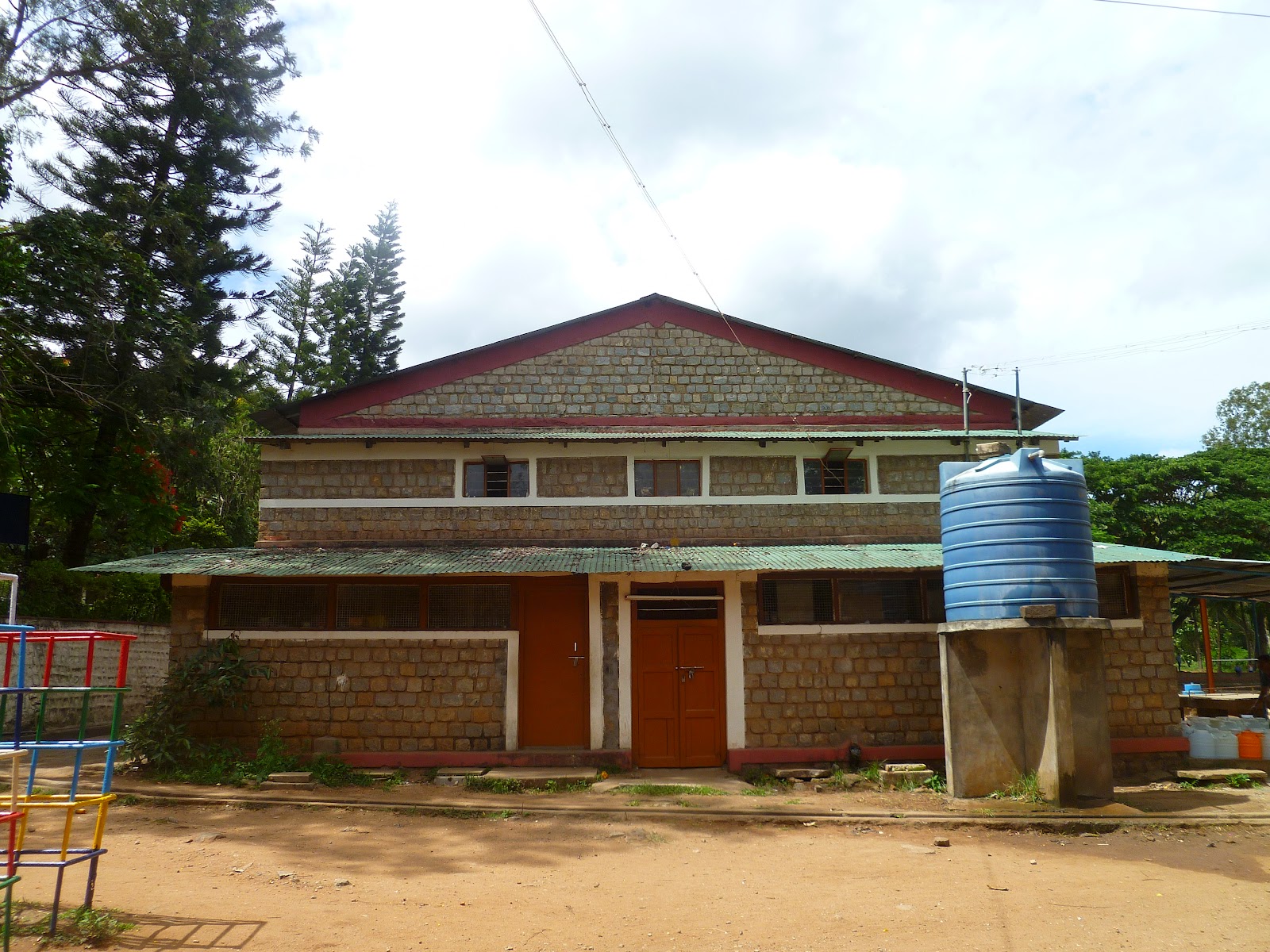
This stone building, nestled in a not-so-quiet corner of the Tibetan Children's Village between the mess hall and the sports field, is home to two wondrous little rooms filled to the brim with those magical implements we call instruments. Pardon me if I wax sentimental, but music rooms are to me what stadiums are to athletes, flea markets to hoarders, back alleys to crack addicts, and churches to the faithful. They are homes, sometimes literally, for stretches of time filling months and years. They are places of joy and pain, highs and lows, friends and frienemies (I never had any, but I saw the phenomenon in the music room regularly). The sound space is singular - what other rooms spend most of their time above a sound pressure level of 90 dB, in an at least semi-musical din?


The four main Tibetan instruments, with parts labeled. Notice the Tibetan, Western, and Indian scale degree equivalency chart in quadrant I (for those of you who forgot which quadrant is I, Descartes' fly on the ceiling is about to give you some terrible disease). The doors on either side lead to the two music/dance rooms.

The soundscape of the room is made more interesting by the pedagogical style I have observed when full classes are taught. The first half of class is spent learning some specific song, technique, or instrument, all by rote and call-and-response. The second half is a kind of free time, where students are meant to practice what they learn while the teacher moves from student to student assisting. Exploration is encouraged, and the result is the very loud, dissonant, and beautiful sound of twenty-five kids messing around on different instruments simultaneously in a small stone room. I noted to Dawa-la, the head music teacher, that I deeply appreciate this teaching method. Music is often taught in a painful way, with no spontaneity or exploration allowed. The focus is usually on not making mistakes, rather than on making music and making connections to the instruments. Some of the most fun and educational experiences I have ever had came from wondering what all the sounds are that a snare drum (etc.) can make, and going on to properly break all the rules I knew and trying my darndest to break rules I hadn't yet heard of. There's a special joy in bending the sound palette of an instrument past sane boundaries, if only for the mental image it conjures up of shock and disgust on an old fuddy-duddy music teacher's face.


Some of the concepts I threw at my drum class the other day. The cascara took a little while to lock in, but they were impressive in the speed they picked it up. Today, I noticed that someone filled the empty space in the top right corner with "Save Tibet!"

In this spirit, and with the injunction from Techung to share more of the best that Western music has to offer with the Bylakuppeans, I have embarked on a very fulfilling mission of reciprocity to my hosts. As I think I have mentioned, I teach drum lessons. There is one class of about 15 students, and two one-on-one classes with students who had the gonads (I have to use the generic term, because Nyidun is a girl) to approach the Inji-Mi and ask for lessons. We have been listening to funk, jazz, prog rock, pop, dance, Afro-Cuban stuff - you name it. It's fun to watch the look on kids' faces when they vibe with something that isn't Justin Bieber (J. Biebs, I love you man, but J. Coltrane is more my kind of cat).


One of the boys who digs on hanging around the music room in his free time. Some of these kids school me on dramyen. It's awesome.

In the spirit of the mission Dawa-la has entrusted me with, I also make sure the kids see me practicing their native music and singing in their mother tongue. For one thing, he told me, the teachers are always trying to convince the students of the richness of Tibetan culture, especially music and dance, and sometimes use as an illustration the Westerners (Injis) who come to their communities to learn Tibetan music. The injis, they say, wouldn't spend so much money and time to travel halfway around the world unless there was something very important and beautiful to uncover. The thing is, the students in Bylakuppe never actually see these injis, because Dharamsala in the north is the normal pilgrimage site for interested musicians. Dawa-la has tried to impart to me the impact of having a real, live inji in their midst. Forget about any musical aptitude I may or may not have. I have come from the land of Taylor Swift to learn dramyen. Dawa-la's hope, and I've seen some small evidences of his hope being fulfilled, is that the excitement of a Westerner learning dramyen might help some of the students take another look at their own musical tradition (without necessarily losing their interest in Metallica, Green Day, and The Eagles). The dream, for me and for the teachers at the school, is for the students to be able to have a resting point, a foundation, in their own culture, and an appreciation and applied aptitude for it, while also exploring, understanding, and experimenting with the musics of other cultures. It's a little like Sanka's speech in Cool Runnings - if I dress Jamaican, talk Jamaican, walk Jamaican, and is Jamaican, then I damn well better bobsled like a Jamaican. I don't see a thing wrong with a refugee picking up a guitar and learning "Hotel California," any more than I have a problem with an American college student traveling to India to learn dramyen, but I dig on the whole thing more if a native flair, fire, and spirit is retained. As another illustration, I was expressing some worry today over the accent I am using to sing the Tibetan lyrics in the song I will be performing at His Holiness' birthday (less than 35 hours from now!), and Dawa-la told me (and I'm paraphrasing),

"You are a Westerner. You won't sound Tibetan. It doesn't matter. You being there, up on that stage, and participating in our celebration in your own way - that's what people want to see. They'll love it. Just focus on the song."

That kind of embracing of two cultures simultaneously while recognizing one as your own is what I am coming to love and believe in more and more.

Words in Tibetan script, music in do-re-mi notation (1=do, 2=re, etc. A line under a phrase doubles its speed)

Back to the building, and the title of this post. I have this thing with physical space and environments and the ways they influence, enable, and inhibit artistic expression. For example, I have never been told more times in my life to play and sing louder. These dudes and chicks have serious pipes. I was practicing in the empty music room today when I heard a group in the other room start singing. It sounded like there were eight or so people singing. There were three. My theory, and maybe one day I'll prove it, is that coming from a physical space like the one in the Himalayas influences the cultures that inhabit it to fill the space with their music, and also uninhibits/never creates the volume sanctions that city-dwellers develop so as not to step on their neighbor's sound space. The alpenhorn in Switzerland are a similar case of huge instruments filling the forever-space, and the didgeridoo of the Australian Aborigines is another. (in a reverse example, electronic keyboards with headphone jacks took off in relatively cramped suburban America).

Focusing down to the microcosm of my current subject, music rooms are perfect spaces. They are made sacred by noise, sometimes disjointed and sometimes polished, and also make sacred and untouchable the noise-making desires of their inhabitants (untouchable, that is, by the normal workings of the outside world. If the students in the math building next door are taking a test, to hell with them, but if there is a performance on the stage above the music room then the music room's sacred space is extended and its internal system of governance applies). Music rooms are canvases for the painting of soundscapes. Returning to sentimentality, they are places for the realizing of dreams, and for the dreaming of new ones. They are vehicles for expression as vital and vibrant as the instruments they house.

[Similarly, for any interested parties, musical instruments are perfect objects embodying an infinite realm of possibilities, and make great gifts for all your poor friends who just spent all their money on trips to India]

Without a space where noise and experimentation are unrestricted, or at least are governed by a very different set of rules than the outside world, there can be very little in the way of musical learning. In this particular case, cultural preservation of a diasporic people depends on the existence of such a space. Further, the cultural interaction that takes place when one kid is playing an electric guitar and the kid one chair over is playing dramyen is unlikely without a space that houses both instruments and allows for the necessary noise. I believe this kind of interaction is vital to the way modern cultures progress - not vital in the sense of "needed for this good thing to happen," but in the sense of "foundational and integral to a natural process," and not progress in the sense of "improve," but simply in the sense of "moving forward." In other words, the tide of cultural change in the world is propelled by the existence of two or more distinct cultural implements (physical or otherwise) in shared spaces where they are allowed a degree of use. This may seem rather obvious and even mundane, and perhaps it is, but there is something stirring about watching the fluidity with which these students switch between and mix cultures, and there is something true about letting go of ideas of "Western" and "Tibetan" and watching the students simply live. This particular space has created a venue for this fluidity and unique way of creating identity. Other venues, for further exploration another time, include the pirate shops that sell mp3 cds of Bollywood and American music, the internet cafes with headphones at every stall (by the by, the internet cafe Lori and I frequent plays "All I Want for Christmas is You" over their speaker system every time I'm there), cell phones the monks use to play music while walking, and parties with music blasting. These places house and juxtapose music available to and popular in the community, and give some clues as to what music is housed in the hearts and brains of the people. While not quite as perfect a space as a music room, as they are all based on consumption rather than creation, they are indicative of and drivers of musical cultural exchange.

This ends my post. The pictures here are for general interest and for you, Dr. Grimshaw. There are more where these came from. Credit goes to Lori for agreeing to be my photographer for a few hours.


You know a student is serious when he shows up to a lesson wearing a v-neck t-shirt with a drum set and the word "ROCK" emblazoned in classic heavy metal font. This kid is good, and plays a mean guitar too.

A common sight - three dranyen chilling on the ground next to the kit. The one in the middle is using a kata, or Tibetan Buddhist blessing scarf, as an improvised strap.

Me with one of my teachers, Tsering Palden. This guy blows me away. I'll put up a recording when I get a chance. Yes ladies, he is single. And good with kids.

Tuesday, June 5, 2012

Ears Wide Open


Dig on India, man. On the same street you've got a Hindu temple, a buzzing bus station, mango hawkers, cell phone dealers, sari stitchers, Levi wearers thumbing through branded T-shirts, a thousand flies and all their cousins, the constant trickle of the open sewers, beggars clinking coins and rustling paper, the clack of coconut shells piling higher, and ringtones telling you you could be my chamak challo or J. Bieb's baby baby baby oh. Monks in maroon and saffron huddle laughing around laptops and Cokes while matrons in chupas mutter chants and thumb through  worn sets of prayer beads, watching the ladies in burkas barter for fruit. Walk a little further and glance over the side of the bridge, and the rhythmic thwack of mothers beating their clothes against boulders in the brown water meets the lowing of cattle that just walked in front of a hip rickshaw driver blaring the newest from Bollywood. Only the dogs are silent, quietly watching for a dropped biscuit from a toddler or a scrap from the butcher.

In this soundscape lives the Tibetan diaspora in Bylakuppe. Kushal Nagar, the closest big town, is a center of tourist activity for Indians going on a summer holiday to the higher, cooler ghats and hill stations of southwest India. The town caters to the fifteen thousand or more Tibetans, with signs advertising "Tibetian dress specialists" proudly capping the tailor stalls. Fifty rupees by rickshaw away lay the camps themselves, a sprawling verdant community of rolling hills and cement houses.  The sounds of tractors and motorcycles take over, accompanied by industry and, in the distance, the clapping of monks in debate. Unabashedly Buddhist, speakers chant mantras from rooftops and His Holiness teaches the finer points of compassion from a speaker near the catfish pond as devotees earn merit by feeding the aquatic residents glucose cookies, rolls, and day old bread. The children and I look upon this activity as one of sharing, as a good half of the cookies crunch happily in our mouths as the other half are slurped up by the "fishes with moustaches."  In the quiet parts of the day, the silence is made more conspicuous as motorcycle drivers turn off their engines to coast down the easy slopes in beautiful unhurried bliss. Six a.m. the next morning, the buzzing of my little three-sectioned friends reaches a crescendo, the siren-song of the birds climaxes, and chants from rooftop sound systems begin anew as I roll over to hear my wife's soft, slow, sleeping breathing. 

At least, that's how I hear it.


Monday, February 6, 2012

Annotated Source

POPULAR MUSIC IN GEOGRAPHICAL ANALYSES by LILY KONG 
DEPARTMENT OF GEOGRAPHY 
NATIONAL UNIVERSITY OF SINGAPORE 
10 KENT RIDGE CRESCENT SINGAPORE 0511
PROGRESS IN HUMAN GEOGRAPHY 1995
Vol. 19, pp 183-98. 


I've been seeing this lady's name everywhere since I started this venture, and now I know why. The last 17 years of studies involving place and music and identity owe Lily Kong for much of their vision and legitimacy. She outlines in a very thorough way what has been done and what needs to be done, and so constructs the theoretical framework for analyzing popular music from a human/cultural geography perspective. I have extracted the main points of this paper.


Why pop music?
    Pervasiveness - every culture has popular music woven into its popular culture
    Thus, it can be used to assist in understanding the character and identity of places. "Whatever you feel from the music is what it feels like to be there." - David Thomas, quoted in Jarvis, 1985:121.
    It is a medium through which people convey environmental experiences - creating social systems - and is also the outcome of environmental experience - recreating social systems.


5 trends in the literature up through '95
1. Concern with spatial distribution of musical: forms, activities, performers, personalities.
2. Musical hearth and diffusion: contagion, relocation, hierarchical diffusion
3. Delimitating areas that share certain musical traits: global, regional
4. Character and identity of places gleaned from: lyrics, melody, instrumentation, general "feel"
5. Thematic analysis of lyrics


4 shortcomings of the literature up through '95
1. No engagement with social and political contexts
2. No recognition of space and experienced space as social constructions, or how music might affect or contribute to such constructions
3. Little sense of music as an object of consumption, or how the consumption of music might transform the music
4. Importance of music as a contributor to social identities largely ignored


4 suggestions for research directions
1. Analysis of symbolic meanings
2. Music as cultural communication
3. Cultural politics of music
4. Musical economies


Music constructs and deconstructs identities through:
   musical texts
     rhythm
     lyrics
     distinctive styles
   intertexts
     posters
     videos
     T-shirts
     Fashion
   local activities
     band practice
     competitions
     karaoke


Suggested methods:
    examine and analyze musical texts, intertexts, and activities
    interview, interview, interview - especially those who produce music and who are responsible for "bringing it all together" (DJs, etc.)
   look at it from a "consumption" point of view:
      physical
      emotional
      cognitive
   look at it from an "involvement" point of view:
      exposure
      consumption
      use
   participant observation is key, completely indispensable. Attend concerts, parties, or go crazy and join the band (a la Keila Diehl).


This article opened my mind in a big way to the possibilities and directions I can go. Now the hard part is choosing some to focus on... Thankfully, I don't have to commit too hard until I get in the field and see what the situation is in Bylakuppe.


Party on, Garth.

Wednesday, February 1, 2012

The Matrix (of Influence)

Thanks, rem, whoever you are, for inspiring this blog post. At the beginning of this blogging adventure, I kind of jumped in and started picking apart some specifics of the Tibetan cultural issue without giving a more general framework. It's-a time for the framework.

Taking Diehl's cue, we'll do this spatially, assigning different cultural influences to each of the cardinal directions. We'll start with south and west. To the south (taking Dharamsala, the seat of the Tibetan Government-in-Exile, as center), we have:

Bollywood! And all the other -ollywoods!
Shahrukh Khan, my freakin' hero. Ladies, there are much better pictures of his muscles online, but I'm keeping this strictly BYU-rated (really though, I just don't want to make all the guys jealous of Shahrukh's raging pectorals).
The beautiful and graceful Aishwarya Rai. If you want to try and find pictures of her pectorals, be my guest, but Bollywood queens are, as of 2012, quite a bit more modest than their Hollywood counterparts. This is, sadly, changing, but for now we can enjoy good ol' family friendly entertainment from most of India's silver screens.
My wife and I have gotten into Bollywood films over the last few months, and I'm starting to feel that if a movie isn't three hours long with at least one redirection of plot and an incredibly dramatic hug at the end, then I've wasted my time and money. The millennia old Indian penchant for dramatic storytelling - the Ramayana has been popular in India for literally thousands of years - has translated easily into film, and is taking the world by storm. Netflix just recently added a sizable Bollywood catalog to their on-demand playlist, including classics as well as brand new offerings.

There are -ollywoods from all over India, each of them having their distinctive style. I don't know much about these other cultural centers, but I will make a point of researching them so I will know their influence if and when I see it in Bylakuppe.

Now to the West:

Hollywood and MTV!
(Though I'm not sure how relevant MTV is anymore - does anybody out there know?)
Katherine Heigl - Lori and I just saw this, and we think she rocks.
Jay-Z and Alicia Keys - two of my favorite and, I think, two of the most honest-to-goodness talented people in the biz today
  The movie and music industries of the West, of the US particularly, are without question the biggest influences on pop culture worldwide. K'Naan grew up in Somalia listening to Tupac and Biggie, gamelan kids in Bali wear Metallica T-shirts, and Disney is ubiquitous worldwide. The internet has made the whole library of western media available anywhere with a connection, and cheap pirated copies of CDs and DVDs are available in most countries. The flash, glitz, and freedom of western expression is particularly attractive, especially to traditionally "repressed" people. Musicians and actors in the US do whatever the hell they want - so it seems and so it is. Rock and roll, particularly, represents for many cultures what it represented when it first came to the scene in the US - raw expression, freedom, sexuality, and rebellion. Tibetan rock, from my little knowledge of it, represents a bit of a counterculture - not against HH or the Tibetan mainstream, but against Chinese oppression and domination. It's rebel music, as much as Bob Marley's was.

Note the leather jacket and shades! James Dean, Elvis Presley anyone?!

So, there you go. More to come in the next exciting episode.

Monday, January 23, 2012

The Effects of Place on Music, and Vice Versa

Lori and I were looking at places to visit while in India, and boy are there a lot to look at. The state of Karnataka, which houses our little refugee community, is a tropical and cultural paradise. The place is incredibly green, and incredibly full of temples, shrines, and people (though, thankfully, Bylakuppe is spared from the denseness of population of, say, another refugee settlement like Dharamshala.). Nothing could be more different from the place the refugees have come from - the cold, expansive desert of the "roof of the world."

Hampi, in Karnataka

Tibet!

The interrelationship of environment and music has just recently become a topic of serious inquiry in scholarly circles, particularly among those who call themselves "human" or "cultural" geographers. Topics as wide as the use of music to forward industry in failing communities to the musical habits of geriatric groups in small towns have produced in-depth studies, and the cultural geography community, as well as those who benefit from their research, are taking a closer listen to the human family. Looking at these pictures of different landscapes got me thinking - how has the transition from the Tibetan highlands to the Indian lowlands affected the production of music in Bylakuppe? Tibetan monastic music, as well as folk music (particularly shepherd song), is definitely a product of the acoustic phenomena present in the Himalaya, just as much as Gregorian chant is a product of the long reverberation times of large cathedrals (but, after the genesis of the chant, the interplay between music and cathedral building is hard to follow - did the cathedrals get bigger so reverb times could grow, or did the composers write in response to increased church size?). The huge horns, loud cymbals, and large drums of Tibet are instruments designed to travel across the vast plains and echo off the never-ending white-capped walls of the eternal mountains. On the folk side, the plaintive song of the shepherd immediately directs the imagination in the direction of the lone protector of the flock leading his livelihood through mountain passes. What happens to these songs when translated into the densely attenuated echo-space produced by thick forests and tropical rain?

Looking at music this way, perhaps singing the traditional songs of the homeland is a way to travel there for a few moments, to relive and recapture the freedom of wide-open spaces and the safety of living nestled between mountain-sentinels. And perhaps the new musics being produced by youth represent not only the shrinking world village and crosstalk of cultures enabled by internet and a new physical location, but also reflect the polarity of the green environment they have grown up in compared with their parents' white ancestral home. In a conversation with a classmate who has lived in a Tibetan community, I found that the longer a Tibetan family has been in India, the more they shift their culinary preferences toward ingredients readily found in India, and drink less butter-tea and eat less tsampa. Are the Himalayan horns and cacophonous drums being traded for nagaswaram and mridangam? Or for drum sets and electric guitars? And what of Tibetan music is persistent, responding little or not at all to the changed physical and cultural climate? 

These questions, I insist in accord with a main premise of ethnomusicology, are important for not only artistic purposes but for the wider and grander purpose of coming to a greater understanding of identity, for it is in the artistic expression of a people that the finer ineffable points of what it means to be human, and what it means to be a human in a particular time and place, begin to surface.

There is, of course, the problem of defining what exactly "Tibetan-ness" is, but that remains for another time.