
About Me

My photo
Halloo! When I found out I could go to med school with a Humanities degree with an Ethnomusicology emphasis, I almost peed myself. Here's to me holding it in.
Showing posts with label geography. Show all posts

Wednesday, July 4, 2012

Dreams, Wings, and Other Things


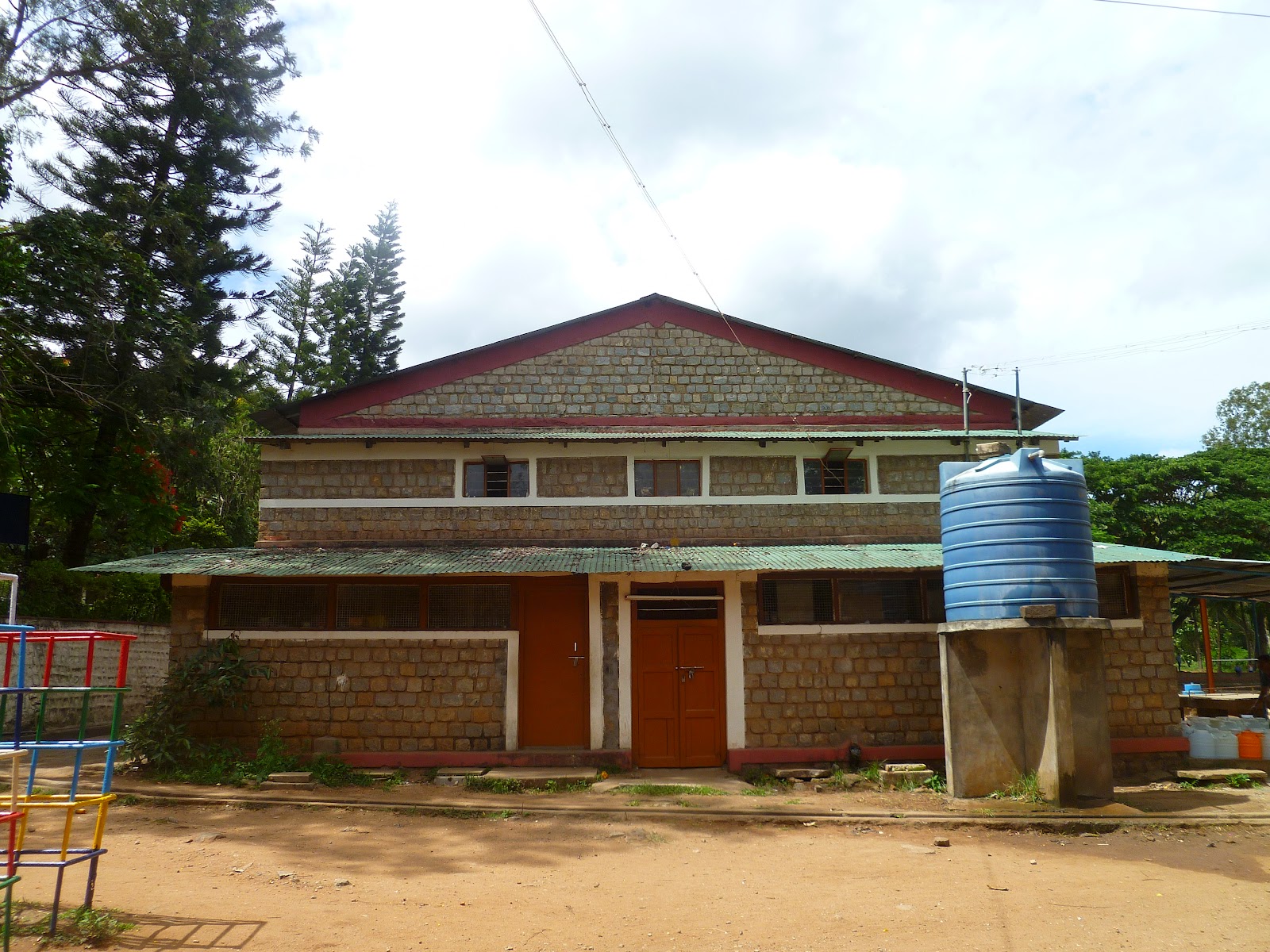
This stone building, nestled in a not-so-quiet corner of the Tibetan Children's Village between the mess hall and the sports field, is home to two wondrous little rooms filled to the brim with those magical implements we call instruments. Pardon me if I wax sentimental, but music rooms are to me what stadiums are to athletes, flea markets to hoarders, back alleys to crack addicts, and churches to the faithful. They are homes, sometimes literally, for stretches of time filling months and years. They are places of joy and pain, highs and lows, friends and frienemies (I never had any, but I saw the phenomenon in the music room regularly). The sound space is singular - what other rooms spend most of their time above a sound pressure level of 90 dB, in an at least semi-musical din?


The four main Tibetan instruments, with parts labeled. Notice the Tibetan, Western, and Indian scale degree equivalency chart in quadrant I (for those of you who forgot which quadrant is I, Descartes' fly on the ceiling is about to give you some terrible disease). The doors on either side lead to the two music/dance rooms.

The soundscape of the room is made more interesting by the pedagogical style I have observed when full classes are taught. The first half of class is spent learning some specific song, technique, or instrument, all by rote and call-and-response. The second half is a kind of free time, where students are meant to practice what they learn while the teacher moves from student to student assisting. Exploration is encouraged, and the result is the very loud, dissonant, and beautiful sound of twenty-five kids messing around on different instruments simultaneously in a small stone room. I noted to Dawa-la, the head music teacher, that I deeply appreciate this teaching method. Music is often taught in a painful way, with no spontaneity or exploration allowed. The focus is usually on not making mistakes, rather than on making music and making connections to the instruments. Some of the most fun and educational experiences I have ever had came from wondering what all the sounds are that a snare drum (etc.) can make, and going on to properly break all the rules I knew and trying my darndest to break rules I hadn't yet heard of. There's a special joy in bending the sound palette of an instrument past sane boundaries, if only for the mental image it conjures up of shock and disgust on an old fuddy-duddy music teacher's face.


Some of the concepts I threw at my drum class the other day. The cascara took a little while to lock in, but they were impressive in the speed they picked it up. Today, I noticed that someone filled the empty space in the top right corner with "Save Tibet!"

In this spirit, and with the injunction from Techung to share more of the best that Western music has to offer with the Bylakuppeans, I have embarked on a very fulfilling mission of reciprocity to my hosts. As I think I have mentioned, I teach drum lessons. There is one class of about 15 students, and two one-on-one classes with students who had the gonads (I have to use the generic term, because Nyidun is a girl) to approach the Inji-Mi and ask for lessons. We have been listening to funk, jazz, prog rock, pop, dance, Afro-Cuban stuff - you name it. It's fun to watch the look on kids' faces when they vibe with something that isn't Justin Bieber (J. Biebs, I love you man, but J. Coltrane is more my kind of cat).


One of the boys who digs on hanging around the music room in his free time. Some of these kids school me on dramyen. It's awesome.

In the spirit of the mission Dawa-la has entrusted me with, I also make sure the kids see me practicing their native music and singing in their mother tongue. For one thing, he told me, the teachers are always trying to convince the students of the richness of Tibetan culture, especially music and dance, and sometimes use as an illustration the Westerners (Injis) who come to their communities to learn Tibetan music. The injis, they say, wouldn't spend so much money and time to travel halfway around the world unless there was something very important and beautiful to uncover. The thing is, the students in Bylakuppe never actually see these injis, because Dharamsala in the north is the normal pilgrimage site for interested musicians. Dawa-la has tried to impart to me the impact of having a real, live inji in their midst. Forget about any musical aptitude I may or may not have. I have come from the land of Taylor Swift to learn dramyen. Dawa-la's hope, and I've seen some small evidences of his hope being fulfilled, is that the excitement of a Westerner learning dramyen might help some of the students take another look at their own musical tradition (without necessarily losing their interest in Metallica, Green Day, and The Eagles). The dream, for me and for the teachers at the school, is for the students to be able to have a resting point, a foundation, in their own culture, and an appreciation and applied aptitude for it, while also exploring, understanding, and experimenting with the musics of other cultures. It's a little like Sanka's speech in Cool Runnings - if I dress Jamaican, talk Jamaican, walk Jamaican, and is Jamaican, then I damn well better bobsled like a Jamaican. I don't see a thing wrong with a refugee picking up a guitar and learning "Hotel California," any more than I have a problem with an American college student traveling to India to learn dramyen, but I dig on the whole thing more if a native flair, fire, and spirit is retained. As another illustration, I was expressing some worry today over the accent I am using to sing the Tibetan lyrics in the song I will be performing at His Holiness' birthday (less than 35 hours from now!), and Dawa-la told me (and I'm paraphrasing),

"You are a Westerner. You won't sound Tibetan. It doesn't matter. You being there, up on that stage, and participating in our celebration in your own way - that's what people want to see. They'll love it. Just focus on the song."

That kind of embracing of two cultures simultaneously while recognizing one as your own is what I am coming to love and believe in more and more.

Words in Tibetan script, music in do-re-mi notation (1=do, 2=re, etc. A line under a phrase doubles its speed)

Back to the building, and the title of this post. I have this thing with physical space and environments and the ways they influence, enable, and inhibit artistic expression. For example, I have never been told more times in my life to play and sing louder. These dudes and chicks have serious pipes. I was practicing in the empty music room today when I heard a group in the other room start singing. It sounded like there were eight or so people singing. There were three. My theory, and maybe one day I'll prove it, is that coming from a physical space like the one in the Himalayas influences the cultures that inhabit it to fill the space with their music, and also uninhibits/never creates the volume sanctions that city-dwellers develop so as not to step on their neighbor's sound space. The alpenhorn in Switzerland are a similar case of huge instruments filling the forever-space, and the didgeridoo of the Australian Aborigines is another. (in a reverse example, electronic keyboards with headphone jacks took off in relatively cramped suburban America).

Focusing down to the microcosm of my current subject, music rooms are perfect spaces. They are made sacred by noise, sometimes disjointed and sometimes polished, and also make sacred and untouchable the noise-making desires of their inhabitants (untouchable, that is, by the normal workings of the outside world. If the students in the math building next door are taking a test, to hell with them, but if there is a performance on the stage above the music room then the music room's sacred space is extended and its internal system of governance applies). Music rooms are canvases for the painting of soundscapes. Returning to sentimentality, they are places for the realizing of dreams, and for the dreaming of new ones. They are vehicles for expression as vital and vibrant as the instruments they house.

[Similarly, for any interested parties, musical instruments are perfect objects embodying an infinite realm of possibilities, and make great gifts for all your poor friends who just spent all their money on trips to India]

Without a space where noise and experimentation are unrestricted, or at least are governed by a very different set of rules than the outside world, there can be very little in the way of musical learning. In this particular case, cultural preservation of a diasporic people depends on the existence of such a space. Further, the cultural interaction that takes place when one kid is playing an electric guitar and the kid one chair over is playing dramyen is unlikely without a space that houses both instruments and allows for the necessary noise. I believe this kind of interaction is vital to the way modern cultures progress - not vital in the sense of "needed for this good thing to happen," but in the sense of "foundational and integral to a natural process," and not progress in the sense of "improve," but simply in the sense of "moving forward." In other words, the tide of cultural change in the world is propelled by the existence of two or more distinct cultural implements (physical or otherwise) in shared spaces where they are allowed a degree of use. This may seem rather obvious and even mundane, and perhaps it is, but there is something stirring about watching the fluidity with which these students switch between and mix cultures, and there is something true about letting go of ideas of "Western" and "Tibetan" and watching the students simply live. This particular space has created a venue for this fluidity and unique way of creating identity. Other venues, for further exploration another time, include the pirate shops that sell mp3 cds of Bollywood and American music, the internet cafes with headphones at every stall (by the by, the internet cafe Lori and I frequent plays "All I Want for Christmas is You" over their speaker system every time I'm there), cell phones the monks use to play music while walking, and parties with music blasting. These places house and juxtapose music available to and popular in the community, and give some clues as to what music is housed in the hearts and brains of the people. While not quite as perfect a space as a music room, as they are all based on consumption rather than creation, they are indicative of and drivers of musical cultural exchange.

This ends my post. The pictures here are for general interest and for you, Dr. Grimshaw. There are more where these came from. Credit goes to Lori for agreeing to be my photographer for a few hours.


You know a student is serious when he shows up to a lesson wearing a v-neck t-shirt with a drum set and the word "ROCK" emblazoned in classic heavy metal font. This kid is good, and plays a mean guitar too.

A common sight - three dranyen chilling on the ground next to the kit. The one in the middle is using a kata, or Tibetan Buddhist blessing scarf, as an improvised strap.

Me with one of my teachers, Tsering Palden. This guy blows me away. I'll put up a recording when I get a chance. Yes ladies, he is single. And good with kids.

Friday, February 24, 2012

Queen Kong Does it Again


Environment and Planning D; Society and Space 1996, volume 14, pages 273-292

Popular music in Singapore: exploring local cultures,
global resources, and regional identities
Lily Kong
Department of Geography, National University of Singapore, 10 Kent Ridge Crescent,
Singapore 119260
Received 21 March 1995; in revised form 12 September 1995

'Geographers concerned with the ways in which local communities are drawn into global arenas and with the means by which global forces become resources for indigenous modification, may thus find music
a worthwhile research area. In this way, "music is integral to the geographical
imagination" (Smith, 1994, page 238), and deserves more space on geographers'
research agenda.'

The more I read Lily Kong, the more I realize why everybody who is anybody in musical human geographies cites her. Her writing style is lucid and accessible, and the arguments she makes are too. Many of the basic ideas I seek to explore in Bylakuppe are present in her works and the works of the other human geographers she has empowered through her seminal writings. Add her and Kiela Diehl together and you have someone who would do incredible things with my project, things I'm sure I haven't yet dreamt of.

The big ideas in this article are the local vs. global views of acculturation, and whether local versus global is the real issue. Perhaps it's not so much a battle, and in any case seeing it as a battle is only marginally useful in research because battles tend to push one towards taking a side. Perhaps it is better to look at a local and global model of acculturation, addressing the issue from all sides. Again, she uses the theoretical framework of "text, intertext, and context," which I love. Lyrics and aural content are examined, as is common in musicological studies, and context/environment (family, national, political, social, etc.) is also examined per normal course. The inclusion of intertext is a wonderful and unique way of tying it all together - what clothes are the musicians and listeners wearing, what goes on the album art, what food and drink are associated (if any), and on and on. Taking in the whole musical scene becomes the essential work of the day. Kong analyzes the person and work, as well as the reception and critical review, of a famous Singaporean pop star, Dick Lee. His music is a lot of fun to listen to - a few tracks are on youtube, if you are interested. The result is a fascinating and satisfying look into music, expression, and identity.

In Bylakuppe, I don't want to spend all my time analyzing texts, or learning instruments, or taking notes of what kids are wearing or listening to - I want to spend time with people, first and foremost, and do all of the above mentioned activities as they are relevant. Since I don't really know what I will find, it would be foolish to go in looking for too specific an idea to test - the set-in-stone idea may not even be relevant, and in any case might blind me to things more interesting and vital. The way I look at things, people are the music they make, and vice versa. I don't mean that a singer believes every word they ever sing, or that the emotion they have to reproduce every night in performance has to be fresh and entirely heartfelt, but that a person choosing (or being forced, as was the case for the great Art Blakey) to make music of any type reveals something vital about their character and environment. Maybe a Chinese national singing an anthem doesn't quite buy into the words about the greatness of their leader, or perhaps that guy singing next to you in church doesn't believe at all - the fact of musical production in such circumstances is itself a fascinating manifestation of personal and cultural phenomena. Music is a struggle, and music is easy, all at the same time. Looking at the music itself (the "text"), the context, and the intertext in a holistic method is a powerful way to get at the heart of the human experience, and a powerful way to get at the heart of a particular human's experience.

Friday, January 27, 2012

The World is Sound?


The World Is Sound? Geography, Musicology and British-Asian Soundscapes
Author(s): Tariq Jazeel
Source: Area, Vol. 37, No. 3 (Sep., 2005), pp. 233-241
Published by: Blackwell Publishing on behalf of The Royal Geographical Society (with the Institute of British Geographers)
Stable URL: http://www.jstor.org/stable/20004456 .
Accessed: 25/01/2012 19:44

Musical geography, while quickly growing as a field of study, hasn't made much foray into treating the production of and pure sonic qualities of music as they relate to place, nor have the politics of music vs. music and politics been adequately treated. This journal article by Tariq Jazeel seeks to begin to address this deficiency. The article has three main sections, and I describe the points that stuck with me from a first reading:

Reappraising the critique of exotica
     Exotica has been, by many scholars, dismissed as not truly representing any of the cultures from which it draws, and is criticized for catering to a middle-class white demographic by "sanitizing" itself. It becomes, in their eyes, artificial and superficial. Jazeel counters these arguments with the recognition that just because something is made for middle class consumption (as is the case for much British-Asian music, which fills the acoustic space of popular British dance clubs), it is not automatically shallow, and that tip-toeing, crisscrossing, and redefining cultural boundaries is something worth seriously examining. Also, British-Asian music, such as that made by Talvin Singh, deals seriously with post-colonial issues, syncretism, and racial dynamics. Artists like Singh, born and raised in Britain but steeped in their South Asian ancestry, float in limbo between being British and being Indian, their identity contested by internal conflict, by assertions of some Britons that people like Singh are "too brown to be British" and by counter assertions by some Indians that people like Singh are "too white to be Indian," using color literally and as a metaphor for cultural norms and boundaries.

Production and expression
     Musical analysis of several songs is undertaken in a qualitative way, detailing the mixing and cohesion of Western and Indian elements. It is interesting to me that not only are West and East mixed, but that Indian musics from different parts of the subcontinent are layered as well. This detail would not be noticed by most Western listeners, but to those with a knowledge of Indian classical music would be most salient.

Consumption and performativity
     The reaction of consumers to the music, particularly in a dance club setting, are explored and problematized. When dancing to a raga in a time signature unfamiliar to the club-goers, for example, the immediacy of expression through dance is challenged. At first, the dancers, used to a four-on-the-floor club rhythm, stutter and struggle to find the rhythm. The ways in which consumers and performers of British-Asian music negotiate and purposefully challenge cultural divides are instructive and tell more of the full story than even demographic survey information can.


VERY useful stuff. Thanks, Tariq.

Monday, January 23, 2012

The Effects of Place on Music, and Vice Versa

Lori and I were looking at places to visit while in India, and boy are there a lot to look at. The state of Karnataka, which houses our little refugee community, is a tropical and cultural paradise. The place is incredibly green, and incredibly full of temples, shrines, and people (though, thankfully, Bylakuppe is spared from the denseness of population of, say, another refugee settlement like Dharamshala.). Nothing could be more different from the place the refugees have come from - the cold, expansive desert of the "roof of the world."

Hampi, in Karnataka

Tibet!

The interrelationship of environment and music has just recently become a topic of serious inquiry in scholarly circles, particularly among those who call themselves "human" or "cultural" geographers. Topics as wide as the use of music to forward industry in failing communities to the musical habits of geriatric groups in small towns have produced in-depth studies, and the cultural geography community, as well as those who benefit from their research, are taking a closer listen to the human family. Looking at these pictures of different landscapes got me thinking - how has the transition from the Tibetan highlands to the Indian lowlands affected the production of music in Bylakuppe? Tibetan monastic music, as well as folk music (particularly shepherd song), is definitely a product of the acoustic phenomena present in the Himalaya, just as much as Gregorian chant is a product of the long reverberation times of large cathedrals (but, after the genesis of the chant, the interplay between music and cathedral building is hard to follow - did the cathedrals get bigger so reverb times could grow, or did the composers write in response to increased church size?). The huge horns, loud cymbals, and large drums of Tibet are instruments designed to travel across the vast plains and echo off the never-ending white-capped walls of the eternal mountains. On the folk side, the plaintive song of the shepherd immediately directs the imagination in the direction of the lone protector of the flock leading his livelihood through mountain passes. What happens to these songs when translated into the densely attenuated echo-space produced by thick forests and tropical rain?

Looking at music this way, perhaps singing the traditional songs of the homeland is a way to travel there for a few moments, to relive and recapture the freedom of wide-open spaces and the safety of living nestled between mountain-sentinels. And perhaps the new musics being produced by youth represent not only the shrinking world village and crosstalk of cultures enabled by internet and a new physical location, but also reflect the polarity of the green environment they have grown up in compared with their parents' white ancestral home. In a conversation with a classmate who has lived in a Tibetan community, I found that the longer a Tibetan family has been in India, the more they shift their culinary preferences toward ingredients readily found in India, and drink less butter-tea and eat less tsampa. Are the Himalayan horns and cacophonous drums being traded for nagaswaram and mridangam? Or for drum sets and electric guitars? And what of Tibetan music is persistent, responding little or not at all to the changed physical and cultural climate? 

These questions, I insist in accord with a main premise of ethnomusicology, are important for not only artistic purposes but for the wider and grander purpose of coming to a greater understanding of identity, for it is in the artistic expression of a people that the finer ineffable points of what it means to be human, and what it means to be a human in a particular time and place, begin to surface.

There is, of course, the problem of defining what exactly "Tibetan-ness" is, but that remains for another time.