About Me

My photo
Halloo! When I found out I could go to med school with a Humanities degree with an Ethnomusicology emphasis, I almost peed myself. Here's to me holding it in.
Showing posts with label jay-z. Show all posts

Thursday, March 22, 2012

Annotated Source

3...
Jay-Z interview on Charlie Rose, 9 November 2007

http://www.charlierose.com/view/interview/8771

This is the second interview Charlie Rose did with Jay-Z.

Some notes:

Jay-Z talks over and over again about how rap saved his life. He was a crack dealer, making good money and driving nice cars, when he decided to go with a friend named Jazz to London to do some shows. His partner in the hustle was stung and went away for twelve years. He decided, based on that experience and some other close calls, to pursue rap as a career. No one would sign him, so him and some friends started their own record company and used skills gained from the hustle to promote themselves. They became successful independently, and then the record label noticed them. 

Rap artists are typically 17-18 years old when they first get signed. 

Russell Simmons is the Godfather of hip-hop entrepreneurship. That's a good place to do more research.
Good ol' Russ


Talking about the problems in the entertainment industry, don't just take the rap industry to task - take the video games industry, the movie industry, on and on.

People give words power - take the N word away and the racist will use another word. The word isn't the issue, it's the feeling behind it.

"Chasin' History" - this will probably be the name of the biography someone will write when Jay-Z dies. He describes the reasons he stays in hip-hop, now that money is no longer a problem, and the biggest reason is what he calls chasin' history. The rap game became a tool for changing history and influencing a whole culture, especially as it could be inspirational for young kids who think the ghetto is all there is. This black crack-dealer from Marcy project became a $450 billion dollar net-worth CEO with 14 Grammy awards - what else is in store? What is possible?
The Assimilated Negro: Chasing History: Jay-Z & Charlie Rose
Urban Dictionary: chasing history

"Rap is a competitive sport"- taking shots is part of the game, and it usually isn't personal at all. People who want to go somewhere have to grow a thick skin, and the more jabs taken the more successful the jabbee probably is.

Jay-Z took the CEO position at Def Jam Recordings as a way to 1) be creative in another outlet, and 2) be an example to the artist community, proving that it doesn't always have to be some old dude who never touched a mic running the show, and that young black kids can and should aspire to greatness in any field, including the white dominated business field.


I've been thinking about the worthwhileness of these interviews as annotated sources, and I stand by the decision. Not much of this will make its way into the project proposal, but it will serve the purpose of true research - it has made me more conversant in a topic that will be important to me personally and to the people I live with in my study location, and will link directly with the project in a major way. I can't go into a community without a background in the important topics and expect to have any credence or respectability. So, here I am, annotating interviews with the King of America. I have the coolest major.

And, just so you don't think I'm making shiz up:

Rolling Stone said it. I agree.

Annotated Source

4...
Q&A with Jay-Z , 8 December 2010

http://www.charlierose.com/view/interview/11374

After the interview at the Brooklyn Museum, the stage was opened for questions. The Q&A session lasted about an hour.

About the music industry and where Jay-Z wants to take it:

The music industry screwed up an opportunity to modernize when Napster became big, but, in a way, the internet might save the industry. As the sales of records in brick and mortar stores goes down and as illegal downloading increases, the draw of becoming a rap star decreases. People who got into the rap scene in the beginning knew, just knew, that money wasn't part of the equation, and rappers had to have a love of the game. As the mid-90s came and rap became lucrative, many rappers got into the industry not for artistry but for money. Jay-Z laments this, and sees the internet as a way to weed out those who aren't really in it for what he considers pure reasons. With so much music coming down the tube, and with the power of the record labels being thus reduced, the cream will rise. It's interesting to me that someone who has made so much money from record sales would support a new way of doing things that threatens the bottom line but could possibly produce better art.

"Rap is dead" by NaS is a sentiment echoed across the industry. Jay-Z views it as a challenge, which vibes with the other responses I have heard. Rap has died to a degree, due to the huge amounts of money involved, and there is a lamentation echoing off the Brooklyn walls. Kids making rap in communities where money isn't going to be part of the equation just might be part of the solution.

I like the recognition that the internet has changed things so much, and it will be fun to see to what extent this has affected Bylakuppe.

Annotated Source

5...

27 October 2004 Jay-Z interview, Charlie Rose

Charlie Rose has interviewed Jay-Z 3 major times. This interview from 2004 was the first.

http://www.charlierose.com/view/interview/1211

Here are some of my notes from the interview.

Roc-a-fella brand name came (obviously) from Rockefeller, but why? Rock and roll, in many ways, discouraged monetary success, or the appearance of it. You have to stay grungy, keep wearing the leather jackets and smoking the cheap cigarettes (this is a sweeping statement, and not true in all cases). Hip-hop, from the beginning, has been about an aspiration to affluence. The dream of the kids from the projects is to get money, pay for their parents' houses, keep their friends fed and happy, etc. I think this is part of why hip-hop is popular among most minorities - there is an unabashed drive to get paid and get comfortable. Rockefeller represents all of that, and Roc-a-fella strove for that too.

"Hip-hop is what you live. Rap is what you do."

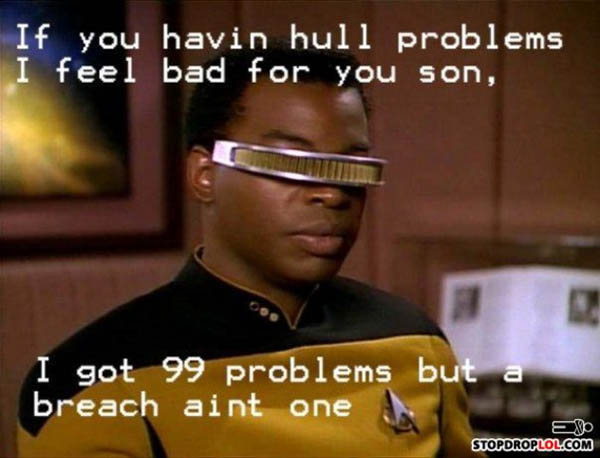
99 Problems (famous song - I'm sure most of you know it)

is not about women at all. The first verse is about the industry and its problems, the second verse is about a K9 unit (play on words in more than one way, if you know which problem Jay doesn't have), and the third verse is about getting punked and played. It goes into race relations, about good people who do bad things (who make a living doing bad things), etc. It is a great example of a song that seems, on the surface, to be about misogyny and braggadocio, but turns out to be much deeper. In analyzing hip-hop verse, it is essential to understand context and the truth that the hip-hop artist has to hide deep issues beneath a rough surface, or else it won't sell well enough to reach the audience the artist wants to affect.


This last one is for Charli.