About Me

My photo
Halloo! When I found out I could go to med school with a Humanities degree with an Ethnomusicology emphasis, I almost peed myself. Here's to me holding it in.
Showing posts with label folk music. Show all posts

Wednesday, July 4, 2012

Dreams, Wings, and Other Things


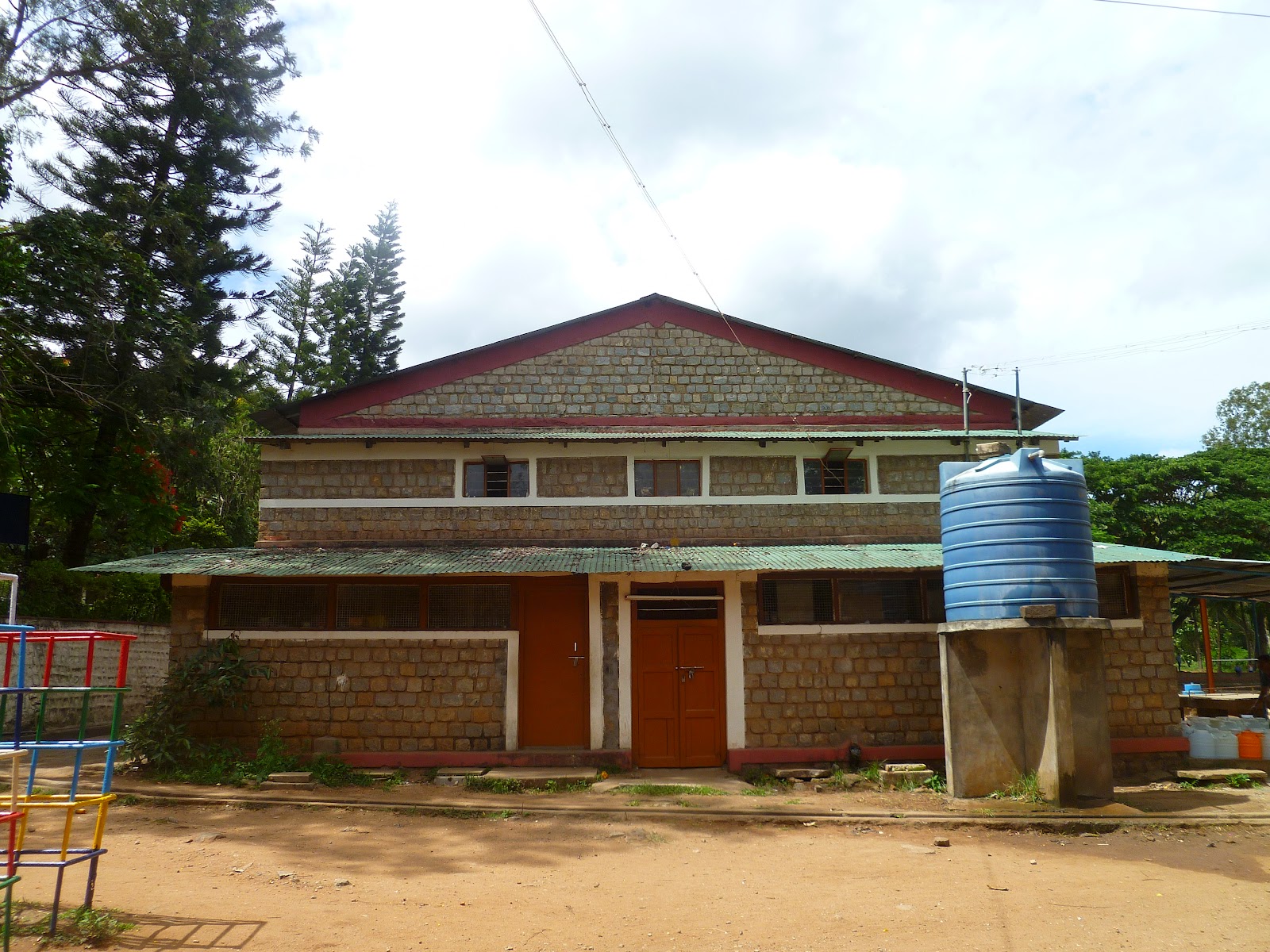
This stone building, nestled in a not-so-quiet corner of the Tibetan Children's Village between the mess hall and the sports field, is home to two wondrous little rooms filled to the brim with those magical implements we call instruments. Pardon me if I wax sentimental, but music rooms are to me what stadiums are to athletes, flea markets to hoarders, back alleys to crack addicts, and churches to the faithful. They are homes, sometimes literally, for stretches of time filling months and years. They are places of joy and pain, highs and lows, friends and frienemies (I never had any, but I saw the phenomenon in the music room regularly). The sound space is singular - what other rooms spend most of their time above a sound pressure level of 90 dB, in an at least semi-musical din?


The four main Tibetan instruments, with parts labeled. Notice the Tibetan, Western, and Indian scale degree equivalency chart in quadrant I (for those of you who forgot which quadrant is I, Descartes' fly on the ceiling is about to give you some terrible disease). The doors on either side lead to the two music/dance rooms.

The soundscape of the room is made more interesting by the pedagogical style I have observed when full classes are taught. The first half of class is spent learning some specific song, technique, or instrument, all by rote and call-and-response. The second half is a kind of free time, where students are meant to practice what they learn while the teacher moves from student to student assisting. Exploration is encouraged, and the result is the very loud, dissonant, and beautiful sound of twenty-five kids messing around on different instruments simultaneously in a small stone room. I noted to Dawa-la, the head music teacher, that I deeply appreciate this teaching method. Music is often taught in a painful way, with no spontaneity or exploration allowed. The focus is usually on not making mistakes, rather than on making music and making connections to the instruments. Some of the most fun and educational experiences I have ever had came from wondering what all the sounds are that a snare drum (etc.) can make, and going on to properly break all the rules I knew and trying my darndest to break rules I hadn't yet heard of. There's a special joy in bending the sound palette of an instrument past sane boundaries, if only for the mental image it conjures up of shock and disgust on an old fuddy-duddy music teacher's face.


Some of the concepts I threw at my drum class the other day. The cascara took a little while to lock in, but they were impressive in the speed they picked it up. Today, I noticed that someone filled the empty space in the top right corner with "Save Tibet!"

In this spirit, and with the injunction from Techung to share more of the best that Western music has to offer with the Bylakuppeans, I have embarked on a very fulfilling mission of reciprocity to my hosts. As I think I have mentioned, I teach drum lessons. There is one class of about 15 students, and two one-on-one classes with students who had the gonads (I have to use the generic term, because Nyidun is a girl) to approach the Inji-Mi and ask for lessons. We have been listening to funk, jazz, prog rock, pop, dance, Afro-Cuban stuff - you name it. It's fun to watch the look on kids' faces when they vibe with something that isn't Justin Bieber (J. Biebs, I love you man, but J. Coltrane is more my kind of cat).


One of the boys who digs on hanging around the music room in his free time. Some of these kids school me on dramyen. It's awesome.

In the spirit of the mission Dawa-la has entrusted me with, I also make sure the kids see me practicing their native music and singing in their mother tongue. For one thing, he told me, the teachers are always trying to convince the students of the richness of Tibetan culture, especially music and dance, and sometimes use as an illustration the Westerners (Injis) who come to their communities to learn Tibetan music. The injis, they say, wouldn't spend so much money and time to travel halfway around the world unless there was something very important and beautiful to uncover. The thing is, the students in Bylakuppe never actually see these injis, because Dharamsala in the north is the normal pilgrimage site for interested musicians. Dawa-la has tried to impart to me the impact of having a real, live inji in their midst. Forget about any musical aptitude I may or may not have. I have come from the land of Taylor Swift to learn dramyen. Dawa-la's hope, and I've seen some small evidences of his hope being fulfilled, is that the excitement of a Westerner learning dramyen might help some of the students take another look at their own musical tradition (without necessarily losing their interest in Metallica, Green Day, and The Eagles). The dream, for me and for the teachers at the school, is for the students to be able to have a resting point, a foundation, in their own culture, and an appreciation and applied aptitude for it, while also exploring, understanding, and experimenting with the musics of other cultures. It's a little like Sanka's speech in Cool Runnings - if I dress Jamaican, talk Jamaican, walk Jamaican, and is Jamaican, then I damn well better bobsled like a Jamaican. I don't see a thing wrong with a refugee picking up a guitar and learning "Hotel California," any more than I have a problem with an American college student traveling to India to learn dramyen, but I dig on the whole thing more if a native flair, fire, and spirit is retained. As another illustration, I was expressing some worry today over the accent I am using to sing the Tibetan lyrics in the song I will be performing at His Holiness' birthday (less than 35 hours from now!), and Dawa-la told me (and I'm paraphrasing),

"You are a Westerner. You won't sound Tibetan. It doesn't matter. You being there, up on that stage, and participating in our celebration in your own way - that's what people want to see. They'll love it. Just focus on the song."

That kind of embracing of two cultures simultaneously while recognizing one as your own is what I am coming to love and believe in more and more.

Words in Tibetan script, music in do-re-mi notation (1=do, 2=re, etc. A line under a phrase doubles its speed)

Back to the building, and the title of this post. I have this thing with physical space and environments and the ways they influence, enable, and inhibit artistic expression. For example, I have never been told more times in my life to play and sing louder. These dudes and chicks have serious pipes. I was practicing in the empty music room today when I heard a group in the other room start singing. It sounded like there were eight or so people singing. There were three. My theory, and maybe one day I'll prove it, is that coming from a physical space like the one in the Himalayas influences the cultures that inhabit it to fill the space with their music, and also uninhibits/never creates the volume sanctions that city-dwellers develop so as not to step on their neighbor's sound space. The alpenhorn in Switzerland are a similar case of huge instruments filling the forever-space, and the didgeridoo of the Australian Aborigines is another. (in a reverse example, electronic keyboards with headphone jacks took off in relatively cramped suburban America).

Focusing down to the microcosm of my current subject, music rooms are perfect spaces. They are made sacred by noise, sometimes disjointed and sometimes polished, and also make sacred and untouchable the noise-making desires of their inhabitants (untouchable, that is, by the normal workings of the outside world. If the students in the math building next door are taking a test, to hell with them, but if there is a performance on the stage above the music room then the music room's sacred space is extended and its internal system of governance applies). Music rooms are canvases for the painting of soundscapes. Returning to sentimentality, they are places for the realizing of dreams, and for the dreaming of new ones. They are vehicles for expression as vital and vibrant as the instruments they house.

[Similarly, for any interested parties, musical instruments are perfect objects embodying an infinite realm of possibilities, and make great gifts for all your poor friends who just spent all their money on trips to India]

Without a space where noise and experimentation are unrestricted, or at least are governed by a very different set of rules than the outside world, there can be very little in the way of musical learning. In this particular case, cultural preservation of a diasporic people depends on the existence of such a space. Further, the cultural interaction that takes place when one kid is playing an electric guitar and the kid one chair over is playing dramyen is unlikely without a space that houses both instruments and allows for the necessary noise. I believe this kind of interaction is vital to the way modern cultures progress - not vital in the sense of "needed for this good thing to happen," but in the sense of "foundational and integral to a natural process," and not progress in the sense of "improve," but simply in the sense of "moving forward." In other words, the tide of cultural change in the world is propelled by the existence of two or more distinct cultural implements (physical or otherwise) in shared spaces where they are allowed a degree of use. This may seem rather obvious and even mundane, and perhaps it is, but there is something stirring about watching the fluidity with which these students switch between and mix cultures, and there is something true about letting go of ideas of "Western" and "Tibetan" and watching the students simply live. This particular space has created a venue for this fluidity and unique way of creating identity. Other venues, for further exploration another time, include the pirate shops that sell mp3 cds of Bollywood and American music, the internet cafes with headphones at every stall (by the by, the internet cafe Lori and I frequent plays "All I Want for Christmas is You" over their speaker system every time I'm there), cell phones the monks use to play music while walking, and parties with music blasting. These places house and juxtapose music available to and popular in the community, and give some clues as to what music is housed in the hearts and brains of the people. While not quite as perfect a space as a music room, as they are all based on consumption rather than creation, they are indicative of and drivers of musical cultural exchange.

This ends my post. The pictures here are for general interest and for you, Dr. Grimshaw. There are more where these came from. Credit goes to Lori for agreeing to be my photographer for a few hours.


You know a student is serious when he shows up to a lesson wearing a v-neck t-shirt with a drum set and the word "ROCK" emblazoned in classic heavy metal font. This kid is good, and plays a mean guitar too.

A common sight - three dranyen chilling on the ground next to the kit. The one in the middle is using a kata, or Tibetan Buddhist blessing scarf, as an improvised strap.

Me with one of my teachers, Tsering Palden. This guy blows me away. I'll put up a recording when I get a chance. Yes ladies, he is single. And good with kids.

Thursday, April 5, 2012

Looking Ahead

It's best to live in the moment, but living peacefully in the moment usually involves at least a little bit of planning for the future. It's a peace of mind thing, yeah? I'm going to update y'all on where I'm going and what I'm doing after this field study (i.e. Fall semester), and in the process I might figure out a little more of what I actually want from the next 8 months or so.

SCHOOL


Here's my class schedule. It takes up the largest chunk of my time and thought, which is sometimes wonderful and sometimes tedious. It looks pretty good:


I've got the second semester of O-Chem (though if the O-Chem I'm in right now goes badly enough I might just retake it to make sure I've got the concepts down. If I had known the field studies class would function more like a 5-credit class than a 3-credit class, I would have waited to take O-Chem. 15 credits of classes that actually take the time the credits imply is hard enough, but when two of my 3-credit classes should be 5-credit classes, it feels like I'm taking 19. No sleep tonight... :) C'est la vie!). I'll be doing the post-field writing class and putting together a polished something, just to prove I didn't waste my time in India. Humanities 202 will be cool (I love modern art [so shoot me]), Hindi is always great, and Gamelan is a blast. It seems like not a lot, but there are definitely 15 credits up on that picture.

What else do I want to do with my time? Fifteen credits is too boring by itself.
JOB

I need to get a job, for one thing. I would love to work part-time on campus, preferably as a TA (if the field studies program wasn't being kaiboshed I would apply to be a facilitator). Lori is going to be working as full time as possible and taking an online class or two so we can recover from how expensive this whole thing has been and save up for tuition, kids, and maybe even a little nest egg.

NONPROFIT


I have an idea for a nonprofit organization that does crowd-sourced scholarships. I'm working out the kinks right now, and thinking through what features I want to incorporate, so I'll let you know more when I know more. I also don't want to reveal too much... But y'all will like it. It'll be the new Jumpstarter for college kids.

ACOUSTICS
Blaine, did you know there's a huge picture of your face on the interwebs? Now you do.
My acoustics guru, Dr. A, with family.
The fro is now gone, but the spirit remains.
Above are some of the wonderful people involved in BYU's Acoustics Research Group, and one of the freaking coolest rooms at BYU - the large anechoic chamber. The floor is just a wire mesh, so you feel like you're walking on the moon and like you're in Tron all at the same time.
I love Acoustics Research Group, and they love me back, so I hope I can find enough interesting things to do to stay involved with them. The ASA conference this last fall was too fun for words (but I bet you one of these guys could make an equation that gets pretty close). I would like to give service there too - they gave tours and demonstrations to something like 4000 kids this semester, and even a dummy Humanities major can help with those.

MEDICAL SCHOOL PREPARATION


I need to start shadowing doctors, pronto. Med schools like applicants to have something around 200 shadowing hours. I would love to find a reproductive endocrinologist to follow around for the rest of college. I know there are a few in the area - in LDS culture, having kids is kind of important, and it's devastating to couples when the usual method doesn't work. Utah is a great place to work in fertility medicine. I've also always had a desire to work with hospice patients, so maybe I'll find a place that takes volunteers and start getting some meaningful patient contact hours (I hate how clinical that sounds...).

FUN STUFF


As far as fun extracurriculars that probably won't look that good on a transcript but would be fun anyway (what is the deal with being "serious" all the time? Who wants that?), I would love to get more involved with Leading Edge magazine and Quark, BYU's resident clubs for sci-fi and fantasy geeks. There is also a great folk ensemble performing club that does a lot of interesting things (below is one of the groups in the club, an Irish folk band). I would probably be touring with them this summer if I was going to be in the country.

I'm in a band right now too, and we have a great time playing little shows here and there. Here's our Facebook page: https://www.facebook.com/pages/This-Years-Fall-Fashion/178862797008. There are a few videos if you're interested.

So, there you go. That's something like 8-9 extracurriculars and 15 credits. The hard part is figuring out where I should allocate my time to find that magic balance between career and educational progression and personal fulfillment. I'm glad I have a wonderful wife who puts up with all her husband's craziness, what you might even call dilettante-ness (I don't really know what I'm doing in any of the things I do). Life is fun as long as you live most of it for others, non? My wife is teaching me that, and I hope the way I prioritize my time in the years and months to come reflects the life of a person who has learned well the lesson of compassion and that good ol' 13th Article of Faith.

Wednesday, April 4, 2012

Acho Danny


The trailer above is for the movie Namgyal: Shey Kyi Jinpa, a documentary made by musician Acho Danny to document one of the most important figures in 20th Century Tibetan music. I heard about Acho Danny a while ago, but was reminded of him today in my world music class and decided to find out more.


Here's a video of him and a few other musicians doing some traditional Tibetan songs.


It's interesting that the music of his that is online is very much in a traditional style. Some of the songs from his CD, "My Dranyen," work in a very interesting fusion framework. Here's the cover of the CD - it's a great example of intertext, and captures the refugee spirit.


It might be fun to get in touch with Acho Danny and see what his take on the whole thing is. I also want to pick his brain a bit about dranyen - the more I hear it the more I want to learn how to play it. 


This last video was found while I was searching for the other ones in this post. This dude is pretty cool, and brings up some points I would love to explore one day regarding musical expression in modern Tibet.


Tuesday, March 27, 2012

Aural Project in a Visual Virtual Space

I've been struggling to figure out what to write about for these last few learning journals. This is weird. I usually have too much to say, and my posts are generally much too long. I was thinking about where the difficulty is coming from, and I realized that my project is mainly aural - having to do with sound - and presenting the ideas in a visual format, including text under the umbrella of "visual content," is therefore problematic.

I've always thought the idea of a "music publication" to be kind of a funny thing. We take an aural phenomenon that exists in a liminal and temporal form, continually being recreated, and talk about it using printed words and figures. It's self-imposed synesthesia (not that there is necessarily anything wrong with that - synesthetes have made some freakin' cool stuff). The decision, based on this type of reasoning, is to write less and provide more music for my bloggy friends to peruse. I'll still have blog entries that are long and full of text, but to better serve the project I am making a switch. Frankly, more work goes into the posts that are full of music - I have to listen to it through to make sure it goes in the direction I want it to, and finding good material takes at least as much time and skill, not to mention personal background and history, as it does to find good articles in journals or books in a library.

Here goes. You don't really have to watch the videos, especially if you want to get all aural up in here. Feel free to psychoanalyze me. I'm kinda feeling all this right now.


My favorite version of the last song is on youtube, but it's terrible quality (this version is great too, though). Check it out here: http://grooveshark.com/s/Henehene+Kou+Aka/1TRG1T?src=5. I love it when messing up lyrics makes them better, a la Louis Armstrong. Satchmo never knew the words, and it was great.

Monday, March 26, 2012

Dranyen

སྒྲ་སྙན་

I found an instrument I really want to learn (and maybe even purchase - that would be cool). This is it:

It's a Tibetan lute called a dranyen. Other spellings include dramyin and dramnyen, and I've seen some other strange spellings scattered around. Here's a sweet video of some dranyen players singing and dancing.


The second one is a musician named Nawakyipo doing a concert. He talks about the subject matter of the lyrics, and has a beautiful voice.


This is a Bhutanese player. The dranyen is very popular in Bhutan, and even factors into the monastic music.
More of this guy: http://media.smithsonianfolkways.org/audio/podcasts/sound_sessions/sound_sessions_11.mp3

I don't really have much else to say about the dranyen - just listen to it! It's beautiful, simple, and Keila Diehl says it's easy to learn, at least to start (most instruments are easy to learn at first, but hard to master, yeah?). Hopefully there is a dranyen player or two kicking around Bylakuppe that will impart some wisdom to me.

Friday, March 2, 2012

Annotated Source


Ellwanger, Tracy, "“Oh Uncle Pema!” The Role of Musical Agency in the Creation of a Modern Tibetan Identity" (2005). ISP Collection. Paper 415.
http://digitalcollections.sit.edu/isp_collection/415 


"Aku Pema," a popular Tibetan song, is used as a case study for what the title denotes. Interesting ideas from this article are the resistance of Tibetans to Chinese "impurities" in the traditional musics, and the very real ways that Tibetans use musical and other artistic expressions to support Tibetan identity and maintain national pride. 


Lyrics from Wikipedia

"Uncle Pema"
By Palgon (original in Tibetan)
Oh Uncle Pema!
Oh mighty Eagle adorned with a conch-white stripe!
If you soar up heavenwards, you adorn the azure sky,
If you descend earthwards, you gladden the craggy mountains.
And, your absence makes the craggy ledges bereft of any life!
Oh Uncle Pema!
Duck with the golden rosary
If you fly out of the water, you adorn the meadows,
If you swim in the water, you gladden the water’s spirits
And, your absence makes the lake bereft of life and spirit!
Oh Uncle Pema!
Oh handsome Youth, adorned with conch-white teeth like a tiger!
If you go [a]way, you are a credit to your fellow townsfolk, and
If you come this way, you are a star amongst your peers.
And, your absence makes my heart bereft of love and meaning!

Friday, February 24, 2012

Queen Kong Does it Again


Environment and Planning D; Society and Space 1996, volume 14, pages 273-292

Popular music in Singapore: exploring local cultures,
global resources, and regional identities
Lily Kong
Department of Geography, National University of Singapore, 10 Kent Ridge Crescent,
Singapore 119260
Received 21 March 1995; in revised form 12 September 1995

'Geographers concerned with the ways in which local communities are drawn into global arenas and with the means by which global forces become resources for indigenous modification, may thus find music
a worthwhile research area. In this way, "music is integral to the geographical
imagination" (Smith, 1994, page 238), and deserves more space on geographers'
research agenda.'

The more I read Lily Kong, the more I realize why everybody who is anybody in musical human geographies cites her. Her writing style is lucid and accessible, and the arguments she makes are too. Many of the basic ideas I seek to explore in Bylakuppe are present in her works and the works of the other human geographers she has empowered through her seminal writings. Add her and Kiela Diehl together and you have someone who would do incredible things with my project, things I'm sure I haven't yet dreamt of.

The big ideas in this article are the local vs. global views of acculturation, and whether local versus global is the real issue. Perhaps it's not so much a battle, and in any case seeing it as a battle is only marginally useful in research because battles tend to push one towards taking a side. Perhaps it is better to look at a local and global model of acculturation, addressing the issue from all sides. Again, she uses the theoretical framework of "text, intertext, and context," which I love. Lyrics and aural content are examined, as is common in musicological studies, and context/environment (family, national, political, social, etc.) is also examined per normal course. The inclusion of intertext is a wonderful and unique way of tying it all together - what clothes are the musicians and listeners wearing, what goes on the album art, what food and drink are associated (if any), and on and on. Taking in the whole musical scene becomes the essential work of the day. Kong analyzes the person and work, as well as the reception and critical review, of a famous Singaporean pop star, Dick Lee. His music is a lot of fun to listen to - a few tracks are on youtube, if you are interested. The result is a fascinating and satisfying look into music, expression, and identity.

In Bylakuppe, I don't want to spend all my time analyzing texts, or learning instruments, or taking notes of what kids are wearing or listening to - I want to spend time with people, first and foremost, and do all of the above mentioned activities as they are relevant. Since I don't really know what I will find, it would be foolish to go in looking for too specific an idea to test - the set-in-stone idea may not even be relevant, and in any case might blind me to things more interesting and vital. The way I look at things, people are the music they make, and vice versa. I don't mean that a singer believes every word they ever sing, or that the emotion they have to reproduce every night in performance has to be fresh and entirely heartfelt, but that a person choosing (or being forced, as was the case for the great Art Blakey) to make music of any type reveals something vital about their character and environment. Maybe a Chinese national singing an anthem doesn't quite buy into the words about the greatness of their leader, or perhaps that guy singing next to you in church doesn't believe at all - the fact of musical production in such circumstances is itself a fascinating manifestation of personal and cultural phenomena. Music is a struggle, and music is easy, all at the same time. Looking at the music itself (the "text"), the context, and the intertext in a holistic method is a powerful way to get at the heart of the human experience, and a powerful way to get at the heart of a particular human's experience.

Makin' Some Contacts

Inspired by Rachel and Kristen's presentations today at the inquiry conference, I have decided to see what I can do about getting in touch with musicians in Bylakuppe. There are three that I have been able to find, thanks to musictibet.com.

Namgyal Choeyang
Wants to start music school in Bylakuppe
Tashi Tsering Porangnga
Teaches at Tibetan SOS Children's Village in Bylakuppe
Kundeling Thupten
2011 Lifetime Achievement Award recipient, Tibetan Music Awards
Lhamo (opera) singer
I found these guys, actually, by not searching for them at all, but by trying to find better sources of information about Bylakuppe. Turns out that, just as Dharamsala is often called by its English name of McLeod Ganj, Bylakuppe as a cluster of settlements is called "Dickey Larsoe Tibetan Settlement." Also used is "Lugsung Samdupling Tibetan Settlement." These terms refer to slightly different parts of the conglomeration that is Bylakuppe, but for my purposes now they simply open up the internet search. Putting in "Dickey Larsoe" gave me the goods on these musicians, as well as some sweet info on the area that was hiding before. Finding them put me in the mind of social networking, so...


Through the musictibet.com website, I sent messages to the first two artists. Knowing how well those types of email servers work, I don't have the highest hopes for getting a response. I did find out something interesting through the process, though - Lobsang Wangyal, possibly the most controversial Tibetan who isn't a lama or a politician, runs the website and the Tibetan Music Awards. Wangyal is famous for his hotly debated "Miss Tibet Pageant," and, from firsthand accounts, seems to be quite the character. It would be informative to meet him, that's for sure. 


UPDATE: I may have found Namgyal on Facebook. Here's to friending people on a hope!

Friday, February 17, 2012

Methods Practice II

Tanielle is from the big red dot.
Surabaya metropolitan

Methodology:
Semi-structured, semi-formal interview.
Found Tanielle in Gamelan class, bought food from her (amazing Indonesian steam buns). She has led out in extracurricular Indonesian cultural events, including dance and presenting at World Fest. She is our "resident Indonesian" and makes the gamelan legit. Also, she is super friendly. I approached her at gamelan practice and worked out a time to ask her a few questions, and explained a bit of what the assignment for the class was.
Met in the HFAC, found a comfortable set of chairs, and talked for ~30 minutes.

From my notebook:

Possible topics of discussion:
Biography
where from
age
family
major
career goals
"How you met your husband"
Church involvement
circumstances surrounding coming to the states
identities

Involvement in Gamelan
Why?
What effect does it have on your feeling of being Indonesian?
We talk about the social implications of gamelan frequently - kotekan, omback, etc. Do you think these characterizations are accurate? Why or why not?
You are involved with a lot of uniquely Indonesian endeavors - cooking, Gamelan, dance. What drives your participation in these activities? How does participation make you feel?
Other things besides food, music, dance?
Is it important to you to identify with your cultural background, and why?

Music in General
Who are some of your favorite artists?
What exposure did you have to western pop music growing up? What seemed to be popular in Indonesia?
What musics besides Western musics did people listen to? Local, Chinese, Arabic, India, etc.

Beginning of interview notes:

Surabaya - island next to Bali on Java. 2nd largest city in Java
Dad's from US
Mom Chinese by blood, grew up in Indonesia
Oldest, 2 younger brothers
Grew up LDS
LDS 1 stake for all Indonesia, recently established
many Muslims
religious diversity depends on Island - some religions congregate in certain areas
First attended BYU Hawaii
Undergrad degree - Biochemistry. Met husband (Tahitian) while at BYU-H.
Biochem - pregnancy disorders (premature births, preeclampsia, etc.)
US citizen, but wouldn't consider self American
Would self identify as "Indonesian, mainly, but my Mom's Chinese"
Doesn't want to forget heritage or lose it
Looking to posterity - preservation of culture and family values for the next generation
Stays in contact w/ Indonesian students on BYU campus
Participated in World Fest 2011
BYU Provo less diverse than BYU-H
musical concepts different in Bali than in Surabaya, so not all the concepts discussed in Balinese Gamelan translate
Course in schools in Indonesia reflects cultural values:
   moral studies
   tolerance
   working together
   diversity
   every island is different, so unity is important
   What does it mean to be Indonesian, if there are so many differences between local island cultures?
   national language
   Indonesia wanted out from under colonized rule, so united and kicked out the colonizers (Dutch ruled ~300 years, other countries took over from time to time).
Music
 - Indonesian - modern, Arabic +
 - Dang-dut - blend of Arab, Indian
 - Angklung - traditional, mostly idiophonic instruments
 - Each province teaches particular songs @ school, relative to local and folk traditions
 - Backstreet Boys, etc., also a presence
 - Mom is Chinese, so listened to that as well
 - Regular music course for elementary schools includes traditional music
 - " dance
 - western influence increasing
           Justin Bieber just did a concert in Indonesia
    - TV, internet, media
    - some disparity between villages & cities as far as media access is concerned (I [Beau] wondered about the availability of internet, etc. in the smaller islands)
         Each island has capital, and capitals are, generally, fully modern
 - West won't hurt Indonesia if schools & families keep exposure to tradition high (in response to "Does the influx of Western culture feel like a threat to Indonesian traditions?)
 - Parents lived in Idaho
     felt like they had to raise their kids in Indonesia/abroad somewhere
     Tanielle would still be Indo-Chinese-American, even if grew up in Idaho, and she is
     grateful to have grown up in Indonesia
    In Indonesia, her parents spoke English at home so that the kids would be enabled. Tanielle only visited the states once before going to BYU-H, for Christmas as the house of some relatives. The English paid off, and even though it was strange to be meeting so many new people at once, they were family and so were welcoming.
Hopes for Tanielle's kids/family
     keep all languages
           Indonesian, Chinese (Mandarin - Tanielle is conversant) English, also French and perhaps Fijian due to her husbands background
     culture
           exposure to events
               Chinese New Year, festivals
           cooking
                Indonesian independence day


As I reflect on these notes, I realize that the issue of the preservation of culture is impossible to pick into parts and force to stay separate. Everything, at least for Tanielle, goes into preserving culture for herself and her future children. The festivals, foods, musics, dances, and other traditions play off of and into each other to create experiences to help create identity with each of the cultures involved. Tanielle's kids will be Indonesian-Chinese-Tahitian-Americans, and that is a bit of a daunting yet exciting prospect. I will have to look into how music in Tibet dovetails into other aspects of cultural expression. It was also interesting to note her reaction towards the West coming into Surabaya - of course they listened to Backstreet Boys, but as long as the rising generation is encouraged by institutions and families to appreciate its heritage, the Backstreet Boys will never completely replace Angklung. I felt a bit of the sadness the Western threat must bring when the thought arises, "But what if the kids just don't want to anymore?" What if the young generation sheds its Indonesian-ness for a created, unauthentic Western archetype? The vibe I got from Tanielle was that it isn't likely to get that bad, but the thought itself is bad enough.

Probably one of the most wonderful things was the ease with which Tanielle seems to navigate cultural landscapes. I'm sure it isn't easy, and that hiccups have happened along the way, but here is a woman who is actively participating in all aspects of modern life, including tradition and cultural pride as part of it. I thought I might get a sense of conflictedness, but I got just the opposite - here is a person who seems very comfortable with the incredible diversity of her own life.

This whole thing was a great experience. I am excited to practice, get better at, and do more of it. Thank goodness for such a willing participant!

Wednesday, February 8, 2012

Annotated Source

'Country Life'? Rurality, folk music, and 'Show of Hands'
Yarwood and Charlton
Journal of Rural Studies

Folk music is: ‘‘collectively owned, of ancient and anonymous authorship and transmitted across generations by word of mouth; a canon celebrating life in the past and urging change for tomorrow, the performance being on simple instruments in natural settings.. the joyful performance by specially gifted but not ‘professional’ musicians’’, (Ennis, 1992, p. 88, quoted in Connell and Gibson, 2003, p. 30). 

Another entry in the saga of my study of place and music, this article uses the case study of the folk group "Show of Hands" and how it reflects southwest English rurality.  Grooveshark has a few of their albums - I'm listening to them as I write this. One of the absolutely fun things about this research is that it turns up all kinds of cool music to listen to, entire soundscapes I didn't even know existed.  This project approaches the sheer enjoyment I had when reading Winnie-the-Pooh and Wind in the Willows for a paper I wrote on Daoism (which is in the archives of this blog, if you want to read it).


Some of the salient points from this article:
    rural music represents the lives, grievances, and celebrations of peoples in the particular localities
    folk music is constantly evolving, a hybrid, not separatable from current influences
    folk revival sometimes is more about inventing a past than preserving it
    music can only be understood by taking account of conditions of production, form of the song, readings, society and impacts
    music can play an important role in transcending the limitations of our own place in the world, of constructing trajectories across space
    music helps people 'become' something beyond their assigned dominant identities - to join 'others' via music
    regions and regional identities are porous
   "realistic portrayal" of folk like is not as important as providing a "complex, shifting, and hybrid view of reality"


Another neat idea, which I deeply appreciate, was found in the admission of the authors that they were analyzing lyrics because they were geographers trained in textual analysis - it's the "go with what you know" principle. They noted that if they were music theorists they could have undertaken an aural analysis, but they weren't so they didn't. What is my niche? What unique analysis can I bring to the table, based on my background?


Also, getting away from the idea of worrying about what is "realistic" or "authentic" and focusing more on how music describes the complexities of how the creators and performers view reality is a much more interesting and vibrant way to analyze a place or a people. Instead of worrying about the "Tibetan-ness" of the music in Bylakuppe, why not shift focus a little bit to the "Bylakuppe-ness" of the music, and how this contributes not only to the Tibetan identity of the refugees, but to the "Tibetan-refugee-in-Bylakuppe" identity of the community. I still have to continue in the vein of becoming conversant with Tibetan music from the motherland, because it is fascinating and because it is what the Bylakuppeans are likely to have in their heads when they evoke the sound of their heritage. But I don't have to worry so much about "finding" an "authentic" version of Tibet in Bylakuppe, and that would be deceiving anyway, instead I can choose to look with open eyes at the current situation.


Friday, February 3, 2012

The Matrix (of Influence) Part II

Looking in an easterly direction:

CHINA! And the rest of Asia!

 
Jay Chou - Way cool Taiwanese pop/rock/R&B superstar


The incredible popularity of a few pop superstars in Asia, combined with what seems to be a pan-Asian love for karaoke (notice the pinyin lyrics in the video), takes erhu pop straight into the Tibetan mainstream. Both of the Tibetan weddings in Mantras & Misdemeanors, Wednesday's annotated source, include at least a little Asian pop. I'm not sure how widespread the love for Asian pop is in India. It is interesting, and will be a subject of further inquiry, that deep fear/discomfort/hatred/[insert negative emotion here] that one would expect from Tibetans towards the Chinese doesn't seem to reduce their ability to enjoy music from the east. The Chinese government's efforts to dilute Tibetan culture may be working, or it may be that most Tibetans are above hating a people simply because they don't agree with their government. The latter is the vibe I've been getting most.

And, finally, back up north to the homeland:

TIBET!

There is a constant influx of Tibetan refugees, fresh over the Himalayas. One estimate says that about 3000 Tibetans escaped per year in the 90s, most into Nepal then on to India. This ensures a continual influx of Tibetan culture straight from the homeland to the camps.

Most interesting to me so far, from the Tibetan folk music side of things, has been shepherd song. Many societies with a history of pastoral emphasis have beautiful songs, inspired by long days in the middle of nowhere with little company except the flock. Again using the weddings from Mantras & Misdemeanors as examples, the young men were quick to take the stage to sing the nomad songs of their homelands, with vigor and nostalgia.

"They stand in front of the crowd, strong and happy, and sing beautiful nomad songs, their voices undulating over high calls emanating from deep in their throats to low languid notes. One after the other Tibetans get up and take the bottle to sing; sometimes alone closing their eyes, sometimes spontaneously joined in by others swaying happily in their seats. Just when I think there is no one left, someone else will get up and launch into beautiful, unabashed nomadic wailing." p. 110, Vanessa Walker

A similar scene occurs about 150 pages later, at Vanessa's own wedding. I am excited to see if this is typical of social gatherings, as the only recordings of nomad songs I have are lacking in immediacy and, without visual feedback, are without the degree of emotion described in the book.


So, there you have it. According to Kiela Diehl, these are the main influences on the Tibetan diaspora. With ease of internet access continually increasing, I would not be surprised to find other interests and fads influencing the youth in Bylakuppe. Crazy things happen - my Hindi teacher told us several times about the influx of Latin and Salsa music into India, and how all her friends want to learn Spanish and learn to get down like they do south of the border. We live in an amazing world, and boundaries disappear with every click of the mouse.

Wednesday, February 1, 2012

Annotated Source


Mantras & Misdemeanors: An Accidental Love Story by Vanessa Walker, forward by His Holiness the Dalai Lama

So, I picked up this book when I first got interested in Tibetan refugee communities. I opened it the other day, just expecting a good read - you know those days when academia is just repulsive and you can't take it anymore? Yeah, it was one of those days (truthfully, it's been one of those months). I was surprised to find that it is not only a good read, but is also a treasure trove of firsthand accounts of the crazy lives these exiles live. Vanessa Walker, an Australian convert to Buddhism daylighting as a journalist, had traveled to India several times for spiritual reasons. This trip was purposefully designed to gather material for a book. She lived in Dharamsala, and, of all things, fell in love with a former monk and they got pregnant (I haven't gotten to read about the birth yet - just wait!). Mantras & Misdemeanors is one of those wonderful books that combines serious journalism with compelling, often hilarious storytelling. Hearing her Tibetan boyfriend/husband (it's ambiguous which) tell her in all seriousness how lucky and auspicious it was that she had a double chin just like the Dalai Lama about killed me. It easily and transparently transitions into transcriptions of interviews with some of the most important figures in the diaspora, some of those with whom an interview must have been a miracle to arrange. She sits down with the prime minister, the leader of the resistance movement (not all Tibetans are for the Middle Way approach of non-violence), the spirit-medium of the Tibetan Government-in-Exile, and has frequent dialogue with her boyfriend/husband and other former monks. Their varying stories, opinions, and insights go a long way to show the complexity of the situation. The Dalai Lama's stamp of approval in the forward adds a powerful degree of legitimacy, and also shows how honest and open His Holiness is - several of the people Walker interviews are openly critical of the Dalai Lama and his politics.

One interesting and telling event, from an ethnomusicological perspective, is a wedding party Walker attends. The MC invites any who wish to come to the stage and sing songs, and several young men from Amdo (a region in Tibet) storm the stage and vigorously sing traditional shepherd songs. After the traditional repertoire is exhausted, a karaoke version of "Hotel California" is performed, and the rest of the night is spent bumpin' to techno. All of this is led by Tibetans, quite without regard for any Westerners who might be in attendance. It's simply what that group liked. It seems that, for that particular crowd anyway, tradition is beloved at the same time that modernity is embraced. Cool.

Thursday, January 12, 2012

25 Questions Activity

To get ready for more in-depth research, our teachers asked us to think of 25 questions we would like to explore. Several of these can probably be answered, at least superficially, through reading, but many will have to be addressed in the field.

1. What is the relationship between the laypeople and the monastics in Bylakuppe?
2. What functions does music assume in the lives of the laypeople?

3. Ditto for monastics?
4. What kind of importance is placed on sacred music by the laypeople?

5. Is there a stigma against folk music/secular music, and does such a thing as secular music even exist?
6. What are some reasons given by the monastics for entering monastic life?
7. What, if any, religious principles undergird the sound and arrangement of sacred music?
8. Do these principles have any bearing on folk or secular music?
9. Do any Tibetan instruments depend on Tibet-specific materials (woods, metals, etc.), and if so, are the materials imported from Tibet or have substitutions been made for South Indian materials?
10. Is sacred music thought to have an effect on those who hear and make it, apart from spiritual nourishment (physical healing, mood change, garnering blessings)?
11. Do most Tibetan youth tend to cherish their culture, or is there a tendency towards sloughing off yesteryear and forgetting about the past? Is there a trend, or is it too individual to say?
12. What is being done to educate youth in traditional Tibetan music and art? What pedagogical methods are used?
13. How is this teaching translating into preservation of culture? Is there a feeling that what it means to be Tibetan is changing?
14. To what extent have preservation efforts invented "Tibetan-ness," and is it even possible to ascertain the extent of invention?
15. How do the elderly feel about new musics?
16. What musics are popular among Tibetan youth?
17. What musics are being performed by Tibetan youth?
18. Are western instruments readily available in the settlements?
19. What are some of the mixtures of music taking place in Bylakuppe? I've heard Tibetan techno, Tibetan soft rock, and Tibetan blues, but is there anything else happening there? Hip-hop, metal, latin, show-tunes a-la bollywood?
20. How does the Tibetan landscape affect music/instrument construction? Is the South Indian physical context problematic?
21. Do laypeople participate in sacred music? If so, how?
22. How do most people obtain music for consumption? Do music stores exist close enough, or is the internet the primary source? What effect, if any, does the internet have on the musical culture in Bylakuppe?
23. Is there any written form of Tibetan music?

24. How is Tibetan music learned by those who want to learn it? Is it learned by ear, or is whatever written form that may exist a primary teaching tool?
25. Is there a traditional order for learning traditional music, or does the teacher determine a course individual to each student?