
About Me

My photo
Halloo! When I found out I could go to med school with a Humanities degree with an Ethnomusicology emphasis, I almost peed myself. Here's to me holding it in.
Showing posts with label Popular music. Show all posts

Wednesday, July 4, 2012

Dreams, Wings, and Other Things


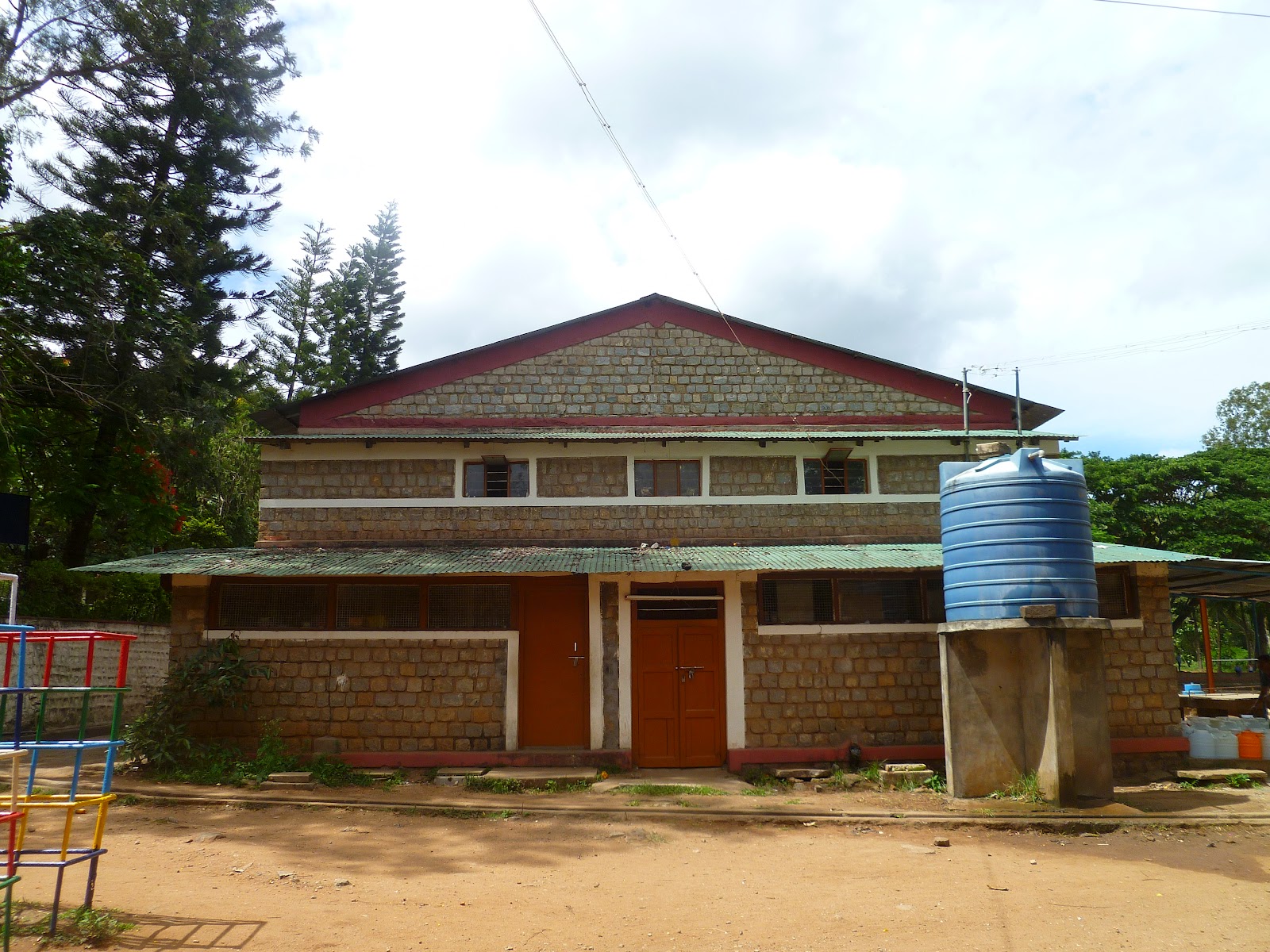
This stone building, nestled in a not-so-quiet corner of the Tibetan Children's Village between the mess hall and the sports field, is home to two wondrous little rooms filled to the brim with those magical implements we call instruments. Pardon me if I wax sentimental, but music rooms are to me what stadiums are to athletes, flea markets to hoarders, back alleys to crack addicts, and churches to the faithful. They are homes, sometimes literally, for stretches of time filling months and years. They are places of joy and pain, highs and lows, friends and frienemies (I never had any, but I saw the phenomenon in the music room regularly). The sound space is singular - what other rooms spend most of their time above a sound pressure level of 90 dB, in an at least semi-musical din?


The four main Tibetan instruments, with parts labeled. Notice the Tibetan, Western, and Indian scale degree equivalency chart in quadrant I (for those of you who forgot which quadrant is I, Descartes' fly on the ceiling is about to give you some terrible disease). The doors on either side lead to the two music/dance rooms.

The soundscape of the room is made more interesting by the pedagogical style I have observed when full classes are taught. The first half of class is spent learning some specific song, technique, or instrument, all by rote and call-and-response. The second half is a kind of free time, where students are meant to practice what they learn while the teacher moves from student to student assisting. Exploration is encouraged, and the result is the very loud, dissonant, and beautiful sound of twenty-five kids messing around on different instruments simultaneously in a small stone room. I noted to Dawa-la, the head music teacher, that I deeply appreciate this teaching method. Music is often taught in a painful way, with no spontaneity or exploration allowed. The focus is usually on not making mistakes, rather than on making music and making connections to the instruments. Some of the most fun and educational experiences I have ever had came from wondering what all the sounds are that a snare drum (etc.) can make, and going on to properly break all the rules I knew and trying my darndest to break rules I hadn't yet heard of. There's a special joy in bending the sound palette of an instrument past sane boundaries, if only for the mental image it conjures up of shock and disgust on an old fuddy-duddy music teacher's face.


Some of the concepts I threw at my drum class the other day. The cascara took a little while to lock in, but they were impressive in the speed they picked it up. Today, I noticed that someone filled the empty space in the top right corner with "Save Tibet!"

In this spirit, and with the injunction from Techung to share more of the best that Western music has to offer with the Bylakuppeans, I have embarked on a very fulfilling mission of reciprocity to my hosts. As I think I have mentioned, I teach drum lessons. There is one class of about 15 students, and two one-on-one classes with students who had the gonads (I have to use the generic term, because Nyidun is a girl) to approach the Inji-Mi and ask for lessons. We have been listening to funk, jazz, prog rock, pop, dance, Afro-Cuban stuff - you name it. It's fun to watch the look on kids' faces when they vibe with something that isn't Justin Bieber (J. Biebs, I love you man, but J. Coltrane is more my kind of cat).


One of the boys who digs on hanging around the music room in his free time. Some of these kids school me on dramyen. It's awesome.

In the spirit of the mission Dawa-la has entrusted me with, I also make sure the kids see me practicing their native music and singing in their mother tongue. For one thing, he told me, the teachers are always trying to convince the students of the richness of Tibetan culture, especially music and dance, and sometimes use as an illustration the Westerners (Injis) who come to their communities to learn Tibetan music. The injis, they say, wouldn't spend so much money and time to travel halfway around the world unless there was something very important and beautiful to uncover. The thing is, the students in Bylakuppe never actually see these injis, because Dharamsala in the north is the normal pilgrimage site for interested musicians. Dawa-la has tried to impart to me the impact of having a real, live inji in their midst. Forget about any musical aptitude I may or may not have. I have come from the land of Taylor Swift to learn dramyen. Dawa-la's hope, and I've seen some small evidences of his hope being fulfilled, is that the excitement of a Westerner learning dramyen might help some of the students take another look at their own musical tradition (without necessarily losing their interest in Metallica, Green Day, and The Eagles). The dream, for me and for the teachers at the school, is for the students to be able to have a resting point, a foundation, in their own culture, and an appreciation and applied aptitude for it, while also exploring, understanding, and experimenting with the musics of other cultures. It's a little like Sanka's speech in Cool Runnings - if I dress Jamaican, talk Jamaican, walk Jamaican, and is Jamaican, then I damn well better bobsled like a Jamaican. I don't see a thing wrong with a refugee picking up a guitar and learning "Hotel California," any more than I have a problem with an American college student traveling to India to learn dramyen, but I dig on the whole thing more if a native flair, fire, and spirit is retained. As another illustration, I was expressing some worry today over the accent I am using to sing the Tibetan lyrics in the song I will be performing at His Holiness' birthday (less than 35 hours from now!), and Dawa-la told me (and I'm paraphrasing),

"You are a Westerner. You won't sound Tibetan. It doesn't matter. You being there, up on that stage, and participating in our celebration in your own way - that's what people want to see. They'll love it. Just focus on the song."

That kind of embracing of two cultures simultaneously while recognizing one as your own is what I am coming to love and believe in more and more.

Words in Tibetan script, music in do-re-mi notation (1=do, 2=re, etc. A line under a phrase doubles its speed)

Back to the building, and the title of this post. I have this thing with physical space and environments and the ways they influence, enable, and inhibit artistic expression. For example, I have never been told more times in my life to play and sing louder. These dudes and chicks have serious pipes. I was practicing in the empty music room today when I heard a group in the other room start singing. It sounded like there were eight or so people singing. There were three. My theory, and maybe one day I'll prove it, is that coming from a physical space like the one in the Himalayas influences the cultures that inhabit it to fill the space with their music, and also uninhibits/never creates the volume sanctions that city-dwellers develop so as not to step on their neighbor's sound space. The alpenhorn in Switzerland are a similar case of huge instruments filling the forever-space, and the didgeridoo of the Australian Aborigines is another. (in a reverse example, electronic keyboards with headphone jacks took off in relatively cramped suburban America).

Focusing down to the microcosm of my current subject, music rooms are perfect spaces. They are made sacred by noise, sometimes disjointed and sometimes polished, and also make sacred and untouchable the noise-making desires of their inhabitants (untouchable, that is, by the normal workings of the outside world. If the students in the math building next door are taking a test, to hell with them, but if there is a performance on the stage above the music room then the music room's sacred space is extended and its internal system of governance applies). Music rooms are canvases for the painting of soundscapes. Returning to sentimentality, they are places for the realizing of dreams, and for the dreaming of new ones. They are vehicles for expression as vital and vibrant as the instruments they house.

[Similarly, for any interested parties, musical instruments are perfect objects embodying an infinite realm of possibilities, and make great gifts for all your poor friends who just spent all their money on trips to India]

Without a space where noise and experimentation are unrestricted, or at least are governed by a very different set of rules than the outside world, there can be very little in the way of musical learning. In this particular case, cultural preservation of a diasporic people depends on the existence of such a space. Further, the cultural interaction that takes place when one kid is playing an electric guitar and the kid one chair over is playing dramyen is unlikely without a space that houses both instruments and allows for the necessary noise. I believe this kind of interaction is vital to the way modern cultures progress - not vital in the sense of "needed for this good thing to happen," but in the sense of "foundational and integral to a natural process," and not progress in the sense of "improve," but simply in the sense of "moving forward." In other words, the tide of cultural change in the world is propelled by the existence of two or more distinct cultural implements (physical or otherwise) in shared spaces where they are allowed a degree of use. This may seem rather obvious and even mundane, and perhaps it is, but there is something stirring about watching the fluidity with which these students switch between and mix cultures, and there is something true about letting go of ideas of "Western" and "Tibetan" and watching the students simply live. This particular space has created a venue for this fluidity and unique way of creating identity. Other venues, for further exploration another time, include the pirate shops that sell mp3 cds of Bollywood and American music, the internet cafes with headphones at every stall (by the by, the internet cafe Lori and I frequent plays "All I Want for Christmas is You" over their speaker system every time I'm there), cell phones the monks use to play music while walking, and parties with music blasting. These places house and juxtapose music available to and popular in the community, and give some clues as to what music is housed in the hearts and brains of the people. While not quite as perfect a space as a music room, as they are all based on consumption rather than creation, they are indicative of and drivers of musical cultural exchange.

This ends my post. The pictures here are for general interest and for you, Dr. Grimshaw. There are more where these came from. Credit goes to Lori for agreeing to be my photographer for a few hours.


You know a student is serious when he shows up to a lesson wearing a v-neck t-shirt with a drum set and the word "ROCK" emblazoned in classic heavy metal font. This kid is good, and plays a mean guitar too.

A common sight - three dranyen chilling on the ground next to the kit. The one in the middle is using a kata, or Tibetan Buddhist blessing scarf, as an improvised strap.

Me with one of my teachers, Tsering Palden. This guy blows me away. I'll put up a recording when I get a chance. Yes ladies, he is single. And good with kids.

Wednesday, April 4, 2012

Acho Danny


The trailer above is for the movie Namgyal: Shey Kyi Jinpa, a documentary made by musician Acho Danny to document one of the most important figures in 20th Century Tibetan music. I heard about Acho Danny a while ago, but was reminded of him today in my world music class and decided to find out more.


Here's a video of him and a few other musicians doing some traditional Tibetan songs.


It's interesting that the music of his that is online is very much in a traditional style. Some of the songs from his CD, "My Dranyen," work in a very interesting fusion framework. Here's the cover of the CD - it's a great example of intertext, and captures the refugee spirit.


It might be fun to get in touch with Acho Danny and see what his take on the whole thing is. I also want to pick his brain a bit about dranyen - the more I hear it the more I want to learn how to play it. 


This last video was found while I was searching for the other ones in this post. This dude is pretty cool, and brings up some points I would love to explore one day regarding musical expression in modern Tibet.


Tuesday, March 27, 2012

Aural Project in a Visual Virtual Space

I've been struggling to figure out what to write about for these last few learning journals. This is weird. I usually have too much to say, and my posts are generally much too long. I was thinking about where the difficulty is coming from, and I realized that my project is mainly aural - having to do with sound - and presenting the ideas in a visual format, including text under the umbrella of "visual content," is therefore problematic.

I've always thought the idea of a "music publication" to be kind of a funny thing. We take an aural phenomenon that exists in a liminal and temporal form, continually being recreated, and talk about it using printed words and figures. It's self-imposed synesthesia (not that there is necessarily anything wrong with that - synesthetes have made some freakin' cool stuff). The decision, based on this type of reasoning, is to write less and provide more music for my bloggy friends to peruse. I'll still have blog entries that are long and full of text, but to better serve the project I am making a switch. Frankly, more work goes into the posts that are full of music - I have to listen to it through to make sure it goes in the direction I want it to, and finding good material takes at least as much time and skill, not to mention personal background and history, as it does to find good articles in journals or books in a library.

Here goes. You don't really have to watch the videos, especially if you want to get all aural up in here. Feel free to psychoanalyze me. I'm kinda feeling all this right now.


My favorite version of the last song is on youtube, but it's terrible quality (this version is great too, though). Check it out here: http://grooveshark.com/s/Henehene+Kou+Aka/1TRG1T?src=5. I love it when messing up lyrics makes them better, a la Louis Armstrong. Satchmo never knew the words, and it was great.

Thursday, March 22, 2012

Annotated Source

1!

I'm done with the assignment - chheeeya. Don't fret - I'll still do research. I don't need assignments to do what I do.

Dufelmeier, Daylan. "A Forty Million Slave's Moment of Clarity." Jay-Z: Essays on Hip Hop's Philosopher King. Ed. Julius Bailey. Jefferson, NC: McFarland, 2011. Print.


In another annotated source I cited the introduction to the Jay-Z essays book, but several of the essays deserve closer examination. Here's one. The Forty Million Dollar Slave by William C. Rhoden that this essay alludes to and cites details the problems inherent in the vast moneymaking potential of black Americans through the centuries, and the primarily white businessmen that have tapped and taken the money their "Forty Million Dollar Slaves" made through their talents. Daylan explores Jay-Z's unique position as an incredibly lucrative black individual who is yet playing within the old system. As interesting as that is, more relevant to the direction of my studies in hip hop is the closing paragraph of the essay, where hip-hop's potential power for positive social change is defended and Daylan pleads for an increased and more effective use of hip-hop in this arena. I witnessed a beautiful and moving example of Tibetan activist music this past March 10th, and the use of hip-hop for Tibetan activism is readily apparent on the internet - I wonder, as I have in other posts, if any of this is going on in Bylakuppe.


"'Hip hop's true significance for the community activists and leaders I have worked with resides in its ability to encourage young people to believe they have the power to make a difference'(Watkins 255). In The Hip Hop Generation Bakari Kitwana documents scores of situations when hip hop has used its remarkable talent for change (206, 207, 208, 209). Potent lyrics laced with criticism of society would be more effective to make system-wide change than uncritical lyrics or black (or rapper) ownership. With lyrical skills like Jay-Z's rappers have such potential to challenge status quo and empower people to resist injustice... Songs that make heads nod yet retain socially empowering lyrics is what I call a win, win." 138

The recent tragic and touching rise in Tibetan self-immolation is certainly food for socially conscious music, especially as the Tibetan plight is remembered by a world grown callous over the last twenty years. We'll see what happens.

Monday, March 19, 2012

Annotated Source


"An Hour with Jay-Z from the Brooklyn Museum." Interview by Charlie Rose. Charlie Rose. Charlie Rose LLC, 8 Dec. 2010. Web. 19 Mar. 2012. <http://www.charlierose.com/view/interview/11337>.


I heard about this video earlier today, and I also heard (from an anonymous source) that interviews make perfectly good annotated sources. So here it is.


Jay-Z is a genius. Going from crack dealing to becoming the philosopher-king of hip-hop, sitting on a cool $450 mil, is no feat for chumps, suckas, or anyone without an incredible amount of drive, intelligence, and talent. It was fascinating to watch one of the biggest stars in the industry talk about his philosophy of music and rap culture. One of the points he emphasized over and over again is the importance of context in a consideration of hip-hop (the focus of his book Decoded), 
which vibes completely with my ethnomusicological training. You can't understand a song like NWA's "F*** tha Police" without taking into account the local and national scene from a black ghetto perspective, and if you try to you will only see a bunch of reckless, irresponsible "Niggaz Wit Attitude" instead of artists communicating the frustration of an important American social group.  He conducts ethnography from the insider perspective, having been and done everything the rap game stands for. I hope I can find a transcription of this! Useful stuff.


Wednesday, March 14, 2012

Hanging out in Bylakuppe

I decided that, for today's journal, I would spend a little time in virtual Bylakuppe. YouTube has quite a few videos taken in the settlement. Here are a few of the interesting ones:

This guy is the host of a show that does a gastronomic tour of India, and he ends up in Bylakuppe to try out some Tibetan/Tibetan-fusion food. I'm kinda starving right now. Mmmm... Thukpa sounds good.

Of special interest to Lori and B. Landrum, here is a video from the SOS Children's Village, a school in the settlement. I dig the songs they sing - that might be an interesting area for research. Again, they taunt me with food.

This Indian beggar chants Tibetan mantras for his supper, which is cool. The amount of Hindi I was able to understand is also cool (if it was indeed Hindi - I don't know how much Telugu or the other southern Indian languages and Hindi share, and Bylakuppe is in the south...) - shukriya, Shrimati Carroll! 

Now, THIS is very interesting. The video is terrible, and you can't see much, but is worth listening to to see what musical selection a DJ in Bylakuppe at a Losar party would have. There's some Ke$ha, then Bob Marley, then some house trance. Cool beans.

The world is certainly a much smaller place then it used to be, and at Techung's suggestion I have taken part in what he says is probably one of the most used methods by Tibetans to connect and communicate - YouTube. I had no idea that Bylakuppe had any kind of presence on the internet, but here it is. I'll let you know what else I find!

Monday, March 12, 2012

Annotated Source

Pragmatics 19:1.103-127 (2009)

International Pragmatics Association

TRANSLOCAL STYLE COMMUNITIES: HIP HOP YOUTH AS

CULTURAL THEORISTS OF STYLE, LANGUAGE, AND

GLOBALIZATION*

H. Samy Alim


Another fascinating thing I observed with the Tibetans on Saturday was the way the young males styled and characterized themselves. Some were wearing traditional robes over matching jeans and sneakers, while others wore styles associated with the youth music scene - nice sneakers, ear piercings, gelled hair, etc. This article by Samy Alim decodes and explores the worldwide hip-hop phenomenon through a linguistics perspective, which is really where I noticed the chosen style of the teens at the march. Some of the kids I overheard used slang, vernacular, vocal register, and sentence construction drawn from hip-hop culture. It was flawless.

Samy Alim sums up the article nicely in the abstract, "Highlighting youth agency, the article demonstrates that youth are engaging in the agentive act of theorizing the changes in the contemporary world as they attempt to locate themselves at the intersection of the local and the global." This is exactly what I saw, and it blew my mind a little to have my suspicions confirmed in such an intense way (I'm used to my suspicions being blown apart, not confirmed). I cannot express strongly enough how identified these teens were with the hip-hop culture, at the same time that they were marching and participating fully in a freedom rally for their longed for homeland. It is possible that some were there just because their friends were, or just because their parents made them go, but from what I saw there was sincerity in their participation.

It reminds me of the Shapaley phenomenon - listen to this song. Guess, without looking at the lyrics, what it's about. The way the music and the rhymes are constructed is very much in line with American hip-hop, and the association of this sound with particular lyrical content is undeniable. Then read the lyrics, and let me know what you think.


Tuesday, March 6, 2012

Annotated Source


Hip-hop gangsta or most deserving of victims? Transnational migrant identities and the paradox of Tibetan racialization in the USA 

Emily T Yeh
Department of Geography, University of Colorado, Boulder, CO 80309, USA; e-mail: emily.yeh@colorado.edu
Kunga T Lama
Department of Anthropology, University of Colorado, Boulder, CO 80309, USA; e-mail: kunga75@yahoo.com
Received 30 June 2004; in revised form 26 October 2004
Environment and Planning A 2006, volume 38, pages 809 ^ 829

Great article about how Tibetans, especially youth and young adults, navigate identity in the US. There is particular identification with hip-hop culture, which is, from what I have seen, rather universal among displaced communities that gather in the US. There is quite a bit of tension between the older generation, seeking to preserve a unique Tibetan identity, and the younger generation. Some of the most interesting things from the article are the raps of Tibetan hip-hop kids (warning: cursing ahead):

––you lost so jus admit // while yo ass is monastic // my shiet is fantasticno im not sarcastic'' (13 November 2001)

–– ... if failed, no option but to digest bullets into ya chest // and rest in peace and follow your fate // n i'll be wishing you to reincarnate // again in tha body of a human being wid a soul of a MC who comes back to battle // but not to
regulate...'' (3 November 2001)

–– ... i remain silence in Tibet cuz of tha chinese regulation // now that i got tha right of speech, i bust our words that can fill out tha whole ocean // now dont try to get into too deep // cuz i smoke you out like smoking weed // scared tha fuuck outta you that you won't even dare to speak'' (3 November 2001).

––ThiS 1 is for all my asains .......... StanD uP and FiGht ..... if u eva call me a chink // i`ll drown u in my kitchen sink // ... // half of u poeples are jus stereotypical // ... // to all my azains get up stand up // like Bob Marely cuase we fed up // and we aint gonna let up // ask me agian if i know kung fu // i`ll take out my blade and cut // cut u up into peices like pizza and deliver u before 30 minutes is due // ... // we got cars that can`t even match up to yur price // girls so hot they melt ice // as long as im asian im reppin my pride // ain`t got nuttin to hide // always got a phat ride // and grls world- wide // this is an asian invasion // got lov weather u tibetan or malayasian // so we don`t need no hateration // cause we the next generation // ... muthafukaz.....recongize and respect........thas a wrap'' (24 November 2001). 

It'll be cool to see how these same issues are dealt with in Bylakuppe.


Just found this, too: http://knowthankyou.wordpress.com/2009/04/12/cultural-imperialism-and-tibetan-hip-hop/


Friday, March 2, 2012

Annotated Source


Ellwanger, Tracy, "“Oh Uncle Pema!” The Role of Musical Agency in the Creation of a Modern Tibetan Identity" (2005). ISP Collection. Paper 415.
http://digitalcollections.sit.edu/isp_collection/415 


"Aku Pema," a popular Tibetan song, is used as a case study for what the title denotes. Interesting ideas from this article are the resistance of Tibetans to Chinese "impurities" in the traditional musics, and the very real ways that Tibetans use musical and other artistic expressions to support Tibetan identity and maintain national pride. 


Lyrics from Wikipedia

"Uncle Pema"
By Palgon (original in Tibetan)
Oh Uncle Pema!
Oh mighty Eagle adorned with a conch-white stripe!
If you soar up heavenwards, you adorn the azure sky,
If you descend earthwards, you gladden the craggy mountains.
And, your absence makes the craggy ledges bereft of any life!
Oh Uncle Pema!
Duck with the golden rosary
If you fly out of the water, you adorn the meadows,
If you swim in the water, you gladden the water’s spirits
And, your absence makes the lake bereft of life and spirit!
Oh Uncle Pema!
Oh handsome Youth, adorned with conch-white teeth like a tiger!
If you go [a]way, you are a credit to your fellow townsfolk, and
If you come this way, you are a star amongst your peers.
And, your absence makes my heart bereft of love and meaning!

Thursday, March 1, 2012

Ya Don't Stop

Rap, that wonderful little musical style that came out of New York via Jamaica (according to one version of the story), is by nature a historically and culturally aware genre. First on today's playlist, we have Articolo 31, with their Fidanzata. Dig the swing intro.
Then we have K'naan, reppin' some Ethiopian pop background music from the sixties.
The very famous and very diverse Black-Eyed peas, giving it up for all the Pilipino at Pilipina. 
Good ol' Big Will knows his history - compare this track (probably one of my favorite songs ever anywhere) with the next one by George Benson.

Rap music is largely based on sampling, and some of the most amazing record collections owned by individuals are in the capable hands of hip-hop producers and musicians. ?uestlove, widely known now due to the Roots' permanent place on the Jimmy Fallon show (they have always had a special place in hip-hop, but now the rest of the world knows who they are), has quite the stash (pardon the salty language):

Interviewer: “Holy shit, is this your record collection?”
(There were literally thousands upon thousands of records on ceiling high shelves that covered every wall of the room.)
?uestlove: “Ehh, like 70% of it”

One of my favorite uses of music history by a rap artist today (and I'm fairly certain there isn't anything to offend ANYBODY's sensibilities in this song or video [unless smoking a cigar a la 30s jazz singers is reprehensible]) is by Nas. Check it out.

People dismiss hip-hop as mindless, shallow, misogynistic, dangerous, and all of the above. Depending on the song, they might be right. But, as a medium for expression that ties together the spoken word, music history, and fat groove, rap has so many possibilities for communicating emotion, exposing sharp intellectual ability, and bringing people together in a very real way.

I don't know what kind of rap the Karmapa listens to, but I don't have any problem with a spiritual leader getting into a musical form with the capability that rap has. I wonder what rap the kids in Bylakuppe listen to. I don't think there is much of a chance that rap is not on the collective Bylakuppean playlist somewhere - the questions that beg answering are more along the lines of: who do they listen to? with what aspects of the music do they identify with? does hip-hop fashion manifest itself in the clothing of the Tibetans? are there any Tibetan rappers in Bylakuppe, and where do they draw their styles from? what about b-boys/girls, digging around on the internet for samples to make beats with? does traditional Tibetan music get sampled for hip-hop purposes? what are the reactions of the elderly? are other monks or lamas into hip-hop? how do they reconcile the various messages with the messages of Buddhism, or do they even attempt to? is lyrical content important?

Fun stuff, no?

"Up, up, up, up I, up I, up I step, up I walk, up I climb to the platform on which I await the arrival of the Blackline."
"Excuse me, brother - would you mind not dripping your umbrella into my lap?"
"John Coltrane and Chinese food is my date for tonight..."
"Going, going, going, going, going, gone - damn! I missed my stop. Writer's block."

A prize to the first person who knows what album this is from. No Googling.

Monday, February 27, 2012

Annotated Source

Tell me about the music here.


What about here?
This article is short enough that I can put the whole thing here. I got the inspiration to look at and think about the commodification of music this way from several sources, one of which is very exciting to me and will result in free food. Lori works at Magleby's Fresh, a medium-food restaurant in Provo (medium food = not fast food, but not really a sit down place with servers who take you order at the table either ["slow food"]). The workers have grown very tired of the soundtrack - a playlist of 76 songs that repeats at least twice during a typical shift. I told Lori that I thought it would be fun to make them a new playlist, and she told her manager, who is all for the idea and will give me some gift certificates if I can make them something good. Now that I'm working on it, I've realized that I am recreating the place in the process - what people hear in Magleby's will influence how they feel and see the restaurant. If I put a bunch of punk and metal music, there would be a serious disconnect between the food, the customers, and the ambience. But if I put a bunch of sweet jazz standards and some fun, familiar, and rather low-key contemporary music, the place will start to make associations that elevate the mood the restaurant owners are looking for. So, I am, in a very real sense, doing an experiment in creating place through music, which relates 1 to 1 with my project. This article backs up my claims, and shows a contemporary writer's view (as opposed to a scholarly view) of how music and place relate. This is more germane to my purpose, as I don't really give a rat's behind what scholars think.


http://www.huffingtonpost.com/glenn-kurtz/the-marriage-of-music-and_b_51759.html

The Marriage of Music and Place


Glenn Kurtz

Posted: June 12, 2007 10:56 AM

I'd like to propose a new rating system for restaurants, cafes, and bars. Instead of the tired old star system, or some highly poetic, but thoroughly individual review of how the food or drinks taste and are served, my proposal is to rate all public locales by the music they play.
This rating system is based on the belief that music does not merely fill space and time, but shapes space and time. In other words, whether as foreground or background, ambient music is like the soundtrack of our experience, profoundly affecting how we feel about and relate to a place.
My system does not imply anything about the style of the music. There are plenty of places where screeching, screaming, thumping, pounding music is entirely appropriate and welcome, and which can therefore play this music with complete integrity for the delight of its customers. A dance club playing dance music seems like an excellent marriage of music and place.
The same music, however, played at the corner café, where people gather to talk, to read, and to write blogs, and where screeching, screaming, thumping, pounding music is played primarily to keep the staff from falling asleep over their cappuccino machines -- this would be an example, in my opinion, of irreconcilable differences between music and place. The music prevents you from enjoying the place.
My rating system, therefore, describes the relationship between music and place in terms of the emotional communication between the two. It has the following gradations, from best to worst:
1. Intuitive. ("You always know how I'm feeling!")
2. Friendly. ("Um, okay. I can see your point.")

3.
 Neutral. ("I'm sorry, did you say something?")
4. Obnoxious. ("You don't care how I feel!")
It's a very personal kind of rating system, I admit. But I believe that if enough people subscribe to it, the demand for sensitive musical choices in public locations everywhere will increase, and life will improve for everyone.
One more category needs to be mentioned. If we understand the relationship between music and place in emotional terms, then this final category has many qualities of the best: it recognizes the moods and functions of a place, while seeking to delight and please the customers. But these qualities are passive-aggressive: they are used with ulterior motives, most often to sell you something. This final category, therefore, is:
5. Manipulative. ("You say you care, but I don't trust you!")
Two kinds of location define this category for me. Chain bookstores, especially during December (is there a limit to the number of times one can hear "Winter Wonderland" before suffering permanent damage?) and a certain ubiquitous "café."
How do your favorite places rate?

Friday, February 24, 2012

Queen Kong Does it Again


Environment and Planning D; Society and Space 1996, volume 14, pages 273-292

Popular music in Singapore: exploring local cultures,
global resources, and regional identities
Lily Kong
Department of Geography, National University of Singapore, 10 Kent Ridge Crescent,
Singapore 119260
Received 21 March 1995; in revised form 12 September 1995

'Geographers concerned with the ways in which local communities are drawn into global arenas and with the means by which global forces become resources for indigenous modification, may thus find music
a worthwhile research area. In this way, "music is integral to the geographical
imagination" (Smith, 1994, page 238), and deserves more space on geographers'
research agenda.'

The more I read Lily Kong, the more I realize why everybody who is anybody in musical human geographies cites her. Her writing style is lucid and accessible, and the arguments she makes are too. Many of the basic ideas I seek to explore in Bylakuppe are present in her works and the works of the other human geographers she has empowered through her seminal writings. Add her and Kiela Diehl together and you have someone who would do incredible things with my project, things I'm sure I haven't yet dreamt of.

The big ideas in this article are the local vs. global views of acculturation, and whether local versus global is the real issue. Perhaps it's not so much a battle, and in any case seeing it as a battle is only marginally useful in research because battles tend to push one towards taking a side. Perhaps it is better to look at a local and global model of acculturation, addressing the issue from all sides. Again, she uses the theoretical framework of "text, intertext, and context," which I love. Lyrics and aural content are examined, as is common in musicological studies, and context/environment (family, national, political, social, etc.) is also examined per normal course. The inclusion of intertext is a wonderful and unique way of tying it all together - what clothes are the musicians and listeners wearing, what goes on the album art, what food and drink are associated (if any), and on and on. Taking in the whole musical scene becomes the essential work of the day. Kong analyzes the person and work, as well as the reception and critical review, of a famous Singaporean pop star, Dick Lee. His music is a lot of fun to listen to - a few tracks are on youtube, if you are interested. The result is a fascinating and satisfying look into music, expression, and identity.

In Bylakuppe, I don't want to spend all my time analyzing texts, or learning instruments, or taking notes of what kids are wearing or listening to - I want to spend time with people, first and foremost, and do all of the above mentioned activities as they are relevant. Since I don't really know what I will find, it would be foolish to go in looking for too specific an idea to test - the set-in-stone idea may not even be relevant, and in any case might blind me to things more interesting and vital. The way I look at things, people are the music they make, and vice versa. I don't mean that a singer believes every word they ever sing, or that the emotion they have to reproduce every night in performance has to be fresh and entirely heartfelt, but that a person choosing (or being forced, as was the case for the great Art Blakey) to make music of any type reveals something vital about their character and environment. Maybe a Chinese national singing an anthem doesn't quite buy into the words about the greatness of their leader, or perhaps that guy singing next to you in church doesn't believe at all - the fact of musical production in such circumstances is itself a fascinating manifestation of personal and cultural phenomena. Music is a struggle, and music is easy, all at the same time. Looking at the music itself (the "text"), the context, and the intertext in a holistic method is a powerful way to get at the heart of the human experience, and a powerful way to get at the heart of a particular human's experience.

Makin' Some Contacts

Inspired by Rachel and Kristen's presentations today at the inquiry conference, I have decided to see what I can do about getting in touch with musicians in Bylakuppe. There are three that I have been able to find, thanks to musictibet.com.

Namgyal Choeyang
Wants to start music school in Bylakuppe
Tashi Tsering Porangnga
Teaches at Tibetan SOS Children's Village in Bylakuppe
Kundeling Thupten
2011 Lifetime Achievement Award recipient, Tibetan Music Awards
Lhamo (opera) singer
I found these guys, actually, by not searching for them at all, but by trying to find better sources of information about Bylakuppe. Turns out that, just as Dharamsala is often called by its English name of McLeod Ganj, Bylakuppe as a cluster of settlements is called "Dickey Larsoe Tibetan Settlement." Also used is "Lugsung Samdupling Tibetan Settlement." These terms refer to slightly different parts of the conglomeration that is Bylakuppe, but for my purposes now they simply open up the internet search. Putting in "Dickey Larsoe" gave me the goods on these musicians, as well as some sweet info on the area that was hiding before. Finding them put me in the mind of social networking, so...


Through the musictibet.com website, I sent messages to the first two artists. Knowing how well those types of email servers work, I don't have the highest hopes for getting a response. I did find out something interesting through the process, though - Lobsang Wangyal, possibly the most controversial Tibetan who isn't a lama or a politician, runs the website and the Tibetan Music Awards. Wangyal is famous for his hotly debated "Miss Tibet Pageant," and, from firsthand accounts, seems to be quite the character. It would be informative to meet him, that's for sure. 


UPDATE: I may have found Namgyal on Facebook. Here's to friending people on a hope!

Friday, February 17, 2012

Methods Practice II

Tanielle is from the big red dot.
Surabaya metropolitan

Methodology:
Semi-structured, semi-formal interview.
Found Tanielle in Gamelan class, bought food from her (amazing Indonesian steam buns). She has led out in extracurricular Indonesian cultural events, including dance and presenting at World Fest. She is our "resident Indonesian" and makes the gamelan legit. Also, she is super friendly. I approached her at gamelan practice and worked out a time to ask her a few questions, and explained a bit of what the assignment for the class was.
Met in the HFAC, found a comfortable set of chairs, and talked for ~30 minutes.

From my notebook:

Possible topics of discussion:
Biography
where from
age
family
major
career goals
"How you met your husband"
Church involvement
circumstances surrounding coming to the states
identities

Involvement in Gamelan
Why?
What effect does it have on your feeling of being Indonesian?
We talk about the social implications of gamelan frequently - kotekan, omback, etc. Do you think these characterizations are accurate? Why or why not?
You are involved with a lot of uniquely Indonesian endeavors - cooking, Gamelan, dance. What drives your participation in these activities? How does participation make you feel?
Other things besides food, music, dance?
Is it important to you to identify with your cultural background, and why?

Music in General
Who are some of your favorite artists?
What exposure did you have to western pop music growing up? What seemed to be popular in Indonesia?
What musics besides Western musics did people listen to? Local, Chinese, Arabic, India, etc.

Beginning of interview notes:

Surabaya - island next to Bali on Java. 2nd largest city in Java
Dad's from US
Mom Chinese by blood, grew up in Indonesia
Oldest, 2 younger brothers
Grew up LDS
LDS 1 stake for all Indonesia, recently established
many Muslims
religious diversity depends on Island - some religions congregate in certain areas
First attended BYU Hawaii
Undergrad degree - Biochemistry. Met husband (Tahitian) while at BYU-H.
Biochem - pregnancy disorders (premature births, preeclampsia, etc.)
US citizen, but wouldn't consider self American
Would self identify as "Indonesian, mainly, but my Mom's Chinese"
Doesn't want to forget heritage or lose it
Looking to posterity - preservation of culture and family values for the next generation
Stays in contact w/ Indonesian students on BYU campus
Participated in World Fest 2011
BYU Provo less diverse than BYU-H
musical concepts different in Bali than in Surabaya, so not all the concepts discussed in Balinese Gamelan translate
Course in schools in Indonesia reflects cultural values:
   moral studies
   tolerance
   working together
   diversity
   every island is different, so unity is important
   What does it mean to be Indonesian, if there are so many differences between local island cultures?
   national language
   Indonesia wanted out from under colonized rule, so united and kicked out the colonizers (Dutch ruled ~300 years, other countries took over from time to time).
Music
 - Indonesian - modern, Arabic +
 - Dang-dut - blend of Arab, Indian
 - Angklung - traditional, mostly idiophonic instruments
 - Each province teaches particular songs @ school, relative to local and folk traditions
 - Backstreet Boys, etc., also a presence
 - Mom is Chinese, so listened to that as well
 - Regular music course for elementary schools includes traditional music
 - " dance
 - western influence increasing
           Justin Bieber just did a concert in Indonesia
    - TV, internet, media
    - some disparity between villages & cities as far as media access is concerned (I [Beau] wondered about the availability of internet, etc. in the smaller islands)
         Each island has capital, and capitals are, generally, fully modern
 - West won't hurt Indonesia if schools & families keep exposure to tradition high (in response to "Does the influx of Western culture feel like a threat to Indonesian traditions?)
 - Parents lived in Idaho
     felt like they had to raise their kids in Indonesia/abroad somewhere
     Tanielle would still be Indo-Chinese-American, even if grew up in Idaho, and she is
     grateful to have grown up in Indonesia
    In Indonesia, her parents spoke English at home so that the kids would be enabled. Tanielle only visited the states once before going to BYU-H, for Christmas as the house of some relatives. The English paid off, and even though it was strange to be meeting so many new people at once, they were family and so were welcoming.
Hopes for Tanielle's kids/family
     keep all languages
           Indonesian, Chinese (Mandarin - Tanielle is conversant) English, also French and perhaps Fijian due to her husbands background
     culture
           exposure to events
               Chinese New Year, festivals
           cooking
                Indonesian independence day


As I reflect on these notes, I realize that the issue of the preservation of culture is impossible to pick into parts and force to stay separate. Everything, at least for Tanielle, goes into preserving culture for herself and her future children. The festivals, foods, musics, dances, and other traditions play off of and into each other to create experiences to help create identity with each of the cultures involved. Tanielle's kids will be Indonesian-Chinese-Tahitian-Americans, and that is a bit of a daunting yet exciting prospect. I will have to look into how music in Tibet dovetails into other aspects of cultural expression. It was also interesting to note her reaction towards the West coming into Surabaya - of course they listened to Backstreet Boys, but as long as the rising generation is encouraged by institutions and families to appreciate its heritage, the Backstreet Boys will never completely replace Angklung. I felt a bit of the sadness the Western threat must bring when the thought arises, "But what if the kids just don't want to anymore?" What if the young generation sheds its Indonesian-ness for a created, unauthentic Western archetype? The vibe I got from Tanielle was that it isn't likely to get that bad, but the thought itself is bad enough.

Probably one of the most wonderful things was the ease with which Tanielle seems to navigate cultural landscapes. I'm sure it isn't easy, and that hiccups have happened along the way, but here is a woman who is actively participating in all aspects of modern life, including tradition and cultural pride as part of it. I thought I might get a sense of conflictedness, but I got just the opposite - here is a person who seems very comfortable with the incredible diversity of her own life.

This whole thing was a great experience. I am excited to practice, get better at, and do more of it. Thank goodness for such a willing participant!