
About Me

My photo
Halloo! When I found out I could go to med school with a Humanities degree with an Ethnomusicology emphasis, I almost peed myself. Here's to me holding it in.
Showing posts with label dalai lama. Show all posts

Wednesday, February 8, 2012

Virtual Shambala: Tibet in Video Games

People ask me, with some frequency, "Why Tibet?" There are a million and one incredible places and cultures on the planet, and the plane tickets cost about the same as long as you cross one of the oceans. Folks who want to go somewhere and live there to experience something a little out of the ordinary have options. Initially, and it's still the case to a degree, I don't know how to answer the question. It's not just that I don't know how to articulate the mass of feelings floating around inside me, it's that I really don't know. It's been a mysterious, kinda crazy really, experience. Like getting tractor-beamed.

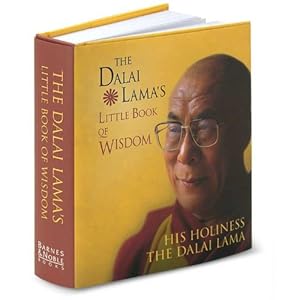
There are two big reasons that I have been able to tease out for picking a Tibetan community. The first is a person, the most visible and known Tibetan of all time - the Dalai Lama. For a few years now I have been enamored with the most famous of Lamas, and not because Richard Gere told me I should be. I received as a gift "The Dalai Lama's Little Book of Wisdom," pictured below, and it has taken a permanent place on the back of the toilet of whichever bathroom I call mine. For those of you who know me, that is a place of highest honor.
iTunes has several of his addresses to various audiences available for free download, and those became the soundtracks to my walking adventures to and from school. He is brilliant, honest, candid, funny, and compassionate in an incredible way. If I were to list, as have several of the prophets of our church, the inspired and God-sent individuals of history, His Holiness would take a prominent place.

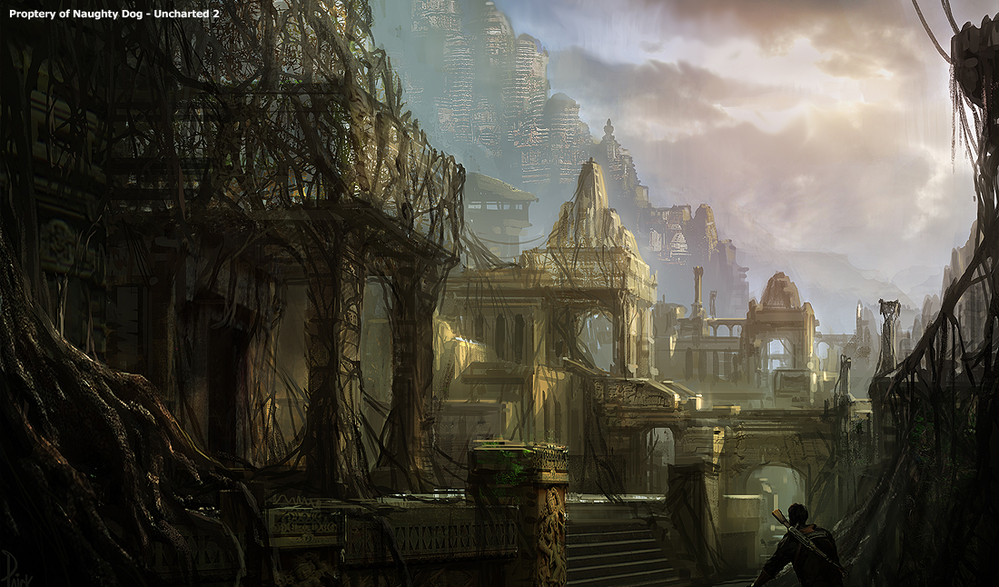
The second thing that got me interested in Tibet was nothing so spiritually fulfilling as the first, but actually launched part of my project in a direct way. I love video games, and I am prepared to defend the video game as a legitimate artistic medium (Smithsonian, suckas - http://americanart.si.edu/exhibitions/archive/2012/games/ - not that the Smithsonian has always been right about everything, but this exhibit makes my geeky heart happy) and a powerful vehicle for storytelling. One of the best games I have played in my short life was Uncharted 2: Among Thieves. The Uncharted series creates stories based around ambiguities in history, using a modern day, edgy version of the Indiana Jones archetype to explore exotic locales and solve ancient puzzles. Uncharted 2 explores the mystery of Marco Polo's lost year - you know, the one when he left port with a huge entourage and arrived home with only a few survivors, never telling what actually happened. It also plays with the Shambala/Shangri-La legend, tying in the mythical Cintamani stone and a megalomaniac bent on world domination. The story ends up in Tibet, searching ruins and villages for the entrance into Shambala before the megalomaniac can get there and find who-knows-what. The music for the game pulls a Williams/Glass technique, combining Tibetan music and instrumentation with blood-pumping Western orchestral arrangements. I loved it.


Similar to Patrick French, I was first taken in by the incredible "other-ness" of it all. There has been an exhaustive amount of research done on romanticization of Tibet in Western literature, and, actually, in non-western literature as well. Patrick French mentions Lara Croft and the Tomb Raider games for their inclusion of large sections that play out in Tibet. I wondered what other conceptions of Tibet were formed in video games. I found nine other games that use Tibet as a location, thanks to giantbomb.com.

4x4 Evo 2 The sequel to 4x4 Evolution, 4x4 Evo 2 is an offroad racing game developed by Terminal Reality
Barbie Explorer
Battletoads in Battlemaniacs Battlemaniacs is the first SNES version of the popular Battletoads series, infamous both for its unique humour and brutal difficulty.
Comix Zone All was swell for the comic book artist and part-time rock musician Sketch Turner until his apartment got struck by lightning and he gets sucked into his own comic, where he has to fight off mutants and other monstrosities to save himself, as well as "the girl".
Cosmic Relief: Prof. Renegade to the Rescue A asteroid is hurtling towards earth, you must travel to Tibet and find Professor K.K. Renegade. Once you have found him you must convince him to help build a anti-asteroid deflector to save Earth from being utterly destroyed.
James Bond 007 This is the first James Bond Game for the Gameboy and in the game James Bond travels all over the world in the effort to defeat a weapons ring.
Lost Horizon Fenton Paddock, a disgraced former British solider turned smuggler, must stop the Nazis from finding the mystical Shambhala.
Terranigma Terranigma is an action-RPG from Quintet and Enix telling the tale of the resurrection of the world from the eyes of the protagonist. The game is believed to successfully combine the best of A Link to the Past and Seiken Densetsu series.


TrackMania United Forever TrackMania United compiles much of the content and concepts found in the previous TrackMania games while maintaining the same crazy driving and huge online feel.


I'm sure there are more, and by golly I will find them, but for now this will suffice as indicative of the Western draw toward Tibet. It will be interesting to look into this subject more, as video games by their very nature say quite a bit about how a person imagines other places. Instead of just reading books about or listening to music from a place, video games purport to transport the gamer to that locale and allow them to live the experience vicariously in a unique way. For me, Uncharted was a visceral, exciting experience, encompassing all of the senses except smell and taste - but I will make no claims to its accuracy. This makes it (video gaming) a interesting and wholly singular topic of inquiry, and, I think, very telling in determining the ways Westerners imagine the Roof of the World.

Wednesday, February 1, 2012

Annotated Source


Mantras & Misdemeanors: An Accidental Love Story by Vanessa Walker, forward by His Holiness the Dalai Lama

So, I picked up this book when I first got interested in Tibetan refugee communities. I opened it the other day, just expecting a good read - you know those days when academia is just repulsive and you can't take it anymore? Yeah, it was one of those days (truthfully, it's been one of those months). I was surprised to find that it is not only a good read, but is also a treasure trove of firsthand accounts of the crazy lives these exiles live. Vanessa Walker, an Australian convert to Buddhism daylighting as a journalist, had traveled to India several times for spiritual reasons. This trip was purposefully designed to gather material for a book. She lived in Dharamsala, and, of all things, fell in love with a former monk and they got pregnant (I haven't gotten to read about the birth yet - just wait!). Mantras & Misdemeanors is one of those wonderful books that combines serious journalism with compelling, often hilarious storytelling. Hearing her Tibetan boyfriend/husband (it's ambiguous which) tell her in all seriousness how lucky and auspicious it was that she had a double chin just like the Dalai Lama about killed me. It easily and transparently transitions into transcriptions of interviews with some of the most important figures in the diaspora, some of those with whom an interview must have been a miracle to arrange. She sits down with the prime minister, the leader of the resistance movement (not all Tibetans are for the Middle Way approach of non-violence), the spirit-medium of the Tibetan Government-in-Exile, and has frequent dialogue with her boyfriend/husband and other former monks. Their varying stories, opinions, and insights go a long way to show the complexity of the situation. The Dalai Lama's stamp of approval in the forward adds a powerful degree of legitimacy, and also shows how honest and open His Holiness is - several of the people Walker interviews are openly critical of the Dalai Lama and his politics.

One interesting and telling event, from an ethnomusicological perspective, is a wedding party Walker attends. The MC invites any who wish to come to the stage and sing songs, and several young men from Amdo (a region in Tibet) storm the stage and vigorously sing traditional shepherd songs. After the traditional repertoire is exhausted, a karaoke version of "Hotel California" is performed, and the rest of the night is spent bumpin' to techno. All of this is led by Tibetans, quite without regard for any Westerners who might be in attendance. It's simply what that group liked. It seems that, for that particular crowd anyway, tradition is beloved at the same time that modernity is embraced. Cool.

Wednesday, December 7, 2011

HUM 201 Journal Entry 5

Elysian Fields in the Occident and the Orient:
The Middle Heaven in the Aeneid and Indian Religious Traditions

            What is the state of the soul between this life and the final resting place? Most religious traditions do not simply make a theological jump from earthly death to final heavens or hells, and many use the concept of a “middle heaven” to describe the occupation of a soul in limbo. Though I will not here focus on the Latter-day Saint view, most of what I describe should ring with a measure of truth – the spirit world, where the righteous in paradise and the wicked and untaught in hell retain their personalities and inclinations, where the wicked mourn, the untaught are educated, and the righteous take their rest in doing the Lord’s work, is a reality for us. The human soul reasons and is taught by divine inspiration that there is a place or a state betwixt the cosmic here and there. The Elysian Fields described in Vergil’s Aeneid provide the Roman conception of a middle heaven, and may be instructively compared and contrasted with similar ideas in the various Indian religious traditions.
            The impetus for this journal entry is my surprise at finding of a type of selective reincarnation in the Aeneid, and a brief treatment of this doctrine will serve as a springboard to understanding overarching similarities and differences in the traditions. “When they have turned Time’s wheel a thousand years, the god calls in a crowd to Lethe stream, that there unmemoried they may see again the heavens and wish re-entry into bodies.” (1009) This is the culmination of Anchises’ answer to Aeneas’ startled question regarding those about to be reincarnated. Aeneas held, in a similar fashion to most Indian religions, a negative view regarding the “bodies’ dead weight” (1008), and saw the disembodied soul as something light, free, and closer to pure. In Indian tradition, impurities keep one on the rounds of rebirth, or samsara, and rebirth is something to be escaped. In the Aeneid, reincarnation is part of the god’s plans, and only some are subjected to it. Anchises’ descendents are to be reborn for specific purposes in the building up of the Roman Empire. The Indians generally treat reincarnation as universal, not restricted to humans, and only chosen purposefully by a very few (the Buddhist Bodhisattva, for example, chooses to be reborn in order to assist the rest of the human family in gaining enlightenment. The Dalai Lama is one such being.). And here we have our similarities and differences: both the Aeneid and Eastern tradition view the spiritual state, bereft of body, as a state of higher bliss, but reincarnation is selective, rather than universal, in the Aeneid. Now that we have examined those who are on their way out of a middle heaven, let us look at those who are going to be staying there a while.
            Within samsara, the cosmological hierarchy goes something like this, from the bottom up: hell beings, vegetation, animals, humans, and gods. Acts that accrue karma send a person down the ladder, and meritorious acts shoot a person up the ladder.[1] The gods occupy a heaven strikingly similar to Vergil’s verdant fields. Elysium is described as “places of delight… green park land, where souls take ease amid the Blessed Groves” (1006) and also as the place “where a few abide in happy lands, till the long day, the round of Time fulfilled, has worn our stains away” (1009). The Indian middle heaven is a resting place for those with an excess of merit, and may be generally described using the same words Vergil used for Elysium. In most Indian traditions, though, it is not only stains that are here washed away, but merit as well– any mark upon one’s being is damning in most Indic thought, regardless if it is a positive or negative mark, and the goal of religion is to remove from one’s self any marks so as to be able to return to the original, primordial state of perfection. The gods in middle heaven are biding their time until merit is worn away. In the Aeneid, this cleansing period is followed by entry into the realm of the gods and eternal bliss. In Indian tradition, there is generally one more rebirth as a human and then entry into what may be collectively described as the “heavens.”[2] Again, the similarities are striking.
            With what do those in the middle heaven occupy themselves? “All joy they took, alive, in cars and weapons, as in the care and pasturing of horses, remained with them when they were laid in earth” (1006). As in Indian and LDS thought, the dead carry with them their personalities and passions. The middle heaven for Indians may involve much of what Vergil here describes – with no fatigue, hunger, or pain, the gods fill their time with largely idle and enjoyable pursuits. These gods cannot help others to get off the rounds of rebirth, for they themselves are trapped in samsara.[3] They may have some sway in earthly matters, such as weather, crop production, military endeavors, and so forth, but in Indian thinking such things are paltry when compared to a soul’s liberation. In the Hindu caste system, those at the top are not the richest or most powerful (Kshatriya, warrior and noble, or Vaisya, merchant castes) but those entitled to a greater portion of spirituality (the Brahmin caste). Therefore these gods have a level of comfort that is to be envied, but, as in Vergil, their true plight (separation from the final heaven) is largely unchanged. I have heard Indian middle heaven described as that proverbial “rest home for the righteous,” and that seems to be a good description of Elysium. The main difference here is that the residents of Elysium are not recognized as gods, nor do they have godlike powers and temporal influence, with the exception being freedom from pain, hunger, etc. In the ancient world, where a much higher proportion of humanity died from disease and starvation than it does now, it seems to me that this freedom may very well be characterized as a desirable form of godhood.
            The more I read Western and Eastern thought concurrently, the more I am convinced of several things. The problems common to humankind really are common, and they stir up in us ideas and solutions that may seem very different superficially, but deeper inspection yields a rather united core. Also, I believe that God continues to inspire His kids and give them, here a little and there a little, glimmers of truth. It is also possible that similar truths are found across the human family because the human family has a common root. From examining Western and Eastern thought and comparing it with my own Latter-day Saint background and beliefs, I find much common ground on which to build, as well as interesting differences that enliven the mind and enrich the bright tapestry of human experience.


[1] As a note to avoid confusion, in Hinduism and several forms of Buddhism there are Gods and then there are gods. “Big G” Gods are not and never were on the wheel of samsara, but will often choose to manifest themselves as avatars or incarnations in order to help the human race. The Hindu Trimurti (Vishnu, Shiva, and Brahma) and the five Cosmic Buddhas are examples. “Little g” gods are stuck on the rounds of rebirth just like humans, and it is these gods who occupy a middle heaven in Indic thought.
[2] What “heaven” means differs depending on the specific religion, and Buddhism in particular shies away from too-specific description of heaven, bringing to mind Confucius’ pragmatic sentiment – how can we worry about heaven when we can’t even get earth right! Various traditions hold to nirvana, or an extinguishment of desire and unification with the infinite, as heaven, whereas others hold a view similar to the Christian heaven of personal conference with deity and bliss in deity’s presence.
[3] In one version of the Buddha’s enlightenment, gods appear to Siddhartha disguised as a sick man, and old man, a dead man, and an ascetic holy man, in order to awaken in him a desire for the transcendent. Their reason for doing this is simple – they know the Buddha will discover the way to leave samsara, and they desire this knowledge for themselves so they might attain nirvana.