About Me

My photo
Halloo! When I found out I could go to med school with a Humanities degree with an Ethnomusicology emphasis, I almost peed myself. Here's to me holding it in.
Showing posts with label place. Show all posts

Wednesday, April 4, 2012

Acho Danny


The trailer above is for the movie Namgyal: Shey Kyi Jinpa, a documentary made by musician Acho Danny to document one of the most important figures in 20th Century Tibetan music. I heard about Acho Danny a while ago, but was reminded of him today in my world music class and decided to find out more.


Here's a video of him and a few other musicians doing some traditional Tibetan songs.


It's interesting that the music of his that is online is very much in a traditional style. Some of the songs from his CD, "My Dranyen," work in a very interesting fusion framework. Here's the cover of the CD - it's a great example of intertext, and captures the refugee spirit.


It might be fun to get in touch with Acho Danny and see what his take on the whole thing is. I also want to pick his brain a bit about dranyen - the more I hear it the more I want to learn how to play it. 


This last video was found while I was searching for the other ones in this post. This dude is pretty cool, and brings up some points I would love to explore one day regarding musical expression in modern Tibet.


Tuesday, March 20, 2012

Annotated Source

George Morgan & Andrew Warren (2011): Aboriginal youth, hip hop and the politics of identification, Ethnic and Racial Studies, 34:6, 925-947
Winnipeg's Most, an Aboriginal Hip-hop group

Abstract:
This paper explores the identity work taking place around contemporary subcultural hip hop amongst Australian indigenous youth in two disadvantaged urban locations. Previous work on Aboriginal hip hop has been attentive to the interface between tradition and modernity. However, existing scholarship has lacked a deeper ethnographic understanding of the dynamics between youth and parent cultures, and the tensions between the two generations. This article is based on research with young hip hop enthusiasts, community activists and educators. It deals with the cultural politics of identification and sees hip hop practice as associated with a process in which Aboriginality is crystallized as a principal affiliation and as offering an account for experiences of social marginalization. Far from being an outlet for expressing a prior or essential Aboriginality, hip hop as cultural practice is associated with the production of particular identifications.


What I really like about this source is the recognition that musical cultures among young people serve not (only) to articulate a previously existing culture or tradition through a new musical expression, but that identity and culture is created at the same time the music is created. A Tibetan kid rapping about Tibetan problems creates a new identity in the process of rapping, and creates new methods to deal with both the problems he or she personally and the problems the society has. Hip hop is a wonderful example of a particular set of musical styles that has assisted marginalized youth in creating identity all over the world, but other musics have also played key roles - dig the Tibetan metal musician Techung hipped me to, or the blues and rock group The Yak Band.

Tuesday, March 6, 2012

Annotated Source


Musical Community on the Internet: An On-Line Ethnography 
Author(s): René T. A. Lysloff
Source: Cultural Anthropology, Vol. 18, No. 2 (May, 2003), pp. 233-263
Published by:
Blackwell Publishing on behalf of the American Anthropological Association Stable URL: http://www.jstor.org/stable/3651522 .
Accessed: 05/03/2012 02:20


 Very cool article arguing for the internet and internet communities as viable and fertile ground for ethnographic research, particularly in the mod music scene. For one thing, I really dig video game music (mod's granddaddy) and the amazing things early composers did with limited storage and processing power. C64 music still has a vibrant community, creating compositions using "primitive" software as both a creative exercise and a labor of love. It reminds me of tearing down my drum kit every once in a while and keeping only the most basic elements - it forces a reconnection with creativity in the dearth of simple variety. If you're interested, C64 music is all over the internet for free download, and the files are tiny so you can get a huge sampling without spending too much hard drive space. http://www.hvsc.de/ - check it out. 41,250 songs in one 80 meg download. Win. 


In a more contemporary and popular vein (not everyone on the internet is into ultimate nerd-dom in the form of Commodore 64 music), websites like this: http://www.breakmysong.com/ assist artists in finding inspiration and partners in crime.


Relevant to my project is the ability of musicians and listeners to use the internet for nearly instant collaboration with people from around the world that they may never see in person. The hip-hop, punk, and electronica scenes do a lot of work on the interwebs, sharing beats and competing for the most hits. I hope to discover a secret pocket of Tibetan musicians or two on the net, but my not speaking Tibetan may slow things a bit... I'll let you know how it goes.


Thursday, March 1, 2012

Ya Don't Stop

Rap, that wonderful little musical style that came out of New York via Jamaica (according to one version of the story), is by nature a historically and culturally aware genre. First on today's playlist, we have Articolo 31, with their Fidanzata. Dig the swing intro.
Then we have K'naan, reppin' some Ethiopian pop background music from the sixties.
The very famous and very diverse Black-Eyed peas, giving it up for all the Pilipino at Pilipina. 
Good ol' Big Will knows his history - compare this track (probably one of my favorite songs ever anywhere) with the next one by George Benson.

Rap music is largely based on sampling, and some of the most amazing record collections owned by individuals are in the capable hands of hip-hop producers and musicians. ?uestlove, widely known now due to the Roots' permanent place on the Jimmy Fallon show (they have always had a special place in hip-hop, but now the rest of the world knows who they are), has quite the stash (pardon the salty language):

Interviewer: “Holy shit, is this your record collection?”
(There were literally thousands upon thousands of records on ceiling high shelves that covered every wall of the room.)
?uestlove: Ehh, like 70% of it

One of my favorite uses of music history by a rap artist today (and I'm fairly certain there isn't anything to offend ANYBODY's sensibilities in this song or video [unless smoking a cigar a la 30s jazz singers is reprehensible]) is by Nas. Check it out.

People dismiss hip-hop as mindless, shallow, misogynistic, dangerous, and all of the above. Depending on the song, they might be right. But, as a medium for expression that ties together the spoken word, music history, and fat groove, rap has so many possibilities for communicating emotion, exposing sharp intellectual ability, and bringing people together in a very real way.

I don't know what kind of rap the Karmapa listens to, but I don't have any problem with a spiritual leader getting into a musical form with the capability that rap has. I wonder what rap the kids in Bylakuppe listen to. I don't think there is much of a chance that rap is not on the collective Bylakuppean playlist somewhere - the questions that beg answering are more along the lines of: who do they listen to? with what aspects of the music do they identify with? does hip-hop fashion manifest itself in the clothing of the Tibetans? are there any Tibetan rappers in Bylakuppe, and where do they draw their styles from? what about b-boys/girls, digging around on the internet for samples to make beats with? does traditional Tibetan music get sampled for hip-hop purposes? what are the reactions of the elderly? are other monks or lamas into hip-hop? how do they reconcile the various messages with the messages of Buddhism, or do they even attempt to? is lyrical content important?

Fun stuff, no?

"Up, up, up, up I, up I, up I step, up I walk, up I climb to the platform on which I await the arrival of the Blackline."
"Excuse me, brother - would you mind not dripping your umbrella into my lap?"
"John Coltrane and Chinese food is my date for tonight..."
"Going, going, going, going, going, gone - damn! I missed my stop. Writer's block."

A prize to the first person who knows what album this is from. No Googling.

Monday, February 27, 2012

Annotated Source

Tell me about the music here.


What about here?
This article is short enough that I can put the whole thing here. I got the inspiration to look at and think about the commodification of music this way from several sources, one of which is very exciting to me and will result in free food. Lori works at Magleby's Fresh, a medium-food restaurant in Provo (medium food = not fast food, but not really a sit down place with servers who take you order at the table either ["slow food"]). The workers have grown very tired of the soundtrack - a playlist of 76 songs that repeats at least twice during a typical shift. I told Lori that I thought it would be fun to make them a new playlist, and she told her manager, who is all for the idea and will give me some gift certificates if I can make them something good. Now that I'm working on it, I've realized that I am recreating the place in the process - what people hear in Magleby's will influence how they feel and see the restaurant. If I put a bunch of punk and metal music, there would be a serious disconnect between the food, the customers, and the ambience. But if I put a bunch of sweet jazz standards and some fun, familiar, and rather low-key contemporary music, the place will start to make associations that elevate the mood the restaurant owners are looking for. So, I am, in a very real sense, doing an experiment in creating place through music, which relates 1 to 1 with my project. This article backs up my claims, and shows a contemporary writer's view (as opposed to a scholarly view) of how music and place relate. This is more germane to my purpose, as I don't really give a rat's behind what scholars think.


http://www.huffingtonpost.com/glenn-kurtz/the-marriage-of-music-and_b_51759.html

The Marriage of Music and Place


Glenn Kurtz

Posted: June 12, 2007 10:56 AM

I'd like to propose a new rating system for restaurants, cafes, and bars. Instead of the tired old star system, or some highly poetic, but thoroughly individual review of how the food or drinks taste and are served, my proposal is to rate all public locales by the music they play.
This rating system is based on the belief that music does not merely fill space and time, but shapes space and time. In other words, whether as foreground or background, ambient music is like the soundtrack of our experience, profoundly affecting how we feel about and relate to a place.
My system does not imply anything about the style of the music. There are plenty of places where screeching, screaming, thumping, pounding music is entirely appropriate and welcome, and which can therefore play this music with complete integrity for the delight of its customers. A dance club playing dance music seems like an excellent marriage of music and place.
The same music, however, played at the corner café, where people gather to talk, to read, and to write blogs, and where screeching, screaming, thumping, pounding music is played primarily to keep the staff from falling asleep over their cappuccino machines -- this would be an example, in my opinion, of irreconcilable differences between music and place. The music prevents you from enjoying the place.
My rating system, therefore, describes the relationship between music and place in terms of the emotional communication between the two. It has the following gradations, from best to worst:
1. Intuitive. ("You always know how I'm feeling!")
2. Friendly. ("Um, okay. I can see your point.")

3.
 Neutral. ("I'm sorry, did you say something?")
4. Obnoxious. ("You don't care how I feel!")
It's a very personal kind of rating system, I admit. But I believe that if enough people subscribe to it, the demand for sensitive musical choices in public locations everywhere will increase, and life will improve for everyone.
One more category needs to be mentioned. If we understand the relationship between music and place in emotional terms, then this final category has many qualities of the best: it recognizes the moods and functions of a place, while seeking to delight and please the customers. But these qualities are passive-aggressive: they are used with ulterior motives, most often to sell you something. This final category, therefore, is:
5. Manipulative. ("You say you care, but I don't trust you!")
Two kinds of location define this category for me. Chain bookstores, especially during December (is there a limit to the number of times one can hear "Winter Wonderland" before suffering permanent damage?) and a certain ubiquitous "café."
How do your favorite places rate?

Friday, February 24, 2012

Queen Kong Does it Again


Environment and Planning D; Society and Space 1996, volume 14, pages 273-292

Popular music in Singapore: exploring local cultures,
global resources, and regional identities
Lily Kong
Department of Geography, National University of Singapore, 10 Kent Ridge Crescent,
Singapore 119260
Received 21 March 1995; in revised form 12 September 1995

'Geographers concerned with the ways in which local communities are drawn into global arenas and with the means by which global forces become resources for indigenous modification, may thus find music
a worthwhile research area. In this way, "music is integral to the geographical
imagination" (Smith, 1994, page 238), and deserves more space on geographers'
research agenda.'

The more I read Lily Kong, the more I realize why everybody who is anybody in musical human geographies cites her. Her writing style is lucid and accessible, and the arguments she makes are too. Many of the basic ideas I seek to explore in Bylakuppe are present in her works and the works of the other human geographers she has empowered through her seminal writings. Add her and Kiela Diehl together and you have someone who would do incredible things with my project, things I'm sure I haven't yet dreamt of.

The big ideas in this article are the local vs. global views of acculturation, and whether local versus global is the real issue. Perhaps it's not so much a battle, and in any case seeing it as a battle is only marginally useful in research because battles tend to push one towards taking a side. Perhaps it is better to look at a local and global model of acculturation, addressing the issue from all sides. Again, she uses the theoretical framework of "text, intertext, and context," which I love. Lyrics and aural content are examined, as is common in musicological studies, and context/environment (family, national, political, social, etc.) is also examined per normal course. The inclusion of intertext is a wonderful and unique way of tying it all together - what clothes are the musicians and listeners wearing, what goes on the album art, what food and drink are associated (if any), and on and on. Taking in the whole musical scene becomes the essential work of the day. Kong analyzes the person and work, as well as the reception and critical review, of a famous Singaporean pop star, Dick Lee. His music is a lot of fun to listen to - a few tracks are on youtube, if you are interested. The result is a fascinating and satisfying look into music, expression, and identity.

In Bylakuppe, I don't want to spend all my time analyzing texts, or learning instruments, or taking notes of what kids are wearing or listening to - I want to spend time with people, first and foremost, and do all of the above mentioned activities as they are relevant. Since I don't really know what I will find, it would be foolish to go in looking for too specific an idea to test - the set-in-stone idea may not even be relevant, and in any case might blind me to things more interesting and vital. The way I look at things, people are the music they make, and vice versa. I don't mean that a singer believes every word they ever sing, or that the emotion they have to reproduce every night in performance has to be fresh and entirely heartfelt, but that a person choosing (or being forced, as was the case for the great Art Blakey) to make music of any type reveals something vital about their character and environment. Maybe a Chinese national singing an anthem doesn't quite buy into the words about the greatness of their leader, or perhaps that guy singing next to you in church doesn't believe at all - the fact of musical production in such circumstances is itself a fascinating manifestation of personal and cultural phenomena. Music is a struggle, and music is easy, all at the same time. Looking at the music itself (the "text"), the context, and the intertext in a holistic method is a powerful way to get at the heart of the human experience, and a powerful way to get at the heart of a particular human's experience.

Friday, February 17, 2012

Methods Practice II

Tanielle is from the big red dot.
Surabaya metropolitan

Methodology:
Semi-structured, semi-formal interview.
Found Tanielle in Gamelan class, bought food from her (amazing Indonesian steam buns). She has led out in extracurricular Indonesian cultural events, including dance and presenting at World Fest. She is our "resident Indonesian" and makes the gamelan legit. Also, she is super friendly. I approached her at gamelan practice and worked out a time to ask her a few questions, and explained a bit of what the assignment for the class was.
Met in the HFAC, found a comfortable set of chairs, and talked for ~30 minutes.

From my notebook:

Possible topics of discussion:
Biography
where from
age
family
major
career goals
"How you met your husband"
Church involvement
circumstances surrounding coming to the states
identities

Involvement in Gamelan
Why?
What effect does it have on your feeling of being Indonesian?
We talk about the social implications of gamelan frequently - kotekan, omback, etc. Do you think these characterizations are accurate? Why or why not?
You are involved with a lot of uniquely Indonesian endeavors - cooking, Gamelan, dance. What drives your participation in these activities? How does participation make you feel?
Other things besides food, music, dance?
Is it important to you to identify with your cultural background, and why?

Music in General
Who are some of your favorite artists?
What exposure did you have to western pop music growing up? What seemed to be popular in Indonesia?
What musics besides Western musics did people listen to? Local, Chinese, Arabic, India, etc.

Beginning of interview notes:

Surabaya - island next to Bali on Java. 2nd largest city in Java
Dad's from US
Mom Chinese by blood, grew up in Indonesia
Oldest, 2 younger brothers
Grew up LDS
LDS 1 stake for all Indonesia, recently established
many Muslims
religious diversity depends on Island - some religions congregate in certain areas
First attended BYU Hawaii
Undergrad degree - Biochemistry. Met husband (Tahitian) while at BYU-H.
Biochem - pregnancy disorders (premature births, preeclampsia, etc.)
US citizen, but wouldn't consider self American
Would self identify as "Indonesian, mainly, but my Mom's Chinese"
Doesn't want to forget heritage or lose it
Looking to posterity - preservation of culture and family values for the next generation
Stays in contact w/ Indonesian students on BYU campus
Participated in World Fest 2011
BYU Provo less diverse than BYU-H
musical concepts different in Bali than in Surabaya, so not all the concepts discussed in Balinese Gamelan translate
Course in schools in Indonesia reflects cultural values:
   moral studies
   tolerance
   working together
   diversity
   every island is different, so unity is important
   What does it mean to be Indonesian, if there are so many differences between local island cultures?
   national language
   Indonesia wanted out from under colonized rule, so united and kicked out the colonizers (Dutch ruled ~300 years, other countries took over from time to time).
Music
 - Indonesian - modern, Arabic +
 - Dang-dut - blend of Arab, Indian
 - Angklung - traditional, mostly idiophonic instruments
 - Each province teaches particular songs @ school, relative to local and folk traditions
 - Backstreet Boys, etc., also a presence
 - Mom is Chinese, so listened to that as well
 - Regular music course for elementary schools includes traditional music
 - " dance
 - western influence increasing
           Justin Bieber just did a concert in Indonesia
    - TV, internet, media
    - some disparity between villages & cities as far as media access is concerned (I [Beau] wondered about the availability of internet, etc. in the smaller islands)
         Each island has capital, and capitals are, generally, fully modern
 - West won't hurt Indonesia if schools & families keep exposure to tradition high (in response to "Does the influx of Western culture feel like a threat to Indonesian traditions?)
 - Parents lived in Idaho
     felt like they had to raise their kids in Indonesia/abroad somewhere
     Tanielle would still be Indo-Chinese-American, even if grew up in Idaho, and she is
     grateful to have grown up in Indonesia
    In Indonesia, her parents spoke English at home so that the kids would be enabled. Tanielle only visited the states once before going to BYU-H, for Christmas as the house of some relatives. The English paid off, and even though it was strange to be meeting so many new people at once, they were family and so were welcoming.
Hopes for Tanielle's kids/family
     keep all languages
           Indonesian, Chinese (Mandarin - Tanielle is conversant) English, also French and perhaps Fijian due to her husbands background
     culture
           exposure to events
               Chinese New Year, festivals
           cooking
                Indonesian independence day


As I reflect on these notes, I realize that the issue of the preservation of culture is impossible to pick into parts and force to stay separate. Everything, at least for Tanielle, goes into preserving culture for herself and her future children. The festivals, foods, musics, dances, and other traditions play off of and into each other to create experiences to help create identity with each of the cultures involved. Tanielle's kids will be Indonesian-Chinese-Tahitian-Americans, and that is a bit of a daunting yet exciting prospect. I will have to look into how music in Tibet dovetails into other aspects of cultural expression. It was also interesting to note her reaction towards the West coming into Surabaya - of course they listened to Backstreet Boys, but as long as the rising generation is encouraged by institutions and families to appreciate its heritage, the Backstreet Boys will never completely replace Angklung. I felt a bit of the sadness the Western threat must bring when the thought arises, "But what if the kids just don't want to anymore?" What if the young generation sheds its Indonesian-ness for a created, unauthentic Western archetype? The vibe I got from Tanielle was that it isn't likely to get that bad, but the thought itself is bad enough.

Probably one of the most wonderful things was the ease with which Tanielle seems to navigate cultural landscapes. I'm sure it isn't easy, and that hiccups have happened along the way, but here is a woman who is actively participating in all aspects of modern life, including tradition and cultural pride as part of it. I thought I might get a sense of conflictedness, but I got just the opposite - here is a person who seems very comfortable with the incredible diversity of her own life.

This whole thing was a great experience. I am excited to practice, get better at, and do more of it. Thank goodness for such a willing participant!

Friday, February 10, 2012

Annotated Source

At a party with a few members of my field studies group, our in-field facilitator put on the above rendition of "Om Mani Padme Hum," the most famous and perhaps most important mantra in Tibetan Buddhism. I love it, but I was (and am) rather amused by it. Most of the Tibetan monastic music I have listened to in my studies has been nothing that a typical Westerner would call peaceful. Cymbals clang, giant horns blurt, and thigh-bone trumpets wail. Here's something to consider
Dig.

The annotated source for today deals with this very issue: the commodification of music for tourist consumption, and the way commodification helps cultures subsist while also creating new cultures.


"Commodification and the selling of ethnic music to tourists" by Xiaobo Su,
Received 19 July 2009
Received in revised form 5 March 2011 Available online 12 April 2011
Department of Geography, University of Oregon, Eugene, OR 97403-1251, United States 
Geoforum 42 (2011) 496–505

Su explores the tourist commodification case in Lijiang, China. To sum up his conclusions, 
1. Examining commodification as a process is useful in understanding the links between economy and culture.
2. Commodification shapes local cultures in general, and ethnic music in particular.

It's another story in the saga of how new traditions are created in preservation efforts, and how learning how to survive in an increasingly globalized world molds cultures in fascinating ways. The first track above is beautiful, and several of my friends have taken to using it for morning and bedtime music with a frequency that surprises me. It is unlikely that the second track would take that kind of role, though I find it beautiful in a different way. Perhaps the sentiments of the Karmapa are shared by many - it is important to keep one's roots, but it is the 21st century and denying that is useless.

More on Tibet in Video Games

This has become a really fun little side project. In seeking to get a better idea for how Westerners see Tibet in order to have a point of comparison for how Tibetans see Tibet, I never thought I would get to research video games. It is likely that none of this will show up in my final report (you never know, though...), but if Patrick French looked at video games in Tibet, Tibet, then I can look at them too darnit! Go with what you know, right?

I found a few more games that deal with or use Tibet in some fashion. Here are some screenshots:
Grom: Terror in Tibet. Notice the mandala in the lower left part of the screen.
Crazy Chicken: Heart of Tibet. Yetis and ice - sounds about right.

A Missing Father and a Quest to Find Shangri La!

Jane's father has gone missing in his quest to find the legendary city of Shangri La in Tibet. Guided by clues from her father's secret journal, Jane is determined to find Shangri La and answers!
Help Jane by carving a trail through the treacherous mountains of Tibet in order to find what she needs to build a hot air balloon and get the answers she seeks!
Tintin in Tibet - based on a comic book of the same name. The comic book received an award from the Dalai Lama for introducing many westerners to Tibet for the first time.
Lost Horizon - saving Tibet from the Nazis. Video games like to group Tibet with the Nazis trying to find occult weapons of unimaginable power.
Amazing Monk - fight/trick soldiers on your way to enlightenment
And another list from giantbomb.com, brought up by the search term "Shambhala":

SHAMBHALA

A mythical lost city situated in the Himalayas. Also known as "Shangri-La" to many.

Shambhala is a mythical kingdom described in Tibetan Buddhism. Although usually understood as a physical place, the term is freighted with various mystical or spiritual connotations and is perhaps better understood as a metaphor for spiritual enlightenment and the idea of a "Pure Land" found in some Buddhist traditions.
This notion of a secret Central Asian kingdom combining Utopian and earthly paradise elements was popularized in James Hilton's 1933 novel Lost Horizon, which coined the term Shangri-La. In Hilton's book, Shangri-La is a fertile, temperate valley, nearly inaccessible to the outside world, ruled by a benevolent lamasery of nearly immortal monks.


Name Platforms Developer
Lost Horizon released on Sept. 24, 2010 PC Animation Arts Creative GmbH
Uncharted 2: Among Thieves released on Oct. 13, 2009 PS3 Naughty Dog, Inc.
Indiana Jones and the Infernal Machine released on Oct. 31, 1999 GBC, N64, PC HotGen Ltd., LucasArts Entertainment Company LLC, Factor 5, LLC
The Journeyman Project 3: Legacy of Time released on Jan. 31, 1998 MAC, PC Presto Studios, Inc.
Atlantis: The Lost Tales released on Sept. 30, 1997 SAT, PS1, PC Cryo Interactive Entertainment


 Without exception, the conception and portrayal of Tibet in video games reflects its status as a forbidden land, a place for personal growth and discovery, for the unlocking of ancient mysteries. Interestingly, it's almost always also a place to be escaped from. Sure, it's the location of Shambhala, but no one actually wants to live there. There are yetis and Chinese soldiers and big freaky snowstorms and... It seems that Everest is a good metaphor - it reaches into the heavens, and to conquer it means to conquer yourself, but except for a few crazy sherpas it doesn't have any permanent residents. Get in, have your adventure, and get out. This contrasts quite heavily with what the general feeling of the Tibetan diaspora seems to be - sure, we'll go into exile, grow spiritually as a people and accept karma for what it is, but we want to get back to the Himalayan homeland as fast as possible. The games deal with escape, whereas Tibetans deal with return. Interesting stuff.


This last bit, however, is just downright fascinating, and it ties in with music, identity, AND video games. It's an interview with the Karmapa, one of the current leaders of Tibetan Buddhism. It comes from the Times of India:


Moving to other issues, I believe you like to listen to hip-hop on your ipod. Who are your favourite artistes?
I can't think of any specific artistes right now, I basically listen to what ever comes my way, whatever sounds appealing. It's important for me to stick to my traditional forms of art because I am a Tibetan Buddhist teacher wearing these robes. It's important for me to maintain my cultural affiliations.
But from time to time I do enjoy listening to hip-hop because it has a very modern sound to it and even though I'm a Tibetan teacher representing these ancient teachings, I'm also a global citizen in the 21st century. Hip-hop perhaps is one way of me being a 21st-century person.
Is that why you play war games on your play station because many might say it's inappropriate for a Buddhist monk dedicated to peace to play war games?
Well, I view video games as something of an emotional therapy, a mundane level of emotional therapy for me. We all have emotions whether we're Buddhist practitioners or not, all of us have emotions, happy emotions, sad emotions, displeased emotions and we need to figure out a way to deal with them when they arise.
So, for me sometimes it can be a relief, a kind of decompression to just play some video games. If I'm having some negative thoughts or negative feelings, video games are one way in which I can release that energy in the context of the illusion of the game. I feel better afterwards.
The aggression that comes out in the video game satiates whatever desire I might have to express that feeling. For me, that's very skilful because when I do that I don't have to go and hit anyone over the head.
But shouldn't meditation take care of that?
No, video games are just a skilful method.


I love how candid Tibetan Buddhist leaders are.

This is likely the last post on Tibet and video games, but if anybody out there finds anything worth talking about relative to cyber-Tibet, shoot me a line.

Wednesday, February 8, 2012

Virtual Shambala: Tibet in Video Games

People ask me, with some frequency, "Why Tibet?" There are a million and one incredible places and cultures on the planet, and the plane tickets cost about the same as long as you cross one of the oceans. Folks who want to go somewhere and live there to experience something a little out of the ordinary have options. Initially, and it's still the case to a degree, I don't know how to answer the question. It's not just that I don't know how to articulate the mass of feelings floating around inside me, it's that I really don't know. It's been a mysterious, kinda crazy really, experience. Like getting tractor-beamed.

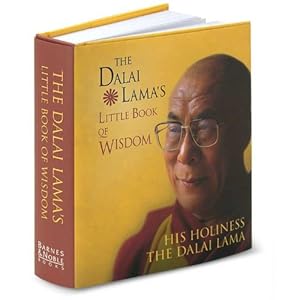
There are two big reasons that I have been able to tease out for picking a Tibetan community. The first is a person, the most visible and known Tibetan of all time - the Dalai Lama. For a few years now I have been enamored with the most famous of Lamas, and not because Richard Gere told me I should be. I received as a gift "The Dalai Lama's Little Book of Wisdom," pictured below, and it has taken a permanent place on the back of the toilet of whichever bathroom I call mine. For those of you who know me, that is a place of highest honor.

iTunes has several of his addresses to various audiences available for free download, and those became the soundtracks to my walking adventures to and from school. He is brilliant, honest, candid, funny, and compassionate in an incredible way. If I were to list, as have several of the prophets of our church, the inspired and God-sent individuals of history, His Holiness would take a prominent place.

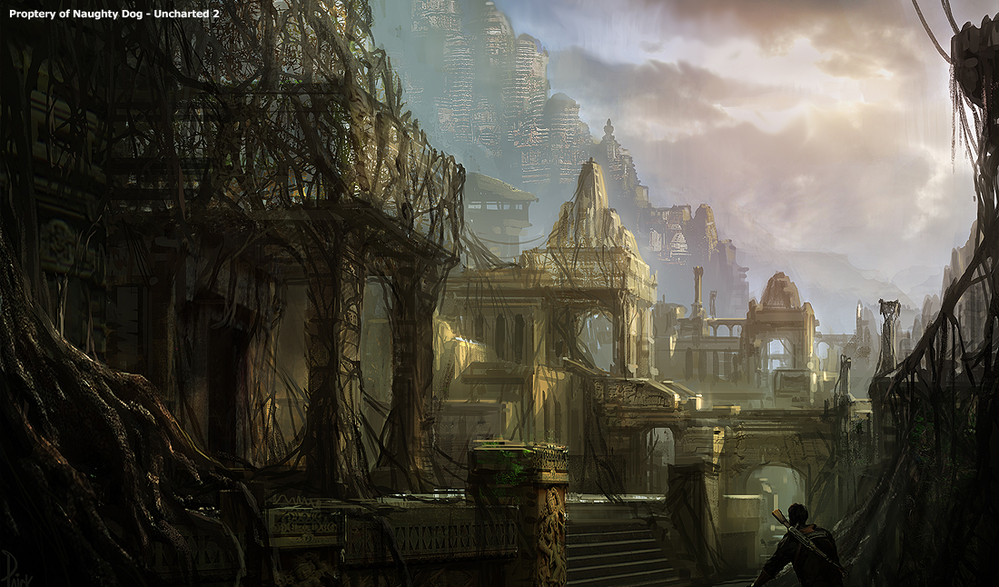
The second thing that got me interested in Tibet was nothing so spiritually fulfilling as the first, but actually launched part of my project in a direct way. I love video games, and I am prepared to defend the video game as a legitimate artistic medium (Smithsonian, suckas - http://americanart.si.edu/exhibitions/archive/2012/games/ - not that the Smithsonian has always been right about everything, but this exhibit makes my geeky heart happy) and a powerful vehicle for storytelling. One of the best games I have played in my short life was Uncharted 2: Among Thieves. The Uncharted series creates stories based around ambiguities in history, using a modern day, edgy version of the Indiana Jones archetype to explore exotic locales and solve ancient puzzles. Uncharted 2 explores the mystery of Marco Polo's lost year - you know, the one when he left port with a huge entourage and arrived home with only a few survivors, never telling what actually happened. It also plays with the Shambala/Shangri-La legend, tying in the mythical Cintamani stone and a megalomaniac bent on world domination. The story ends up in Tibet, searching ruins and villages for the entrance into Shambala before the megalomaniac can get there and find who-knows-what. The music for the game pulls a Williams/Glass technique, combining Tibetan music and instrumentation with blood-pumping Western orchestral arrangements. I loved it.


Similar to Patrick French, I was first taken in by the incredible "other-ness" of it all. There has been an exhaustive amount of research done on romanticization of Tibet in Western literature, and, actually, in non-western literature as well. Patrick French mentions Lara Croft and the Tomb Raider games for their inclusion of large sections that play out in Tibet. I wondered what other conceptions of Tibet were formed in video games. I found nine other games that use Tibet as a location, thanks to giantbomb.com.

4x4 Evo 2 The sequel to 4x4 Evolution, 4x4 Evo 2 is an offroad racing game developed by Terminal Reality
Barbie Explorer
Battletoads in Battlemaniacs Battlemaniacs is the first SNES version of the popular Battletoads series, infamous both for its unique humour and brutal difficulty.
Comix Zone All was swell for the comic book artist and part-time rock musician Sketch Turner until his apartment got struck by lightning and he gets sucked into his own comic, where he has to fight off mutants and other monstrosities to save himself, as well as "the girl".
Cosmic Relief: Prof. Renegade to the Rescue A asteroid is hurtling towards earth, you must travel to Tibet and find Professor K.K. Renegade. Once you have found him you must convince him to help build a anti-asteroid deflector to save Earth from being utterly destroyed.
James Bond 007 This is the first James Bond Game for the Gameboy and in the game James Bond travels all over the world in the effort to defeat a weapons ring.
Lost Horizon Fenton Paddock, a disgraced former British solider turned smuggler, must stop the Nazis from finding the mystical Shambhala.
Terranigma Terranigma is an action-RPG from Quintet and Enix telling the tale of the resurrection of the world from the eyes of the protagonist. The game is believed to successfully combine the best of A Link to the Past and Seiken Densetsu series.


TrackMania United Forever TrackMania United compiles much of the content and concepts found in the previous TrackMania games while maintaining the same crazy driving and huge online feel.


I'm sure there are more, and by golly I will find them, but for now this will suffice as indicative of the Western draw toward Tibet. It will be interesting to look into this subject more, as video games by their very nature say quite a bit about how a person imagines other places. Instead of just reading books about or listening to music from a place, video games purport to transport the gamer to that locale and allow them to live the experience vicariously in a unique way. For me, Uncharted was a visceral, exciting experience, encompassing all of the senses except smell and taste - but I will make no claims to its accuracy. This makes it (video gaming) a interesting and wholly singular topic of inquiry, and, I think, very telling in determining the ways Westerners imagine the Roof of the World.

Annotated Source

'Country Life'? Rurality, folk music, and 'Show of Hands'
Yarwood and Charlton
Journal of Rural Studies

Folk music is: ‘‘collectively owned, of ancient and anonymous authorship and transmitted across generations by word of mouth; a canon celebrating life in the past and urging change for tomorrow, the performance being on simple instruments in natural settings.. the joyful performance by specially gifted but not ‘professional’ musicians’’, (Ennis, 1992, p. 88, quoted in Connell and Gibson, 2003, p. 30). 

Another entry in the saga of my study of place and music, this article uses the case study of the folk group "Show of Hands" and how it reflects southwest English rurality.  Grooveshark has a few of their albums - I'm listening to them as I write this. One of the absolutely fun things about this research is that it turns up all kinds of cool music to listen to, entire soundscapes I didn't even know existed.  This project approaches the sheer enjoyment I had when reading Winnie-the-Pooh and Wind in the Willows for a paper I wrote on Daoism (which is in the archives of this blog, if you want to read it).


Some of the salient points from this article:
    rural music represents the lives, grievances, and celebrations of peoples in the particular localities
    folk music is constantly evolving, a hybrid, not separatable from current influences
    folk revival sometimes is more about inventing a past than preserving it
    music can only be understood by taking account of conditions of production, form of the song, readings, society and impacts
    music can play an important role in transcending the limitations of our own place in the world, of constructing trajectories across space
    music helps people 'become' something beyond their assigned dominant identities - to join 'others' via music
    regions and regional identities are porous
   "realistic portrayal" of folk like is not as important as providing a "complex, shifting, and hybrid view of reality"


Another neat idea, which I deeply appreciate, was found in the admission of the authors that they were analyzing lyrics because they were geographers trained in textual analysis - it's the "go with what you know" principle. They noted that if they were music theorists they could have undertaken an aural analysis, but they weren't so they didn't. What is my niche? What unique analysis can I bring to the table, based on my background?


Also, getting away from the idea of worrying about what is "realistic" or "authentic" and focusing more on how music describes the complexities of how the creators and performers view reality is a much more interesting and vibrant way to analyze a place or a people. Instead of worrying about the "Tibetan-ness" of the music in Bylakuppe, why not shift focus a little bit to the "Bylakuppe-ness" of the music, and how this contributes not only to the Tibetan identity of the refugees, but to the "Tibetan-refugee-in-Bylakuppe" identity of the community. I still have to continue in the vein of becoming conversant with Tibetan music from the motherland, because it is fascinating and because it is what the Bylakuppeans are likely to have in their heads when they evoke the sound of their heritage. But I don't have to worry so much about "finding" an "authentic" version of Tibet in Bylakuppe, and that would be deceiving anyway, instead I can choose to look with open eyes at the current situation.


Friday, February 3, 2012

The Matrix (of Influence) Part II

Looking in an easterly direction:

CHINA! And the rest of Asia!

 
Jay Chou - Way cool Taiwanese pop/rock/R&B superstar


The incredible popularity of a few pop superstars in Asia, combined with what seems to be a pan-Asian love for karaoke (notice the pinyin lyrics in the video), takes erhu pop straight into the Tibetan mainstream. Both of the Tibetan weddings in Mantras & Misdemeanors, Wednesday's annotated source, include at least a little Asian pop. I'm not sure how widespread the love for Asian pop is in India. It is interesting, and will be a subject of further inquiry, that deep fear/discomfort/hatred/[insert negative emotion here] that one would expect from Tibetans towards the Chinese doesn't seem to reduce their ability to enjoy music from the east. The Chinese government's efforts to dilute Tibetan culture may be working, or it may be that most Tibetans are above hating a people simply because they don't agree with their government. The latter is the vibe I've been getting most.

And, finally, back up north to the homeland:

TIBET!

There is a constant influx of Tibetan refugees, fresh over the Himalayas. One estimate says that about 3000 Tibetans escaped per year in the 90s, most into Nepal then on to India. This ensures a continual influx of Tibetan culture straight from the homeland to the camps.

Most interesting to me so far, from the Tibetan folk music side of things, has been shepherd song. Many societies with a history of pastoral emphasis have beautiful songs, inspired by long days in the middle of nowhere with little company except the flock. Again using the weddings from Mantras & Misdemeanors as examples, the young men were quick to take the stage to sing the nomad songs of their homelands, with vigor and nostalgia.

"They stand in front of the crowd, strong and happy, and sing beautiful nomad songs, their voices undulating over high calls emanating from deep in their throats to low languid notes. One after the other Tibetans get up and take the bottle to sing; sometimes alone closing their eyes, sometimes spontaneously joined in by others swaying happily in their seats. Just when I think there is no one left, someone else will get up and launch into beautiful, unabashed nomadic wailing." p. 110, Vanessa Walker

A similar scene occurs about 150 pages later, at Vanessa's own wedding. I am excited to see if this is typical of social gatherings, as the only recordings of nomad songs I have are lacking in immediacy and, without visual feedback, are without the degree of emotion described in the book.


So, there you have it. According to Kiela Diehl, these are the main influences on the Tibetan diaspora. With ease of internet access continually increasing, I would not be surprised to find other interests and fads influencing the youth in Bylakuppe. Crazy things happen - my Hindi teacher told us several times about the influx of Latin and Salsa music into India, and how all her friends want to learn Spanish and learn to get down like they do south of the border. We live in an amazing world, and boundaries disappear with every click of the mouse.