
About Me

My photo
Halloo! When I found out I could go to med school with a Humanities degree with an Ethnomusicology emphasis, I almost peed myself. Here's to me holding it in.
Showing posts with label identity. Show all posts

Wednesday, July 4, 2012

Dreams, Wings, and Other Things


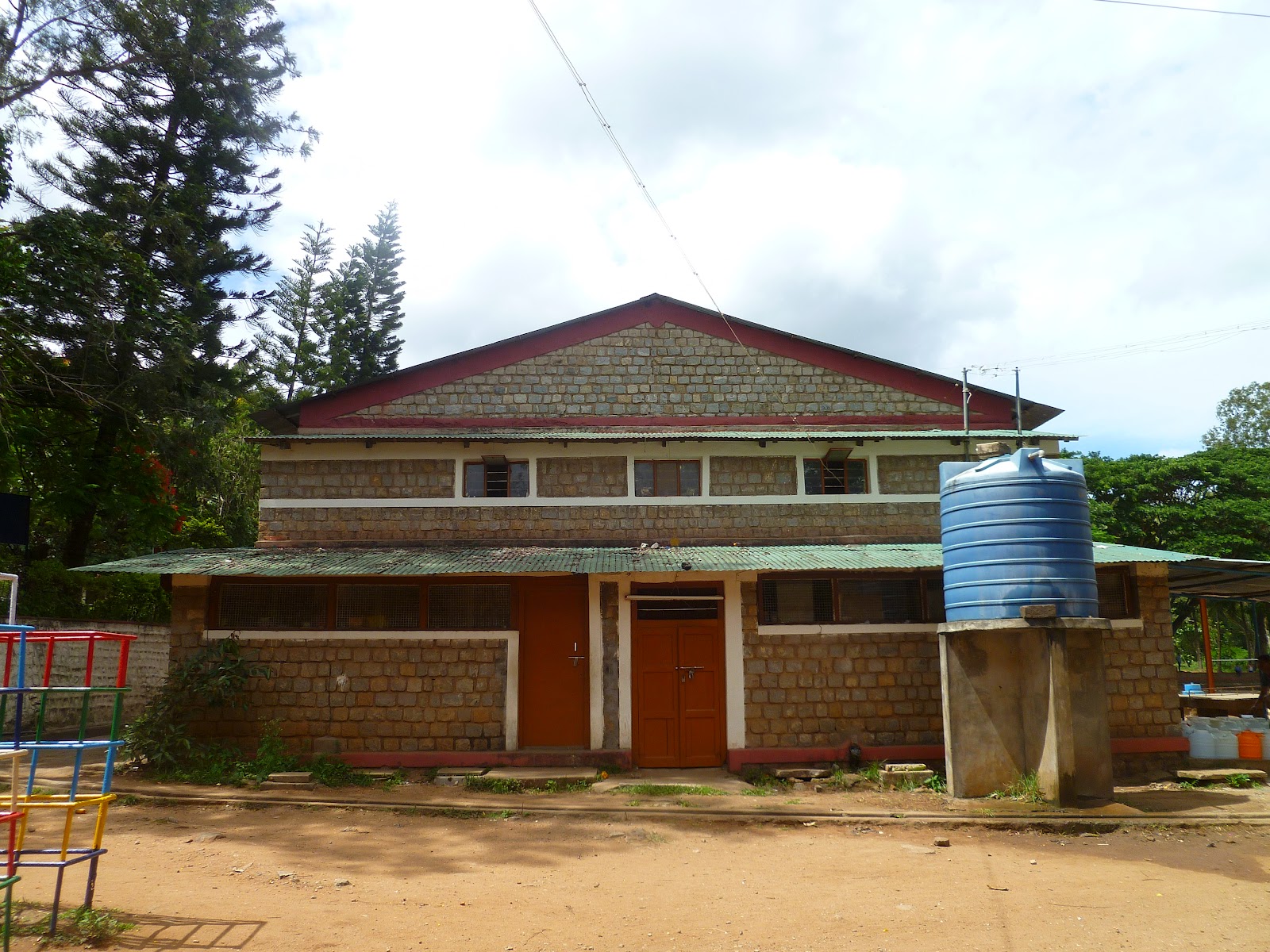
This stone building, nestled in a not-so-quiet corner of the Tibetan Children's Village between the mess hall and the sports field, is home to two wondrous little rooms filled to the brim with those magical implements we call instruments. Pardon me if I wax sentimental, but music rooms are to me what stadiums are to athletes, flea markets to hoarders, back alleys to crack addicts, and churches to the faithful. They are homes, sometimes literally, for stretches of time filling months and years. They are places of joy and pain, highs and lows, friends and frienemies (I never had any, but I saw the phenomenon in the music room regularly). The sound space is singular - what other rooms spend most of their time above a sound pressure level of 90 dB, in an at least semi-musical din?


The four main Tibetan instruments, with parts labeled. Notice the Tibetan, Western, and Indian scale degree equivalency chart in quadrant I (for those of you who forgot which quadrant is I, Descartes' fly on the ceiling is about to give you some terrible disease). The doors on either side lead to the two music/dance rooms.

The soundscape of the room is made more interesting by the pedagogical style I have observed when full classes are taught. The first half of class is spent learning some specific song, technique, or instrument, all by rote and call-and-response. The second half is a kind of free time, where students are meant to practice what they learn while the teacher moves from student to student assisting. Exploration is encouraged, and the result is the very loud, dissonant, and beautiful sound of twenty-five kids messing around on different instruments simultaneously in a small stone room. I noted to Dawa-la, the head music teacher, that I deeply appreciate this teaching method. Music is often taught in a painful way, with no spontaneity or exploration allowed. The focus is usually on not making mistakes, rather than on making music and making connections to the instruments. Some of the most fun and educational experiences I have ever had came from wondering what all the sounds are that a snare drum (etc.) can make, and going on to properly break all the rules I knew and trying my darndest to break rules I hadn't yet heard of. There's a special joy in bending the sound palette of an instrument past sane boundaries, if only for the mental image it conjures up of shock and disgust on an old fuddy-duddy music teacher's face.


Some of the concepts I threw at my drum class the other day. The cascara took a little while to lock in, but they were impressive in the speed they picked it up. Today, I noticed that someone filled the empty space in the top right corner with "Save Tibet!"

In this spirit, and with the injunction from Techung to share more of the best that Western music has to offer with the Bylakuppeans, I have embarked on a very fulfilling mission of reciprocity to my hosts. As I think I have mentioned, I teach drum lessons. There is one class of about 15 students, and two one-on-one classes with students who had the gonads (I have to use the generic term, because Nyidun is a girl) to approach the Inji-Mi and ask for lessons. We have been listening to funk, jazz, prog rock, pop, dance, Afro-Cuban stuff - you name it. It's fun to watch the look on kids' faces when they vibe with something that isn't Justin Bieber (J. Biebs, I love you man, but J. Coltrane is more my kind of cat).


One of the boys who digs on hanging around the music room in his free time. Some of these kids school me on dramyen. It's awesome.

In the spirit of the mission Dawa-la has entrusted me with, I also make sure the kids see me practicing their native music and singing in their mother tongue. For one thing, he told me, the teachers are always trying to convince the students of the richness of Tibetan culture, especially music and dance, and sometimes use as an illustration the Westerners (Injis) who come to their communities to learn Tibetan music. The injis, they say, wouldn't spend so much money and time to travel halfway around the world unless there was something very important and beautiful to uncover. The thing is, the students in Bylakuppe never actually see these injis, because Dharamsala in the north is the normal pilgrimage site for interested musicians. Dawa-la has tried to impart to me the impact of having a real, live inji in their midst. Forget about any musical aptitude I may or may not have. I have come from the land of Taylor Swift to learn dramyen. Dawa-la's hope, and I've seen some small evidences of his hope being fulfilled, is that the excitement of a Westerner learning dramyen might help some of the students take another look at their own musical tradition (without necessarily losing their interest in Metallica, Green Day, and The Eagles). The dream, for me and for the teachers at the school, is for the students to be able to have a resting point, a foundation, in their own culture, and an appreciation and applied aptitude for it, while also exploring, understanding, and experimenting with the musics of other cultures. It's a little like Sanka's speech in Cool Runnings - if I dress Jamaican, talk Jamaican, walk Jamaican, and is Jamaican, then I damn well better bobsled like a Jamaican. I don't see a thing wrong with a refugee picking up a guitar and learning "Hotel California," any more than I have a problem with an American college student traveling to India to learn dramyen, but I dig on the whole thing more if a native flair, fire, and spirit is retained. As another illustration, I was expressing some worry today over the accent I am using to sing the Tibetan lyrics in the song I will be performing at His Holiness' birthday (less than 35 hours from now!), and Dawa-la told me (and I'm paraphrasing),

"You are a Westerner. You won't sound Tibetan. It doesn't matter. You being there, up on that stage, and participating in our celebration in your own way - that's what people want to see. They'll love it. Just focus on the song."

That kind of embracing of two cultures simultaneously while recognizing one as your own is what I am coming to love and believe in more and more.

Words in Tibetan script, music in do-re-mi notation (1=do, 2=re, etc. A line under a phrase doubles its speed)

Back to the building, and the title of this post. I have this thing with physical space and environments and the ways they influence, enable, and inhibit artistic expression. For example, I have never been told more times in my life to play and sing louder. These dudes and chicks have serious pipes. I was practicing in the empty music room today when I heard a group in the other room start singing. It sounded like there were eight or so people singing. There were three. My theory, and maybe one day I'll prove it, is that coming from a physical space like the one in the Himalayas influences the cultures that inhabit it to fill the space with their music, and also uninhibits/never creates the volume sanctions that city-dwellers develop so as not to step on their neighbor's sound space. The alpenhorn in Switzerland are a similar case of huge instruments filling the forever-space, and the didgeridoo of the Australian Aborigines is another. (in a reverse example, electronic keyboards with headphone jacks took off in relatively cramped suburban America).

Focusing down to the microcosm of my current subject, music rooms are perfect spaces. They are made sacred by noise, sometimes disjointed and sometimes polished, and also make sacred and untouchable the noise-making desires of their inhabitants (untouchable, that is, by the normal workings of the outside world. If the students in the math building next door are taking a test, to hell with them, but if there is a performance on the stage above the music room then the music room's sacred space is extended and its internal system of governance applies). Music rooms are canvases for the painting of soundscapes. Returning to sentimentality, they are places for the realizing of dreams, and for the dreaming of new ones. They are vehicles for expression as vital and vibrant as the instruments they house.

[Similarly, for any interested parties, musical instruments are perfect objects embodying an infinite realm of possibilities, and make great gifts for all your poor friends who just spent all their money on trips to India]

Without a space where noise and experimentation are unrestricted, or at least are governed by a very different set of rules than the outside world, there can be very little in the way of musical learning. In this particular case, cultural preservation of a diasporic people depends on the existence of such a space. Further, the cultural interaction that takes place when one kid is playing an electric guitar and the kid one chair over is playing dramyen is unlikely without a space that houses both instruments and allows for the necessary noise. I believe this kind of interaction is vital to the way modern cultures progress - not vital in the sense of "needed for this good thing to happen," but in the sense of "foundational and integral to a natural process," and not progress in the sense of "improve," but simply in the sense of "moving forward." In other words, the tide of cultural change in the world is propelled by the existence of two or more distinct cultural implements (physical or otherwise) in shared spaces where they are allowed a degree of use. This may seem rather obvious and even mundane, and perhaps it is, but there is something stirring about watching the fluidity with which these students switch between and mix cultures, and there is something true about letting go of ideas of "Western" and "Tibetan" and watching the students simply live. This particular space has created a venue for this fluidity and unique way of creating identity. Other venues, for further exploration another time, include the pirate shops that sell mp3 cds of Bollywood and American music, the internet cafes with headphones at every stall (by the by, the internet cafe Lori and I frequent plays "All I Want for Christmas is You" over their speaker system every time I'm there), cell phones the monks use to play music while walking, and parties with music blasting. These places house and juxtapose music available to and popular in the community, and give some clues as to what music is housed in the hearts and brains of the people. While not quite as perfect a space as a music room, as they are all based on consumption rather than creation, they are indicative of and drivers of musical cultural exchange.

This ends my post. The pictures here are for general interest and for you, Dr. Grimshaw. There are more where these came from. Credit goes to Lori for agreeing to be my photographer for a few hours.


You know a student is serious when he shows up to a lesson wearing a v-neck t-shirt with a drum set and the word "ROCK" emblazoned in classic heavy metal font. This kid is good, and plays a mean guitar too.

A common sight - three dranyen chilling on the ground next to the kit. The one in the middle is using a kata, or Tibetan Buddhist blessing scarf, as an improvised strap.

Me with one of my teachers, Tsering Palden. This guy blows me away. I'll put up a recording when I get a chance. Yes ladies, he is single. And good with kids.

Thursday, March 22, 2012

Annotated Source

2...


Dennis, Christopher. Afro-Colombian Hip-hop: Globalization, Transcultural Music, and Ethnic Identities. Lanham, MD: Lexington, 2012. Print.

Here's some Afro-Colombian Hip-hop for context. Let the music play.


This just dropped, a great book about a vibrant hip-hop community. Here are a few relevant quotes (remember that stuff about this being for me, not you? Yeah, this is that. The videos, though, are for both of us.)

Generally speaking, hip-hop is defined as the culture, while rap is the music considered to be one of the four pillars of hip-hop culture: breakdancing, DJing (turntables), MCin (rap), and graffiti. From a cultural and musical practice originating among African American, Caribbean, and Hispanic youth in the Bronx, it has become a global signifying practice providing new parameters of meaning to locally and/or nationally diverse social groups. Beyond U.S. borders, hip-hop has become a vehicle for youth affiliations in parts of Europe, Africa, Asia, and Latin America. 2

All too frequently the media, politicians, and scholars use globalization to describe intercultural and international contact and economic exchange, which, in that case, would simply imply a new term used to define older processes that have a very long history. 10

In the end, most agree that globalization has definitely led to a fundamental acceleration of the pace of the social, cultural, and economic change around the world, greatly aided by technological advances in communication systems that permit the instantaneous movement of information and finance capital in a way that local events are influenced by events that take place at great distances and vice versa... It is vital to consider whether and in what ways has globalization been negative or positive for Afro-Colombian urban youth. What challenges and benefits has globalization presented and how are they manifested through Afro-Colombian hip-hop? 13

Together, globalization and postmodern theories have contributed to a dramatic shift of the terrain of culture toward the popular, toward everyday practices and local narratives - often from the margins of society - which, in turn, challenge the privilege historically bestowed on "high culture." (Hall, "What Is This 'Black' in Black Popular Culture?"124) 15

Hip-hop's worldwide appeal can greatly be attributed to the global fetishization of black peoples as a way for non-blacks to experience "real" or "exotic" culture. And naturally, the understanding of U.S hip-hop as an expression of African American culture has played a critical role in its spread and assimilation among black youth of the diaspora... Nevertheless, hip-hop has also migrated so extensively among the world's youth due to its associations with lower-class urban environments and its strategic marketing as music by and for marginalized groups who live in ghettoized, often violent, worlds, providing an imaginary with which inner-city youth can identify regardless of their ethnic-racial background, nationality, or language. 43-44


Dig.

Tuesday, March 20, 2012

Annotated Source

George Morgan & Andrew Warren (2011): Aboriginal youth, hip hop and the politics of identification, Ethnic and Racial Studies, 34:6, 925-947
Winnipeg's Most, an Aboriginal Hip-hop group

Abstract:
This paper explores the identity work taking place around contemporary subcultural hip hop amongst Australian indigenous youth in two disadvantaged urban locations. Previous work on Aboriginal hip hop has been attentive to the interface between tradition and modernity. However, existing scholarship has lacked a deeper ethnographic understanding of the dynamics between youth and parent cultures, and the tensions between the two generations. This article is based on research with young hip hop enthusiasts, community activists and educators. It deals with the cultural politics of identification and sees hip hop practice as associated with a process in which Aboriginality is crystallized as a principal affiliation and as offering an account for experiences of social marginalization. Far from being an outlet for expressing a prior or essential Aboriginality, hip hop as cultural practice is associated with the production of particular identifications.


What I really like about this source is the recognition that musical cultures among young people serve not (only) to articulate a previously existing culture or tradition through a new musical expression, but that identity and culture is created at the same time the music is created. A Tibetan kid rapping about Tibetan problems creates a new identity in the process of rapping, and creates new methods to deal with both the problems he or she personally and the problems the society has. Hip hop is a wonderful example of a particular set of musical styles that has assisted marginalized youth in creating identity all over the world, but other musics have also played key roles - dig the Tibetan metal musician Techung hipped me to, or the blues and rock group The Yak Band.

Tuesday, March 6, 2012

Annotated Source


Hip-hop gangsta or most deserving of victims? Transnational migrant identities and the paradox of Tibetan racialization in the USA 

Emily T Yeh
Department of Geography, University of Colorado, Boulder, CO 80309, USA; e-mail: emily.yeh@colorado.edu
Kunga T Lama
Department of Anthropology, University of Colorado, Boulder, CO 80309, USA; e-mail: kunga75@yahoo.com
Received 30 June 2004; in revised form 26 October 2004
Environment and Planning A 2006, volume 38, pages 809 ^ 829

Great article about how Tibetans, especially youth and young adults, navigate identity in the US. There is particular identification with hip-hop culture, which is, from what I have seen, rather universal among displaced communities that gather in the US. There is quite a bit of tension between the older generation, seeking to preserve a unique Tibetan identity, and the younger generation. Some of the most interesting things from the article are the raps of Tibetan hip-hop kids (warning: cursing ahead):

––you lost so jus admit // while yo ass is monastic // my shiet is fantasticno im not sarcastic'' (13 November 2001)

–– ... if failed, no option but to digest bullets into ya chest // and rest in peace and follow your fate // n i'll be wishing you to reincarnate // again in tha body of a human being wid a soul of a MC who comes back to battle // but not to
regulate...'' (3 November 2001)

–– ... i remain silence in Tibet cuz of tha chinese regulation // now that i got tha right of speech, i bust our words that can fill out tha whole ocean // now dont try to get into too deep // cuz i smoke you out like smoking weed // scared tha fuuck outta you that you won't even dare to speak'' (3 November 2001).

––ThiS 1 is for all my asains .......... StanD uP and FiGht ..... if u eva call me a chink // i`ll drown u in my kitchen sink // ... // half of u poeples are jus stereotypical // ... // to all my azains get up stand up // like Bob Marely cuase we fed up // and we aint gonna let up // ask me agian if i know kung fu // i`ll take out my blade and cut // cut u up into peices like pizza and deliver u before 30 minutes is due // ... // we got cars that can`t even match up to yur price // girls so hot they melt ice // as long as im asian im reppin my pride // ain`t got nuttin to hide // always got a phat ride // and grls world- wide // this is an asian invasion // got lov weather u tibetan or malayasian // so we don`t need no hateration // cause we the next generation // ... muthafukaz.....recongize and respect........thas a wrap'' (24 November 2001). 

It'll be cool to see how these same issues are dealt with in Bylakuppe.


Just found this, too: http://knowthankyou.wordpress.com/2009/04/12/cultural-imperialism-and-tibetan-hip-hop/


Friday, March 2, 2012

Annotated Source


Ellwanger, Tracy, "“Oh Uncle Pema!” The Role of Musical Agency in the Creation of a Modern Tibetan Identity" (2005). ISP Collection. Paper 415.
http://digitalcollections.sit.edu/isp_collection/415 


"Aku Pema," a popular Tibetan song, is used as a case study for what the title denotes. Interesting ideas from this article are the resistance of Tibetans to Chinese "impurities" in the traditional musics, and the very real ways that Tibetans use musical and other artistic expressions to support Tibetan identity and maintain national pride. 


Lyrics from Wikipedia

"Uncle Pema"
By Palgon (original in Tibetan)
Oh Uncle Pema!
Oh mighty Eagle adorned with a conch-white stripe!
If you soar up heavenwards, you adorn the azure sky,
If you descend earthwards, you gladden the craggy mountains.
And, your absence makes the craggy ledges bereft of any life!
Oh Uncle Pema!
Duck with the golden rosary
If you fly out of the water, you adorn the meadows,
If you swim in the water, you gladden the water’s spirits
And, your absence makes the lake bereft of life and spirit!
Oh Uncle Pema!
Oh handsome Youth, adorned with conch-white teeth like a tiger!
If you go [a]way, you are a credit to your fellow townsfolk, and
If you come this way, you are a star amongst your peers.
And, your absence makes my heart bereft of love and meaning!

Tuesday, February 28, 2012

Annotated Source

So, I'm not really going to annotate this. It's just gross. It does make my project even more relevant, so I guess I can thank Zhu Weiqun for that.
http://articles.timesofindia.indiatimes.com/2012-02-24/china/31094674_1_minority-status-dalai-lama-zhu-weiqun

Red rage: China to strip Tibetans of minority status?

Saibal Dasgupta, TNN Feb 24, 2012, 04.41AM IST


BEIJING: An influential Communist Party leader in China is asking for completely erasing the legal identity and minority status for Tibetans as a means to deal with escalating protests and do some damage-control for the country's image, dented by a spate of self-immolations by Tibetan activists and monks.
The official, an interlocutor with the Dalai Lama's envoys and a key Tibet policymaker, has suggested that the unrest could be quelled if the Tibetans were denied a sepa-rate legal identity in government documents.
Zhu Weiqun, deputy director in the Communist Party's United Front Work Department, asked the two houses of Chinese parliament - the National People's Congress and the Chinese People's Political Cons-ultative Conference - to am-end laws concerning Tibetans during their upcoming annual meetings in March.
He said that mentioning the ethnicity and minority status on identity cards of Tibetans erodes the sense of nationalism and cohesion.
The proposal, which aims to dilute the Dalai Lama's influence in Tibetan areas, follows nearly 20 cases of self-immolation by protesting Tibetans, which triggered calls from several Western governments, including Washington and Paris, demanding that Beijing ensure that the Tibetans are treated fairly.
"Some of our current educational and administrative policies have unintentionally weakened (the minority people's) sense of nationhood and Chinese nationalism," Zhu said in an article. The best way to achieve 'national cohesion' is by stopping to give them separate status as an ethnic minority on identity cards, using ethnic labels in the titles of schools and autonomous regions, and giving them privileges reserved for minorities, Zhu said.

Friday, February 17, 2012

Methods Practice II

Tanielle is from the big red dot.
Surabaya metropolitan

Methodology:
Semi-structured, semi-formal interview.
Found Tanielle in Gamelan class, bought food from her (amazing Indonesian steam buns). She has led out in extracurricular Indonesian cultural events, including dance and presenting at World Fest. She is our "resident Indonesian" and makes the gamelan legit. Also, she is super friendly. I approached her at gamelan practice and worked out a time to ask her a few questions, and explained a bit of what the assignment for the class was.
Met in the HFAC, found a comfortable set of chairs, and talked for ~30 minutes.

From my notebook:

Possible topics of discussion:
Biography
where from
age
family
major
career goals
"How you met your husband"
Church involvement
circumstances surrounding coming to the states
identities

Involvement in Gamelan
Why?
What effect does it have on your feeling of being Indonesian?
We talk about the social implications of gamelan frequently - kotekan, omback, etc. Do you think these characterizations are accurate? Why or why not?
You are involved with a lot of uniquely Indonesian endeavors - cooking, Gamelan, dance. What drives your participation in these activities? How does participation make you feel?
Other things besides food, music, dance?
Is it important to you to identify with your cultural background, and why?

Music in General
Who are some of your favorite artists?
What exposure did you have to western pop music growing up? What seemed to be popular in Indonesia?
What musics besides Western musics did people listen to? Local, Chinese, Arabic, India, etc.

Beginning of interview notes:

Surabaya - island next to Bali on Java. 2nd largest city in Java
Dad's from US
Mom Chinese by blood, grew up in Indonesia
Oldest, 2 younger brothers
Grew up LDS
LDS 1 stake for all Indonesia, recently established
many Muslims
religious diversity depends on Island - some religions congregate in certain areas
First attended BYU Hawaii
Undergrad degree - Biochemistry. Met husband (Tahitian) while at BYU-H.
Biochem - pregnancy disorders (premature births, preeclampsia, etc.)
US citizen, but wouldn't consider self American
Would self identify as "Indonesian, mainly, but my Mom's Chinese"
Doesn't want to forget heritage or lose it
Looking to posterity - preservation of culture and family values for the next generation
Stays in contact w/ Indonesian students on BYU campus
Participated in World Fest 2011
BYU Provo less diverse than BYU-H
musical concepts different in Bali than in Surabaya, so not all the concepts discussed in Balinese Gamelan translate
Course in schools in Indonesia reflects cultural values:
   moral studies
   tolerance
   working together
   diversity
   every island is different, so unity is important
   What does it mean to be Indonesian, if there are so many differences between local island cultures?
   national language
   Indonesia wanted out from under colonized rule, so united and kicked out the colonizers (Dutch ruled ~300 years, other countries took over from time to time).
Music
 - Indonesian - modern, Arabic +
 - Dang-dut - blend of Arab, Indian
 - Angklung - traditional, mostly idiophonic instruments
 - Each province teaches particular songs @ school, relative to local and folk traditions
 - Backstreet Boys, etc., also a presence
 - Mom is Chinese, so listened to that as well
 - Regular music course for elementary schools includes traditional music
 - " dance
 - western influence increasing
           Justin Bieber just did a concert in Indonesia
    - TV, internet, media
    - some disparity between villages & cities as far as media access is concerned (I [Beau] wondered about the availability of internet, etc. in the smaller islands)
         Each island has capital, and capitals are, generally, fully modern
 - West won't hurt Indonesia if schools & families keep exposure to tradition high (in response to "Does the influx of Western culture feel like a threat to Indonesian traditions?)
 - Parents lived in Idaho
     felt like they had to raise their kids in Indonesia/abroad somewhere
     Tanielle would still be Indo-Chinese-American, even if grew up in Idaho, and she is
     grateful to have grown up in Indonesia
    In Indonesia, her parents spoke English at home so that the kids would be enabled. Tanielle only visited the states once before going to BYU-H, for Christmas as the house of some relatives. The English paid off, and even though it was strange to be meeting so many new people at once, they were family and so were welcoming.
Hopes for Tanielle's kids/family
     keep all languages
           Indonesian, Chinese (Mandarin - Tanielle is conversant) English, also French and perhaps Fijian due to her husbands background
     culture
           exposure to events
               Chinese New Year, festivals
           cooking
                Indonesian independence day


As I reflect on these notes, I realize that the issue of the preservation of culture is impossible to pick into parts and force to stay separate. Everything, at least for Tanielle, goes into preserving culture for herself and her future children. The festivals, foods, musics, dances, and other traditions play off of and into each other to create experiences to help create identity with each of the cultures involved. Tanielle's kids will be Indonesian-Chinese-Tahitian-Americans, and that is a bit of a daunting yet exciting prospect. I will have to look into how music in Tibet dovetails into other aspects of cultural expression. It was also interesting to note her reaction towards the West coming into Surabaya - of course they listened to Backstreet Boys, but as long as the rising generation is encouraged by institutions and families to appreciate its heritage, the Backstreet Boys will never completely replace Angklung. I felt a bit of the sadness the Western threat must bring when the thought arises, "But what if the kids just don't want to anymore?" What if the young generation sheds its Indonesian-ness for a created, unauthentic Western archetype? The vibe I got from Tanielle was that it isn't likely to get that bad, but the thought itself is bad enough.

Probably one of the most wonderful things was the ease with which Tanielle seems to navigate cultural landscapes. I'm sure it isn't easy, and that hiccups have happened along the way, but here is a woman who is actively participating in all aspects of modern life, including tradition and cultural pride as part of it. I thought I might get a sense of conflictedness, but I got just the opposite - here is a person who seems very comfortable with the incredible diversity of her own life.

This whole thing was a great experience. I am excited to practice, get better at, and do more of it. Thank goodness for such a willing participant!

Wednesday, February 15, 2012

Annotated Source

http://news.bbc.co.uk/2/hi/asia-pacific/7926559.stm

"Exiles keeping Tibetan identity alive" by Eleanor Thomas
BBC Radio 4, Dharamsala

I wanted to take a step back and look at the forest as a whole, instead of focusing too much on the trees. Eleanor Thomas took a part in making  A Tibetan Odyssey: Fifty Years in Exile for BBC, which I will have to check out sometime. It's audience is those who are new to the Tibetan issues, and aims towards creating a sympathetic viewer. This article is rife with great quotes from Tibetans in exile, including:

"I want to see Tibet as an independent country and all the Tibetans can welcome His Holiness inside the Potala [Dalai Lama's palace in Lhasa] with a great joy. Most of the time that is what I dream about."

"I've been trying for a long time to get a picture of the old home but I think it is unrecognisable now. As an exile I suppose in a way I have never felt I have a home anywhere."

"I remember annual picnics, festivals and visits to the monasteries, horse-riding; it was very close to nature."

So much of what I have found in long, long-winded journal articles (not that I fault their long-windedness - have you seen my blogs posts lately?) are simply hoity-toity restatements of these issues. The journalist, as any good journalist would, has selected her quotes based on a point she is trying to get across to her audience, but it seems that in this case she has picked quotes that also characterize some of the wider problems. These include the importance of the Dalai Lama as a spiritual and political leader, the lost nature of the exilic condition, and an idealization of home.

Kinda crazy how folks with PhDs say the same things folks who haven't ever been on university grounds do, but they take 30 pages to say it. Kinda crazy how I do the same thing...