About Me

My photo
Halloo! When I found out I could go to med school with a Humanities degree with an Ethnomusicology emphasis, I almost peed myself. Here's to me holding it in.
Showing posts with label Tibet. Show all posts

Monday, April 9, 2012

Tibet, Tibet


I just finished Patrick French's wonderful, "hopeless, hopeful," book, Tibet, Tibet: A Personal History of a Lost Land. I'm still reeling.

I read the last 50 pages today (I prefer reading books in large chunks, as opposed to small bites - I lose my place in the ethos of a book if I split things too finely). The end of Tibet, Tibet is depressing on a national level but hopeful on a personal level - the strength and general goodness of the Tibetan people is reaffirmed at the same time a hopeless prognosis for Tibet's nationhood is given, unless the entire Chinese regime changes drastically.

French was able to review some documents in Dharamsala in an effort to come to a better understanding of the actual Tibetan death toll since the beginning of Chinese rule. As he realized that the "official" number (1.2 million) is built on straw-frame statistics, he wondered if he should keep his findings to himself. He then said:

"But I knew, after everything I had seen in Tibet, that truth was more important than continuing to back the cause in its present form. More realism was needed, not less, when it came to Tibet. It was a land that had suffered for to long from the well-intentioned projections of visiting foreigners."

It seems that his sad prognosis is driven from a true sense of compassion and altruism towards the Tibetan people, one that recognizes the faults and problems of the people while still cherishing them as human beings. I still believe in "the mind's Tibet," "a lasting romantic vision... of a lost land, a place of dreams, a place to feel at home," (French 300) but in the same way I still believe in the American dream and the Zion yet to come. America is screwed up, and so is the Church, and so is Tibet, but there is strength and goodness and meaning in all of these places.* The places are symbolic, but the people are real, and it's worth loving and fighting for both.

The project I am doing in Bylakuppe is apolitical, as far as parties and policies are concerned. The negotiation of culture through art is, however, part of what I believe to be a much more lasting and meaningful form of politics. As I have said before, it is indicative that the Dalai Lama set up the Tibetan Institute of Performing Arts in Dharamsala before he set down plans for the rebuilding of Tibet's most sacred monasteries. You can kill the Tibetans in Tibet with some ease - even a tulku goes down with a gunshot - but the Tibet that lives in Tibetans, as romanticized as it may be, is much tougher to kill. If Tibet ever becomes its own place again, it will be due more to cultural heritage preservation and innovation than mere political posturing.


* The Church as "place" is an interesting idea, and deserves further exploration. Any takers?

Wednesday, April 4, 2012

Acho Danny


The trailer above is for the movie Namgyal: Shey Kyi Jinpa, a documentary made by musician Acho Danny to document one of the most important figures in 20th Century Tibetan music. I heard about Acho Danny a while ago, but was reminded of him today in my world music class and decided to find out more.


Here's a video of him and a few other musicians doing some traditional Tibetan songs.


It's interesting that the music of his that is online is very much in a traditional style. Some of the songs from his CD, "My Dranyen," work in a very interesting fusion framework. Here's the cover of the CD - it's a great example of intertext, and captures the refugee spirit.


It might be fun to get in touch with Acho Danny and see what his take on the whole thing is. I also want to pick his brain a bit about dranyen - the more I hear it the more I want to learn how to play it. 


This last video was found while I was searching for the other ones in this post. This dude is pretty cool, and brings up some points I would love to explore one day regarding musical expression in modern Tibet.


Monday, March 26, 2012

Dranyen

སྒྲ་སྙན་

I found an instrument I really want to learn (and maybe even purchase - that would be cool). This is it:

It's a Tibetan lute called a dranyen. Other spellings include dramyin and dramnyen, and I've seen some other strange spellings scattered around. Here's a sweet video of some dranyen players singing and dancing.


The second one is a musician named Nawakyipo doing a concert. He talks about the subject matter of the lyrics, and has a beautiful voice.


This is a Bhutanese player. The dranyen is very popular in Bhutan, and even factors into the monastic music.
More of this guy: http://media.smithsonianfolkways.org/audio/podcasts/sound_sessions/sound_sessions_11.mp3

I don't really have much else to say about the dranyen - just listen to it! It's beautiful, simple, and Keila Diehl says it's easy to learn, at least to start (most instruments are easy to learn at first, but hard to master, yeah?). Hopefully there is a dranyen player or two kicking around Bylakuppe that will impart some wisdom to me.

Thursday, March 22, 2012

Annotated Source

1!

I'm done with the assignment - chheeeya. Don't fret - I'll still do research. I don't need assignments to do what I do.

Dufelmeier, Daylan. "A Forty Million Slave's Moment of Clarity." Jay-Z: Essays on Hip Hop's Philosopher King. Ed. Julius Bailey. Jefferson, NC: McFarland, 2011. Print.


In another annotated source I cited the introduction to the Jay-Z essays book, but several of the essays deserve closer examination. Here's one. The Forty Million Dollar Slave by William C. Rhoden that this essay alludes to and cites details the problems inherent in the vast moneymaking potential of black Americans through the centuries, and the primarily white businessmen that have tapped and taken the money their "Forty Million Dollar Slaves" made through their talents. Daylan explores Jay-Z's unique position as an incredibly lucrative black individual who is yet playing within the old system. As interesting as that is, more relevant to the direction of my studies in hip hop is the closing paragraph of the essay, where hip-hop's potential power for positive social change is defended and Daylan pleads for an increased and more effective use of hip-hop in this arena. I witnessed a beautiful and moving example of Tibetan activist music this past March 10th, and the use of hip-hop for Tibetan activism is readily apparent on the internet - I wonder, as I have in other posts, if any of this is going on in Bylakuppe.


"'Hip hop's true significance for the community activists and leaders I have worked with resides in its ability to encourage young people to believe they have the power to make a difference'(Watkins 255). In The Hip Hop Generation Bakari Kitwana documents scores of situations when hip hop has used its remarkable talent for change (206, 207, 208, 209). Potent lyrics laced with criticism of society would be more effective to make system-wide change than uncritical lyrics or black (or rapper) ownership. With lyrical skills like Jay-Z's rappers have such potential to challenge status quo and empower people to resist injustice... Songs that make heads nod yet retain socially empowering lyrics is what I call a win, win." 138

The recent tragic and touching rise in Tibetan self-immolation is certainly food for socially conscious music, especially as the Tibetan plight is remembered by a world grown callous over the last twenty years. We'll see what happens.

Monday, March 12, 2012

Tibet Freedom Music

March 10 is annual Tibetan uprising day. A friend of mine drove me down to Salt Lake this past Saturday, and we got to meet and spend some quality time with folks from the SLC Tibetan community. It was wonderful get to know some local Tibetans and friends of Tibetans - I had no idea there was a community in the US this active outside of the large coastal cities.

One of the most inspiring and interesting parts of the day was getting to stand on the steps of the Utah Capitol and hear the group sing three songs in Tibetan. This was my first time hearing live Tibetan music. Thankfully, translations were passed out for two of the three songs, for the benefit of Westerners and the Tibetan kids who don't know their heritage language very well. I forgot to bring those papers with me to school today, so I will post those up when I get the chance.


There was one other, but it was a prayer and I can't remember which one (there are a jillion prayer songs on youtube), so I will have to find out from Pema and see if I can find that too.

In order to try and preserve whatever internet neutrality I have left, I won't say much more except that it was a moving experience to see how real the "Free Tibet" movement still is, especially for the exiles, in a world where "Free Tibet" is often nothing more than a hip slogan to put on the back of your station wagon. I don't know how it will work out, or what steps need to be taken to help China and Tibet be reconciled, but I do know that the problem is very real on all sides of Tibet's borders.

Tuesday, March 6, 2012

Annotated Source


Hip-hop gangsta or most deserving of victims? Transnational migrant identities and the paradox of Tibetan racialization in the USA 

Emily T Yeh
Department of Geography, University of Colorado, Boulder, CO 80309, USA; e-mail: emily.yeh@colorado.edu
Kunga T Lama
Department of Anthropology, University of Colorado, Boulder, CO 80309, USA; e-mail: kunga75@yahoo.com
Received 30 June 2004; in revised form 26 October 2004
Environment and Planning A 2006, volume 38, pages 809 ^ 829

Great article about how Tibetans, especially youth and young adults, navigate identity in the US. There is particular identification with hip-hop culture, which is, from what I have seen, rather universal among displaced communities that gather in the US. There is quite a bit of tension between the older generation, seeking to preserve a unique Tibetan identity, and the younger generation. Some of the most interesting things from the article are the raps of Tibetan hip-hop kids (warning: cursing ahead):

––you lost so jus admit // while yo ass is monastic // my shiet is fantasticno im not sarcastic'' (13 November 2001)

–– ... if failed, no option but to digest bullets into ya chest // and rest in peace and follow your fate // n i'll be wishing you to reincarnate // again in tha body of a human being wid a soul of a MC who comes back to battle // but not to
regulate...'' (3 November 2001)

–– ... i remain silence in Tibet cuz of tha chinese regulation // now that i got tha right of speech, i bust our words that can fill out tha whole ocean // now dont try to get into too deep // cuz i smoke you out like smoking weed // scared tha fuuck outta you that you won't even dare to speak'' (3 November 2001).

––ThiS 1 is for all my asains .......... StanD uP and FiGht ..... if u eva call me a chink // i`ll drown u in my kitchen sink // ... // half of u poeples are jus stereotypical // ... // to all my azains get up stand up // like Bob Marely cuase we fed up // and we aint gonna let up // ask me agian if i know kung fu // i`ll take out my blade and cut // cut u up into peices like pizza and deliver u before 30 minutes is due // ... // we got cars that can`t even match up to yur price // girls so hot they melt ice // as long as im asian im reppin my pride // ain`t got nuttin to hide // always got a phat ride // and grls world- wide // this is an asian invasion // got lov weather u tibetan or malayasian // so we don`t need no hateration // cause we the next generation // ... muthafukaz.....recongize and respect........thas a wrap'' (24 November 2001). 

It'll be cool to see how these same issues are dealt with in Bylakuppe.


Just found this, too: http://knowthankyou.wordpress.com/2009/04/12/cultural-imperialism-and-tibetan-hip-hop/


Thursday, March 1, 2012

Ya Don't Stop

Rap, that wonderful little musical style that came out of New York via Jamaica (according to one version of the story), is by nature a historically and culturally aware genre. First on today's playlist, we have Articolo 31, with their Fidanzata. Dig the swing intro.
Then we have K'naan, reppin' some Ethiopian pop background music from the sixties.
The very famous and very diverse Black-Eyed peas, giving it up for all the Pilipino at Pilipina. 
Good ol' Big Will knows his history - compare this track (probably one of my favorite songs ever anywhere) with the next one by George Benson.

Rap music is largely based on sampling, and some of the most amazing record collections owned by individuals are in the capable hands of hip-hop producers and musicians. ?uestlove, widely known now due to the Roots' permanent place on the Jimmy Fallon show (they have always had a special place in hip-hop, but now the rest of the world knows who they are), has quite the stash (pardon the salty language):

Interviewer: “Holy shit, is this your record collection?”
(There were literally thousands upon thousands of records on ceiling high shelves that covered every wall of the room.)
?uestlove: “Ehh, like 70% of it”

One of my favorite uses of music history by a rap artist today (and I'm fairly certain there isn't anything to offend ANYBODY's sensibilities in this song or video [unless smoking a cigar a la 30s jazz singers is reprehensible]) is by Nas. Check it out.

People dismiss hip-hop as mindless, shallow, misogynistic, dangerous, and all of the above. Depending on the song, they might be right. But, as a medium for expression that ties together the spoken word, music history, and fat groove, rap has so many possibilities for communicating emotion, exposing sharp intellectual ability, and bringing people together in a very real way.

I don't know what kind of rap the Karmapa listens to, but I don't have any problem with a spiritual leader getting into a musical form with the capability that rap has. I wonder what rap the kids in Bylakuppe listen to. I don't think there is much of a chance that rap is not on the collective Bylakuppean playlist somewhere - the questions that beg answering are more along the lines of: who do they listen to? with what aspects of the music do they identify with? does hip-hop fashion manifest itself in the clothing of the Tibetans? are there any Tibetan rappers in Bylakuppe, and where do they draw their styles from? what about b-boys/girls, digging around on the internet for samples to make beats with? does traditional Tibetan music get sampled for hip-hop purposes? what are the reactions of the elderly? are other monks or lamas into hip-hop? how do they reconcile the various messages with the messages of Buddhism, or do they even attempt to? is lyrical content important?

Fun stuff, no?

"Up, up, up, up I, up I, up I step, up I walk, up I climb to the platform on which I await the arrival of the Blackline."
"Excuse me, brother - would you mind not dripping your umbrella into my lap?"
"John Coltrane and Chinese food is my date for tonight..."
"Going, going, going, going, going, gone - damn! I missed my stop. Writer's block."

A prize to the first person who knows what album this is from. No Googling.

Tuesday, February 28, 2012

Annotated Source

So, I'm not really going to annotate this. It's just gross. It does make my project even more relevant, so I guess I can thank Zhu Weiqun for that.
http://articles.timesofindia.indiatimes.com/2012-02-24/china/31094674_1_minority-status-dalai-lama-zhu-weiqun

Red rage: China to strip Tibetans of minority status?

Saibal Dasgupta, TNN Feb 24, 2012, 04.41AM IST


BEIJING: An influential Communist Party leader in China is asking for completely erasing the legal identity and minority status for Tibetans as a means to deal with escalating protests and do some damage-control for the country's image, dented by a spate of self-immolations by Tibetan activists and monks.
The official, an interlocutor with the Dalai Lama's envoys and a key Tibet policymaker, has suggested that the unrest could be quelled if the Tibetans were denied a sepa-rate legal identity in government documents.
Zhu Weiqun, deputy director in the Communist Party's United Front Work Department, asked the two houses of Chinese parliament - the National People's Congress and the Chinese People's Political Cons-ultative Conference - to am-end laws concerning Tibetans during their upcoming annual meetings in March.
He said that mentioning the ethnicity and minority status on identity cards of Tibetans erodes the sense of nationalism and cohesion.
The proposal, which aims to dilute the Dalai Lama's influence in Tibetan areas, follows nearly 20 cases of self-immolation by protesting Tibetans, which triggered calls from several Western governments, including Washington and Paris, demanding that Beijing ensure that the Tibetans are treated fairly.
"Some of our current educational and administrative policies have unintentionally weakened (the minority people's) sense of nationhood and Chinese nationalism," Zhu said in an article. The best way to achieve 'national cohesion' is by stopping to give them separate status as an ethnic minority on identity cards, using ethnic labels in the titles of schools and autonomous regions, and giving them privileges reserved for minorities, Zhu said.

Friday, February 17, 2012

Annotated Source

Donal Lopez, Jr., is one of the foremost (and one of my favorite) scholars of Buddhism. His book Prisoners of Shangri-La: Tibetan Buddhism and the West seeks to detail the different ways in which Tibet has become a construction by analyzing seven areas of particularly important contact. The seven areas are:

"A name (Lamaism),
a book (The Tibetan Book of the Dead),
an impostor (T. Lobsang Rampa),
a mantra (om mani padme hum),
an aesthetic (Tibetan Buddhist art),
and a prison, in which Tibetan Lamas in exile and their students are at once the inmates and the guards."

p. 13

This book has shown up in several of the bibliographies of articles and books that are forming the bulk of my literature review, so I thought I would pick it up and give it a go. Lopez is a scholar-adept (to use a term I just found today), a person whose scholarly interests have merged with his spiritual practices. I dig that, because I would much rather ask about Fords at a Ford dealership than ask about Chevys at a Ford dealership (to use the over-used analogy). To save room and headaches, I will outline the important parts and their relation to my project in future posts. Inspired by Rachel agreeing with me that my posts are far too long, here begins what will hopefully be a more useful and readable blog.

Monday, February 13, 2012

Annotated Source


The Music of Tibetan Buddhism in Ladakh: The Musical Structure of Tibetan Buddhist Chant in the Ritual Bskaṅ-gso of the Dge-Lugs-pa Sect
Author(s): Atsuko Tsukamoto

Source: Yearbook for Traditional Music, Vol. 15, East Asian Musics (1983), pp. 126-140
Published by: International Council for Traditional Music Stable URL: http://www.jstor.org/stable/768646 .
Accessed: 20/01/2012 15:29

 This article from the early 80s describes and transcribes, in detail, the bskan-gso ritual of the Tibetan Buddhist monks in Ladakh. Ladakh was chosen because it was isolated in the post-war period, and is most likely to have retained much of tradition as a result. 

Chant is learned orally, but the Tibetans have developed a form of musical notation. Some of the monks are not even aware that written notation exists, suggesting the primacy of oral tradition. I have copied some of the most interesting and important parts of the article, including sections that may be indicative of the wider tradition.

Bskan-gso ritual performance is split into twelve parts:

1) Skyabs-hgro = to seek refuge and worship the Three Treasures: Buddha, Teaching (Skt. dharma), and Buddhist Brotherhood (Skt. samgha);
2) Sems-bskyed= to have a conception of seeking the Enlightenment (Skt. bodhi);
3) Dgah-ldan Iha-brgya = to worship Tson-kha-pa and Maitreya;
4) Nan-mchod byin-rlabs = to bless articles such as water or food and
offer them to deities;
5) Spyan-hdren = to call up and welcome deities; 
6) Snon-tshe la dkar-ma = to offer to Neser;
7) Bskul = to enjoin deities to protect the Teaching; 
8) Zlog-pa = to dispel evil spirits;
9) Hchi-bdag-ma= to offer to Yama;
10) Zlog-pa;
11) Mnah-gsol = to praise deities and
12) Gseg-gsol=to send off deities. 
These parts are indicative of the Vajrayana tradition. Parts 1 and 2 would be comfortable in any Buddhist tradition, but the rest would only have application in the Mahayana and Vajrayana traditions. The inclusion of the worship and supplication of many gods and demons is typical of the wonderful syncretism that Buddhism is capable of when it moves to various countries and meets the local religions.
  This table charts which instruments are used for what. I have some other sources that identify what each instrument is, and I'll do a post with a list and pictures, but the important thing here is that different sounds are intoned relative to the ritual purpose. In Western music, it is a given that various instruments have various connotations relative to their use - black and silver electric guitars shaped like lightning bolts with bleeding airbrushed skulls probably won't show up in the next Mormon Tabernacle Choir broadcast (but hey, you never know), and a drummer who plays tympani is seen very differently from a drummer who plays a double bass drum set. Think of the images conjured up when a tympanist is imagined vs. a drummer with two huge bass drums - one is probably wearing a suit, perhaps a tuxedo, and the other might be wearing ripped jeans and that's it (unless you're old school like me and think of Louie Bellson and his sweet jazz double-bass set up first). It seems that in Tibetan ritual music different instruments have different cosmic connotations, and may be used alternately to scare away demons, welcome gods, or boost one towards enlightenment. It will be interesting to find out why certain instruments have become associated with the various modes.

Below is text from one of the sections: 

Hum, bshefis sig bshefis sig chos kyi dbyifs nas bshens, chos dbyins rnam dag nan las ma gyos kyan,
gdug-pa hdul phyir khro bo skur ston-pa, lha chen ma-ha-ka-la spyan hdren no.

"Rise up, rise up from the ultimate True World. Rise up firmly from the part of the enlightened True World. You show us your angry appearance, so we call to the mighty deity, Mahakala." 

If my Sanskrit is any good, "Mahakala" means "the great black one," though I would have to see it in Devanagari script to tell for certain.
A bit tangential, perhaps, but one of my favorite aspects of Tibetan Buddhism is the great pantheon of vengeful and fierce gods. Here's one of my favorites, Vajrayogini:
Super intense.
She's usually depicted drinking blood out of a skull cap bowl, stepping on demons representing various vices or shortcomings (ignorance, etc.), holding a cleaver, and wearing nothing but skulls. The feminine aspects (i.e. breasts and labia) are emphasized, though I've chosen pictures that conceal this a bit for the benefit of more conservative viewers. As a tangent to a tangent, Vajrayogini as a powerful symbol of femininity is worshiped by many female practitioners and is especially relevant today as Buddhist nuns gain power and standing in a traditionally male-dominated society/religion.
And, finally, a list of general properties of chant (using, of course, Western terminology. These aspects may or may not have direct cognates in Tibetan music theory.):

1) In principle, all the chants consist of a single melodic line; 
2) The melodic range is less than one octave;
3) Several scale types are employed;
4) Melodies consist of several melodic patterns which are composed in
proportion to phrases of the text; and
5) Disjunct melodic motion is most common, and the melody at the
end of the phrases has a tendency to descend.
 

Pretty cool stuff, eh?

Friday, February 10, 2012

More on Tibet in Video Games

This has become a really fun little side project. In seeking to get a better idea for how Westerners see Tibet in order to have a point of comparison for how Tibetans see Tibet, I never thought I would get to research video games. It is likely that none of this will show up in my final report (you never know, though...), but if Patrick French looked at video games in Tibet, Tibet, then I can look at them too darnit! Go with what you know, right?

I found a few more games that deal with or use Tibet in some fashion. Here are some screenshots:
Grom: Terror in Tibet. Notice the mandala in the lower left part of the screen.
Crazy Chicken: Heart of Tibet. Yetis and ice - sounds about right.

A Missing Father and a Quest to Find Shangri La!

Jane's father has gone missing in his quest to find the legendary city of Shangri La in Tibet. Guided by clues from her father's secret journal, Jane is determined to find Shangri La and answers!
Help Jane by carving a trail through the treacherous mountains of Tibet in order to find what she needs to build a hot air balloon and get the answers she seeks!
Tintin in Tibet - based on a comic book of the same name. The comic book received an award from the Dalai Lama for introducing many westerners to Tibet for the first time.
Lost Horizon - saving Tibet from the Nazis. Video games like to group Tibet with the Nazis trying to find occult weapons of unimaginable power.
Amazing Monk - fight/trick soldiers on your way to enlightenment
And another list from giantbomb.com, brought up by the search term "Shambhala":

SHAMBHALA

A mythical lost city situated in the Himalayas. Also known as "Shangri-La" to many.

Shambhala is a mythical kingdom described in Tibetan Buddhism. Although usually understood as a physical place, the term is freighted with various mystical or spiritual connotations and is perhaps better understood as a metaphor for spiritual enlightenment and the idea of a "Pure Land" found in some Buddhist traditions.
This notion of a secret Central Asian kingdom combining Utopian and earthly paradise elements was popularized in James Hilton's 1933 novel Lost Horizon, which coined the term Shangri-La. In Hilton's book, Shangri-La is a fertile, temperate valley, nearly inaccessible to the outside world, ruled by a benevolent lamasery of nearly immortal monks.


Name Platforms Developer
Lost Horizon released on Sept. 24, 2010 PC Animation Arts Creative GmbH
Uncharted 2: Among Thieves released on Oct. 13, 2009 PS3 Naughty Dog, Inc.
Indiana Jones and the Infernal Machine released on Oct. 31, 1999 GBC, N64, PC HotGen Ltd., LucasArts Entertainment Company LLC, Factor 5, LLC
The Journeyman Project 3: Legacy of Time released on Jan. 31, 1998 MAC, PC Presto Studios, Inc.
Atlantis: The Lost Tales released on Sept. 30, 1997 SAT, PS1, PC Cryo Interactive Entertainment


 Without exception, the conception and portrayal of Tibet in video games reflects its status as a forbidden land, a place for personal growth and discovery, for the unlocking of ancient mysteries. Interestingly, it's almost always also a place to be escaped from. Sure, it's the location of Shambhala, but no one actually wants to live there. There are yetis and Chinese soldiers and big freaky snowstorms and... It seems that Everest is a good metaphor - it reaches into the heavens, and to conquer it means to conquer yourself, but except for a few crazy sherpas it doesn't have any permanent residents. Get in, have your adventure, and get out. This contrasts quite heavily with what the general feeling of the Tibetan diaspora seems to be - sure, we'll go into exile, grow spiritually as a people and accept karma for what it is, but we want to get back to the Himalayan homeland as fast as possible. The games deal with escape, whereas Tibetans deal with return. Interesting stuff.


This last bit, however, is just downright fascinating, and it ties in with music, identity, AND video games. It's an interview with the Karmapa, one of the current leaders of Tibetan Buddhism. It comes from the Times of India:


Moving to other issues, I believe you like to listen to hip-hop on your ipod. Who are your favourite artistes?
I can't think of any specific artistes right now, I basically listen to what ever comes my way, whatever sounds appealing. It's important for me to stick to my traditional forms of art because I am a Tibetan Buddhist teacher wearing these robes. It's important for me to maintain my cultural affiliations.
But from time to time I do enjoy listening to hip-hop because it has a very modern sound to it and even though I'm a Tibetan teacher representing these ancient teachings, I'm also a global citizen in the 21st century. Hip-hop perhaps is one way of me being a 21st-century person.
Is that why you play war games on your play station because many might say it's inappropriate for a Buddhist monk dedicated to peace to play war games?
Well, I view video games as something of an emotional therapy, a mundane level of emotional therapy for me. We all have emotions whether we're Buddhist practitioners or not, all of us have emotions, happy emotions, sad emotions, displeased emotions and we need to figure out a way to deal with them when they arise.
So, for me sometimes it can be a relief, a kind of decompression to just play some video games. If I'm having some negative thoughts or negative feelings, video games are one way in which I can release that energy in the context of the illusion of the game. I feel better afterwards.
The aggression that comes out in the video game satiates whatever desire I might have to express that feeling. For me, that's very skilful because when I do that I don't have to go and hit anyone over the head.
But shouldn't meditation take care of that?
No, video games are just a skilful method.


I love how candid Tibetan Buddhist leaders are.

This is likely the last post on Tibet and video games, but if anybody out there finds anything worth talking about relative to cyber-Tibet, shoot me a line.

Wednesday, February 8, 2012

Virtual Shambala: Tibet in Video Games

People ask me, with some frequency, "Why Tibet?" There are a million and one incredible places and cultures on the planet, and the plane tickets cost about the same as long as you cross one of the oceans. Folks who want to go somewhere and live there to experience something a little out of the ordinary have options. Initially, and it's still the case to a degree, I don't know how to answer the question. It's not just that I don't know how to articulate the mass of feelings floating around inside me, it's that I really don't know. It's been a mysterious, kinda crazy really, experience. Like getting tractor-beamed.

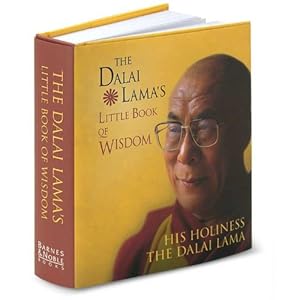
There are two big reasons that I have been able to tease out for picking a Tibetan community. The first is a person, the most visible and known Tibetan of all time - the Dalai Lama. For a few years now I have been enamored with the most famous of Lamas, and not because Richard Gere told me I should be. I received as a gift "The Dalai Lama's Little Book of Wisdom," pictured below, and it has taken a permanent place on the back of the toilet of whichever bathroom I call mine. For those of you who know me, that is a place of highest honor.

iTunes has several of his addresses to various audiences available for free download, and those became the soundtracks to my walking adventures to and from school. He is brilliant, honest, candid, funny, and compassionate in an incredible way. If I were to list, as have several of the prophets of our church, the inspired and God-sent individuals of history, His Holiness would take a prominent place.

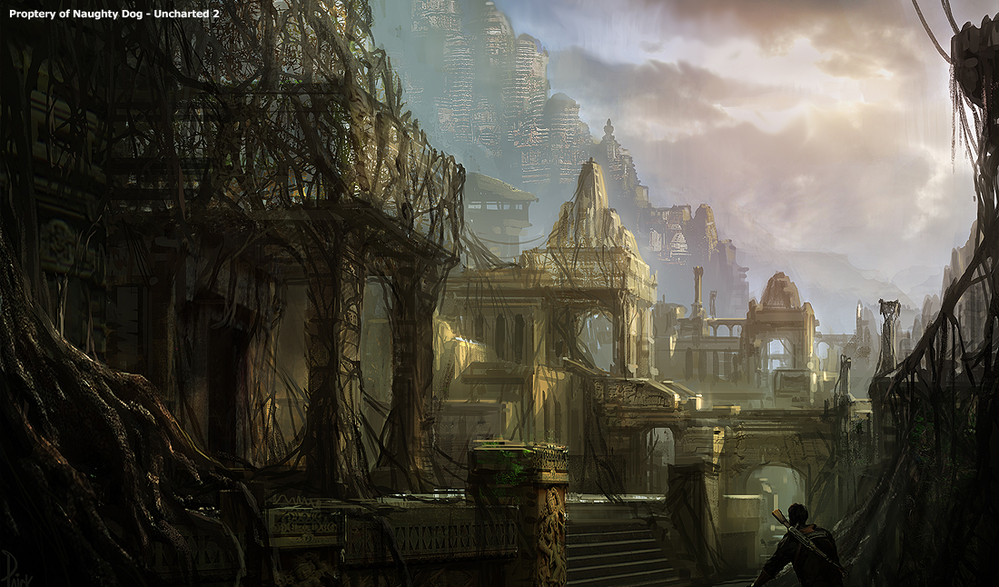
The second thing that got me interested in Tibet was nothing so spiritually fulfilling as the first, but actually launched part of my project in a direct way. I love video games, and I am prepared to defend the video game as a legitimate artistic medium (Smithsonian, suckas - http://americanart.si.edu/exhibitions/archive/2012/games/ - not that the Smithsonian has always been right about everything, but this exhibit makes my geeky heart happy) and a powerful vehicle for storytelling. One of the best games I have played in my short life was Uncharted 2: Among Thieves. The Uncharted series creates stories based around ambiguities in history, using a modern day, edgy version of the Indiana Jones archetype to explore exotic locales and solve ancient puzzles. Uncharted 2 explores the mystery of Marco Polo's lost year - you know, the one when he left port with a huge entourage and arrived home with only a few survivors, never telling what actually happened. It also plays with the Shambala/Shangri-La legend, tying in the mythical Cintamani stone and a megalomaniac bent on world domination. The story ends up in Tibet, searching ruins and villages for the entrance into Shambala before the megalomaniac can get there and find who-knows-what. The music for the game pulls a Williams/Glass technique, combining Tibetan music and instrumentation with blood-pumping Western orchestral arrangements. I loved it.


Similar to Patrick French, I was first taken in by the incredible "other-ness" of it all. There has been an exhaustive amount of research done on romanticization of Tibet in Western literature, and, actually, in non-western literature as well. Patrick French mentions Lara Croft and the Tomb Raider games for their inclusion of large sections that play out in Tibet. I wondered what other conceptions of Tibet were formed in video games. I found nine other games that use Tibet as a location, thanks to giantbomb.com.

4x4 Evo 2 The sequel to 4x4 Evolution, 4x4 Evo 2 is an offroad racing game developed by Terminal Reality
Barbie Explorer
Battletoads in Battlemaniacs Battlemaniacs is the first SNES version of the popular Battletoads series, infamous both for its unique humour and brutal difficulty.
Comix Zone All was swell for the comic book artist and part-time rock musician Sketch Turner until his apartment got struck by lightning and he gets sucked into his own comic, where he has to fight off mutants and other monstrosities to save himself, as well as "the girl".
Cosmic Relief: Prof. Renegade to the Rescue A asteroid is hurtling towards earth, you must travel to Tibet and find Professor K.K. Renegade. Once you have found him you must convince him to help build a anti-asteroid deflector to save Earth from being utterly destroyed.
James Bond 007 This is the first James Bond Game for the Gameboy and in the game James Bond travels all over the world in the effort to defeat a weapons ring.
Lost Horizon Fenton Paddock, a disgraced former British solider turned smuggler, must stop the Nazis from finding the mystical Shambhala.
Terranigma Terranigma is an action-RPG from Quintet and Enix telling the tale of the resurrection of the world from the eyes of the protagonist. The game is believed to successfully combine the best of A Link to the Past and Seiken Densetsu series.


TrackMania United Forever TrackMania United compiles much of the content and concepts found in the previous TrackMania games while maintaining the same crazy driving and huge online feel.


I'm sure there are more, and by golly I will find them, but for now this will suffice as indicative of the Western draw toward Tibet. It will be interesting to look into this subject more, as video games by their very nature say quite a bit about how a person imagines other places. Instead of just reading books about or listening to music from a place, video games purport to transport the gamer to that locale and allow them to live the experience vicariously in a unique way. For me, Uncharted was a visceral, exciting experience, encompassing all of the senses except smell and taste - but I will make no claims to its accuracy. This makes it (video gaming) a interesting and wholly singular topic of inquiry, and, I think, very telling in determining the ways Westerners imagine the Roof of the World.

Annotated Source

'Country Life'? Rurality, folk music, and 'Show of Hands'
Yarwood and Charlton
Journal of Rural Studies

Folk music is: ‘‘collectively owned, of ancient and anonymous authorship and transmitted across generations by word of mouth; a canon celebrating life in the past and urging change for tomorrow, the performance being on simple instruments in natural settings.. the joyful performance by specially gifted but not ‘professional’ musicians’’, (Ennis, 1992, p. 88, quoted in Connell and Gibson, 2003, p. 30). 

Another entry in the saga of my study of place and music, this article uses the case study of the folk group "Show of Hands" and how it reflects southwest English rurality.  Grooveshark has a few of their albums - I'm listening to them as I write this. One of the absolutely fun things about this research is that it turns up all kinds of cool music to listen to, entire soundscapes I didn't even know existed.  This project approaches the sheer enjoyment I had when reading Winnie-the-Pooh and Wind in the Willows for a paper I wrote on Daoism (which is in the archives of this blog, if you want to read it).


Some of the salient points from this article:
    rural music represents the lives, grievances, and celebrations of peoples in the particular localities
    folk music is constantly evolving, a hybrid, not separatable from current influences
    folk revival sometimes is more about inventing a past than preserving it
    music can only be understood by taking account of conditions of production, form of the song, readings, society and impacts
    music can play an important role in transcending the limitations of our own place in the world, of constructing trajectories across space
    music helps people 'become' something beyond their assigned dominant identities - to join 'others' via music
    regions and regional identities are porous
   "realistic portrayal" of folk like is not as important as providing a "complex, shifting, and hybrid view of reality"


Another neat idea, which I deeply appreciate, was found in the admission of the authors that they were analyzing lyrics because they were geographers trained in textual analysis - it's the "go with what you know" principle. They noted that if they were music theorists they could have undertaken an aural analysis, but they weren't so they didn't. What is my niche? What unique analysis can I bring to the table, based on my background?


Also, getting away from the idea of worrying about what is "realistic" or "authentic" and focusing more on how music describes the complexities of how the creators and performers view reality is a much more interesting and vibrant way to analyze a place or a people. Instead of worrying about the "Tibetan-ness" of the music in Bylakuppe, why not shift focus a little bit to the "Bylakuppe-ness" of the music, and how this contributes not only to the Tibetan identity of the refugees, but to the "Tibetan-refugee-in-Bylakuppe" identity of the community. I still have to continue in the vein of becoming conversant with Tibetan music from the motherland, because it is fascinating and because it is what the Bylakuppeans are likely to have in their heads when they evoke the sound of their heritage. But I don't have to worry so much about "finding" an "authentic" version of Tibet in Bylakuppe, and that would be deceiving anyway, instead I can choose to look with open eyes at the current situation.


Friday, February 3, 2012

Annotated Source

Buddhism in the Modern World. "The Making of the Western Lama," by Daniel Cozort. 2003. pp. 221-248.
Monks debating at the original Sera monastery in Tibet

Though this entry in Buddhism and the Modern World is on the introduction of courses of training designed to produce qualified Buddhist teachers in the western world, it uses for comparison the course of study undertaken at Sera Je monastery. Sera Je was originally a monastery in Tibet, and is still going strong, but has also been built in exile in Bylakuppe, the refugee community we will be living in. I wanted to understand more about the lives of the people who make up such a large portion of this particular community, the monks and nuns living in the monasteries. The course of education at the monastery is incredible.

The entire curriculum takes 20-25 years to complete (and I complain about the 12 years to become a doctor!), granting the graduate the title of Geshe, one authorized to teach. There are five phases of curriculum, as follows:
3 years on logic, epistemology, psychology
5 years on 70 topics essential to the dharma
4 years on several topics, the main being shunyata, or the doctrine of emptiness
4 years on monastic discipline and how monastic disciplinary codes and actions reflect Buddhist ethics
4 years on the Abhidharma, the more esoteric teachings - cosmology, meditation states, etc.

In Tibet, the monks spent 6 or more hours a day debating. In Bylakuppe, there is a 2 hour debate session in the morning and a 2 hour debate session in the evening. Geshe Jampa Gyatso, a prominent teacher of Buddhism, said, "In a monastery, it is said that 25% of one's understanding of the subject comes from the teacher's lecture, 25% from self-study, and 50% from debating" (p. 239). Debating is an exciting activity, and becomes a sport of sorts for the monks. They learn to take all sides of an argument and pick them apart, using a vast memorized corpus of scripture and commentary, looking for logical inconsistencies and trying to find ways to disprove or problematize them. It is in this way that the truths of the dharma come into sharp focus, for the monks spend a large chunk of those 20-25 years testing them rigorously. This reminds me of B.H. Roberts' approach to Book of Mormon scholarship - his belief was that the Book of Mormon was absolutely from God, and therefore would stand up to all the hard questions you could ask about it (by the way, I think he was right). B.H. Roberts' material, humorously enough, became one of the main sources for anti-Mormon material, espoused by folks not realizing the position of faith he had taken and the subsequent scholarship that answered many of the questions and transformed and sharpened others. The Buddhists seek to do this intense testing of faith as a monastic body, which is a powerful way to confirm the value of the dharma.

Another interesting point is that the monks begin formal tantra study only after the title of Geshe has been received. Tantra is considered so powerful and dangerous that only the most accomplished practitioners are deemed worthy to use it.

Here's a video of a debate at Sera monastery in Tibet. Remember, these guys are really on the same side. It looks like fun. :)
 
You'll figure out the all the clapping noises about halfway through.

The Matrix (of Influence) Part II

Looking in an easterly direction:

CHINA! And the rest of Asia!

 
Jay Chou - Way cool Taiwanese pop/rock/R&B superstar


The incredible popularity of a few pop superstars in Asia, combined with what seems to be a pan-Asian love for karaoke (notice the pinyin lyrics in the video), takes erhu pop straight into the Tibetan mainstream. Both of the Tibetan weddings in Mantras & Misdemeanors, Wednesday's annotated source, include at least a little Asian pop. I'm not sure how widespread the love for Asian pop is in India. It is interesting, and will be a subject of further inquiry, that deep fear/discomfort/hatred/[insert negative emotion here] that one would expect from Tibetans towards the Chinese doesn't seem to reduce their ability to enjoy music from the east. The Chinese government's efforts to dilute Tibetan culture may be working, or it may be that most Tibetans are above hating a people simply because they don't agree with their government. The latter is the vibe I've been getting most.

And, finally, back up north to the homeland:

TIBET!

There is a constant influx of Tibetan refugees, fresh over the Himalayas. One estimate says that about 3000 Tibetans escaped per year in the 90s, most into Nepal then on to India. This ensures a continual influx of Tibetan culture straight from the homeland to the camps.

Most interesting to me so far, from the Tibetan folk music side of things, has been shepherd song. Many societies with a history of pastoral emphasis have beautiful songs, inspired by long days in the middle of nowhere with little company except the flock. Again using the weddings from Mantras & Misdemeanors as examples, the young men were quick to take the stage to sing the nomad songs of their homelands, with vigor and nostalgia.

"They stand in front of the crowd, strong and happy, and sing beautiful nomad songs, their voices undulating over high calls emanating from deep in their throats to low languid notes. One after the other Tibetans get up and take the bottle to sing; sometimes alone closing their eyes, sometimes spontaneously joined in by others swaying happily in their seats. Just when I think there is no one left, someone else will get up and launch into beautiful, unabashed nomadic wailing." p. 110, Vanessa Walker

A similar scene occurs about 150 pages later, at Vanessa's own wedding. I am excited to see if this is typical of social gatherings, as the only recordings of nomad songs I have are lacking in immediacy and, without visual feedback, are without the degree of emotion described in the book.


So, there you have it. According to Kiela Diehl, these are the main influences on the Tibetan diaspora. With ease of internet access continually increasing, I would not be surprised to find other interests and fads influencing the youth in Bylakuppe. Crazy things happen - my Hindi teacher told us several times about the influx of Latin and Salsa music into India, and how all her friends want to learn Spanish and learn to get down like they do south of the border. We live in an amazing world, and boundaries disappear with every click of the mouse.